.png)
.png)
.png)

Daniel Saks
Chief Executive Officer


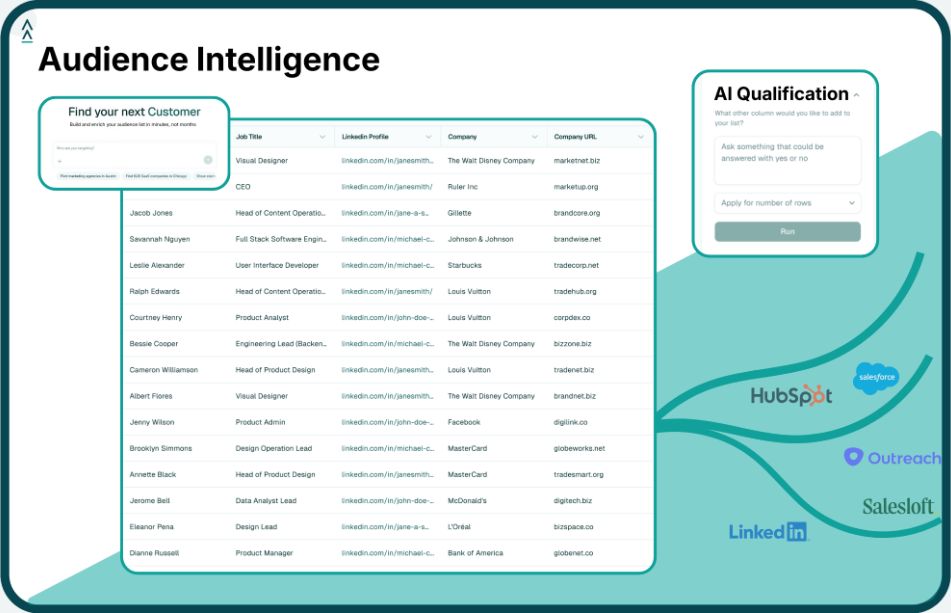
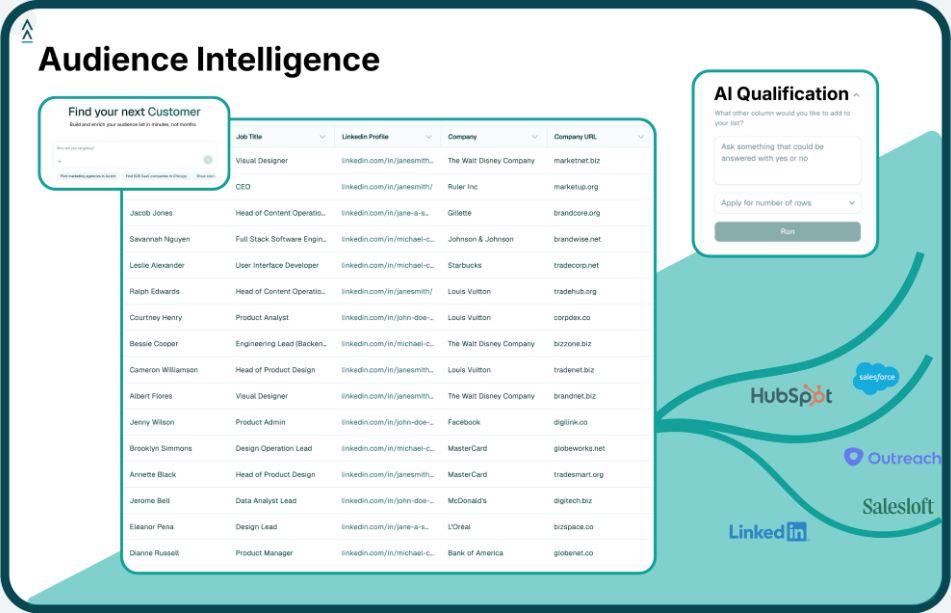
Most RevOps leaders today are drowning in data but starving for insights. The promise of unified revenue operations has been building for years, but 2026 is the year when AI finally delivers on that promise. Companies that master the integration of marketing, sales, and customer success through intelligent automation are seeing dramatic improvements in pipeline velocity and revenue predictability. With platforms like Landbase offering AI-qualified exports through natural language prompts, finding your next customer has never been faster or more precise.
The evolution from traditional sales operations to comprehensive revenue operations represents more than just a departmental reorganization—it's a fundamental shift in how companies approach growth. Where sales ops focused primarily on internal efficiency, RevOps in 2026 takes a holistic view of the entire customer lifecycle, from first touch to renewal and expansion. The key differentiator? Agentic AI systems that can interpret plain-English business goals and execute complex audience discovery across 1,500+ unique signals to deliver qualified prospects ready for immediate activation.
This transformation is happening faster than many organizations anticipated. The integration of AI-driven insights, predictive analytics, and autonomous execution is creating a new class of revenue leaders who can scale operations without proportionally increasing headcount. The question isn't whether your organization should embrace this evolution—it's how quickly you can implement it effectively.
The distinction between Sales Operations and Revenue Operations has never been clearer. While sales ops traditionally focused on optimizing internal sales processes, territories, and compensation plans, Revenue Operations in 2026 encompasses the entire go-to-market strategy across marketing, sales, and customer success functions.
This broader scope reflects the reality that customer journeys are increasingly complex and non-linear. Prospects might engage with marketing content, have multiple sales conversations, and interact with customer success before making a purchase decision. RevOps serves as the connective tissue that ensures consistent messaging, aligned processes, and shared metrics across all touchpoints.
Key differences between traditional Sales Ops and modern RevOps:
The modern RevOps function acts as the central nervous system for revenue generation, ensuring that every customer interaction contributes to the overall revenue strategy. This requires sophisticated data integration, consistent process design, and clear accountability across departments.
Organizational alignment has become the primary challenge for companies implementing RevOps. Without clear ownership and shared objectives, even the most advanced technology stack can't overcome siloed thinking and conflicting priorities. The most successful RevOps implementations start with executive sponsorship and clear definitions of success metrics that matter to the entire organization.
Artificial intelligence has moved from a nice-to-have to a must-have for revenue operations in 2026. AI-driven insights are transforming how companies identify prospects, predict buying behavior, and allocate resources across the revenue funnel. The key breakthrough has been the shift from reactive analytics to proactive prediction and autonomous execution.
Predictive modeling for proactive revenue generation has become increasingly sophisticated. Modern AI systems can analyze historical deal patterns, customer behavior, and market signals to identify which accounts are most likely to convert, expand, or churn. This enables revenue teams to focus their efforts on the highest-potential opportunities rather than spreading resources thin across all prospects.
Landbase Intelligence provides growth signals that inform revenue growth strategies by tracking 1,500+ unique signals across company growth, industry trends, and buying intent. This comprehensive data foundation enables more accurate predictions and better resource allocation.
Personalization at scale has become achievable through AI-powered customer segmentation. Rather than relying on basic firmographic filters, modern systems can identify nuanced patterns in customer behavior and preferences to deliver highly relevant messaging and offers. This level of personalization was previously only possible for enterprise accounts but is now available across the entire customer base.
Resource allocation has become more intelligent through machine learning models that continuously optimize based on performance data. AI systems can automatically adjust campaign parameters, reallocate sales territories, and prioritize leads based on real-time performance indicators and changing market conditions.
The impact of AI on revenue operations is measurable and significant. Companies leveraging AI-driven insights are seeing improvements in forecast accuracy, conversion rates, and customer lifetime value. The key is not just implementing AI technology but integrating it into daily workflows and decision-making processes.
The Revenue Operations Manager role has evolved dramatically by 2026. What was once primarily a technical position focused on CRM administration and reporting has become a strategic business leadership role requiring a unique blend of skills.
Essential skills for the modern RevOps Manager include:
The RevOps Manager now serves as a strategic business partner to the CRO, CMO, and CEO, providing data-driven insights that inform critical business decisions. This requires not just technical expertise but also business acumen and executive presence.
Balancing strategy and execution remains the primary challenge for RevOps leaders. They must simultaneously focus on long-term strategic initiatives like technology stack optimization and short-term tactical needs like campaign support and reporting. The most successful RevOps Managers create scalable systems that can handle both strategic transformation and daily operational demands.
The role has also become more specialized, with some organizations creating dedicated positions for data governance, process optimization, and technology management within the broader RevOps function. This specialization reflects the increasing complexity and importance of revenue operations in driving business growth.
While Revenue Operations provides the strategic framework, Sales Operations remains the tactical engine that drives daily revenue activities. In 2026, sales operations has been transformed by intelligent automation and AI-powered insights that eliminate manual work and enhance decision-making.
Sales enablement has become more sophisticated through AI-powered content recommendations and conversation intelligence. Sales reps now receive real-time suggestions for the most relevant content, talking points, and next steps based on prospect behavior and conversation context. This ensures consistent messaging while allowing for personalized engagement.
CRM optimization has moved beyond data hygiene to predictive insights and automated workflows. Modern CRM systems can automatically score leads, suggest next best actions, and predict deal outcomes based on historical patterns and real-time signals. This reduces administrative burden on sales reps and improves forecast accuracy.
The evolution of Revenue Operations has created new career opportunities and changed the trajectory for sales operations professionals. In 2026, the demand for skilled RevOps talent has never been higher, with organizations competing to attract professionals who can bridge the gap between technical expertise and business strategy.
New roles emerging in the RevOps landscape include:
Required qualifications have evolved to include both technical and business skills. While proficiency with CRM systems and data analysis tools remains essential, employers increasingly value candidates with experience in change management, project management, and cross-functional collaboration. Many organizations now seek candidates with backgrounds in both technical fields and business disciplines.
Professional development opportunities have expanded significantly, with specialized certifications, training programs, and industry communities supporting career growth in RevOps. The most successful professionals continuously update their skills in areas like data science, AI implementation, and strategic planning.
Compensation trends reflect the strategic importance of RevOps roles, with salaries increasing significantly for professionals who can demonstrate measurable impact on revenue outcomes. The highest compensation typically goes to professionals who can combine technical expertise with business acumen and leadership skills.
The interplay between sales operations and broader RevOps careers creates multiple pathways for advancement. Professionals can specialize in specific technical areas or develop broader strategic capabilities, depending on their interests and organizational needs. This flexibility makes RevOps an attractive career path for professionals seeking both technical challenge and business impact.
The most significant advancement in Revenue Operations for 2026 is the emergence of agentic AI systems that can autonomously execute go-to-market strategies based on natural language instructions. This represents a fundamental shift from manual, tool-based approaches to intelligent, autonomous systems that can interpret business objectives and execute complex workflows.
Autonomous GTM systems like Landbase's GTM-2 Omni can understand plain-English prompts like "SaaS startups in Europe hiring for RevOps" and automatically build, qualify, and deliver targeted prospect lists ready for immediate activation. This eliminates the complexity and time required for traditional audience building across multiple tools and data sources.
Natural language targeting has democratized access to sophisticated audience discovery, enabling non-technical users to build complex queries without requiring knowledge of Boolean logic or database structures. This reduces the barrier to entry for effective prospecting and ensures that business knowledge can be directly translated into actionable lists.
Real-time data enrichment ensures accuracy by continuously updating contact and company information from multiple sources. This eliminates the data decay that plagues traditional databases and ensures that outreach efforts are based on current, accurate information.
ICP recognition has become more sophisticated through machine learning models trained on billions of GTM data points from 50M+ B2B campaigns. These models can identify patterns and characteristics that indicate ideal customer fit, even when those patterns aren't explicitly defined by the user.
Multi-channel activation has become seamless through integration with existing communication tools like Gmail, Outlook, and LinkedIn. Qualified prospects can be immediately activated in the channels where they're most likely to engage, without requiring complex data exports or manual list building.
The impact of agentic AI on revenue operations is transformative. Organizations that leverage these systems can scale their go-to-market efforts without proportionally increasing headcount, respond to market opportunities in real-time, and maintain consistent quality across all outreach efforts. The key differentiator is not just the technology itself but the ability to integrate it into existing workflows and measure its impact on revenue outcomes.
Landbase provides an AI-powered platform that enables revenue operations teams to discover and qualify prospects using natural language prompts. The platform analyzes 1,500+ real-time signals to deliver AI-qualified prospect lists ready for immediate activation across multiple channels.
Landbase has pioneered agentic AI for go-to-market execution with its GTM-2 Omni model, trained on billions of data points from 50M+ B2B campaigns. The platform eliminates the complexity of traditional prospecting by enabling users to simply type plain-English prompts and receive qualified exports in seconds. This frictionless approach democratizes access to sophisticated audience discovery without requiring technical expertise or complex tool integrations.
CEO: Information not publicly available Founded: Information not publicly available
Funding information not publicly disclosed
Landbase offers a free trial allowing organizations to test the platform's capabilities before investment. The platform's natural language interface and immediate activation capabilities make it particularly valuable for revenue operations teams that need to quickly respond to market opportunities while maintaining consistent quality across prospecting efforts. The philosophy behind platforms like Landbase is that technology should enhance the human element of sales rather than replacing it.
AI is transforming revenue operations by enabling predictive modeling for proactive revenue generation, personalization at scale through sophisticated customer segmentation, and intelligent resource allocation based on real-time performance data. Agentic AI systems like Landbase's GTM-2 Omni can now interpret natural language prompts and autonomously execute complex audience discovery across 1,500+ unique signals. These capabilities shift RevOps from reactive analytics to proactive prediction and autonomous execution, allowing teams to focus on high-value activities while AI handles routine tasks and provides actionable insights for strategic decision-making.
Essential skills for modern Revenue Operations Managers include analytical expertise to interpret complex data sets, technical proficiency with martech and salestech stacks, process design capabilities for end-to-end revenue workflows, and cross-functional leadership to influence stakeholders without direct authority. Strategic thinking to align operations with business objectives and communication skills to translate technical concepts into business terms are equally critical. The role requires balancing long-term strategic initiatives with short-term tactical needs while serving as a strategic business partner to executive leadership.
Companies measure RevOps ROI through improvements in key metrics like pipeline velocity, forecast accuracy, conversion rates, customer lifetime value, and revenue retention. Successful implementations also demonstrate efficiency gains through reduced manual work, faster response times to market opportunities, and better resource allocation across the revenue funnel. The most successful organizations track both leading indicators like process efficiency and data quality alongside lagging indicators like revenue growth and customer satisfaction to assess the comprehensive impact of their RevOps investments.
AI will primarily augment human roles in Revenue Operations by eliminating repetitive, manual tasks and providing intelligent insights that enhance decision-making. The human element remains crucial for strategic thinking, relationship building, complex problem-solving, and executive leadership that AI cannot replicate. The philosophy behind platforms like Landbase is that technology should enhance the human element of sales rather than replacing it, allowing professionals to focus on high-value activities that require creativity, empathy, and strategic judgment while AI handles data processing and routine execution.
Tool and strategies modern teams need to help their companies grow.