.png)
.png)

Daniel Saks
Chief Executive Officer


Demandbase does not publish standard list prices. Every contract is custom-quoted based on a platform fee plus a flat per-user fee, with costs varying significantly depending on modules, team size, and contract terms. Public third-party estimates vary widely, and one public AWS Marketplace configuration lists a 12-month Demandbase One contract at $215,000. Vendr publishes Demandbase pricing insights based on anonymized contract data, though exact figures should be verified directly from Vendr before citing. This guide covers every Demandbase pricing component, from per-seat costs and module fees to onboarding charges and negotiation strategies, based on a mix of official Demandbase materials, review-site data, Vendr marketplace information, and third-party estimates.
Demandbase does not publish standard list prices, so every contract is custom-quoted based on your specific configuration. The pricing model consists of a platform fee plus a flat fee per user, and your final price depends on which modules you activate, how many seats you need, and your contract terms.
Third-party pricing estimates vary widely. One public AWS Marketplace configuration lists a 12-month Demandbase One contract at $215,000, though this represents just one configuration and should not be taken as a universal benchmark. Vendr's marketplace page publishes Demandbase pricing insights drawn from anonymized contract data, though specific median values and deal counts should be verified directly from Vendr's current page before citing. Competitor pricing from platforms like 6sense and ZoomInfo is also custom-quoted, making direct cost comparisons difficult without current contract data.
The wide range in third-party estimates reflects Demandbase's modular pricing model. A small team purchasing core ABM functionality pays a fraction of what a large enterprise deploying the full Demandbase One platform with advertising, personalization, and dedicated support spends.
Demandbase does not publish official tier names, tier structures, or prices on its website. Its pricing page states that Demandbase One is the flagship platform, and that Advertising and Data can be purchased separately. Demandbase also explicitly notes that it does not split Demandbase One into separate Sales vs. Marketing solutions.
Third-party sources such as Salesmotion have organized Demandbase pricing into heuristic tiers for comparison purposes. These are not official Demandbase packaging and should be understood as third-party approximations, not vendor-verified plans.
These third-party estimates come from Salesmotion's analysis, which compiled data from user reports and publicly available information. Your actual quote will be determined by Demandbase's sales team based on your specific needs.
Demandbase One pricing includes a platform fee plus a per-user fee, but Demandbase does not publicly disclose how many seats are included in a base contract or what the per-seat price ranges are. Clarify seat pricing during your sales conversation.
Demandbase pricing scales with the number of users who need platform access, since the pricing model includes a flat fee per user on top of the platform fee. However, because Demandbase does not publish included seat counts or per-seat rates, the figures below are third-party estimates drawn from sources like Salesmotion and should be treated as directional, not definitive.
These figures cover platform fees and user seats only. They do not include onboarding, advertising spend, or add-on modules. For teams of any size, request an itemized breakdown of platform fees and per-user costs from Demandbase's sales team.
Demandbase One is a modular platform, and each capability carries its own price tag. Demandbase does not publish standalone module pricing, so the descriptions below cover what each module does rather than asserting specific price points.
The modular structure means two companies on the same overall contract can pay vastly different amounts depending on which capabilities they activate. A company using only core ABM and Sales Intelligence pays far less than one running the full Demandbase One stack with the B2B DSP advertising platform, website personalization, Agentbase AI agents, and account identification. This modularity is a key differentiator compared to platforms like 6sense Revenue AI or ZoomInfo Marketing, which bundle features differently.
Beyond the platform subscription and user seats, several additional expenses factor into your total Demandbase investment. Demandbase does not publicly list prices for these services, so the notes below are based on third-party reports and should be treated as unverified estimates unless confirmed during your sales process.
Onboarding and Implementation
Most mid-market buyers see onboarding as a separate line item, covering data connections, Salesforce or HubSpot integration, initial campaign setup, and training. Some enterprise contracts bundle onboarding into the platform fee, but this varies. Demandbase's onboarding services page describes the process but does not publish specific fees. Third-party sources have cited a range of onboarding costs, but these should be confirmed directly with Demandbase.
Professional Services and Training
Custom integration work, advanced training sessions, and ongoing consulting are available through Demandbase's services and support organization. Pricing for these services is not publicly listed and should be discussed during contract negotiations.
Annual Price Increases
Demandbase's Master Subscription Agreement states that renewal fees are at then-current rates unless an order form specifies otherwise. Negotiate renewal price caps in your initial contract to avoid unexpected increases.
Data Overage Fees
If your account volume, API calls, or data refresh frequency exceeds contracted limits, overage fees may apply. Clarify these thresholds during negotiations to avoid unexpected charges mid-contract.
Advertising Media Spend
The advertising module platform fee is separate from your actual ad spend. Media spend commitments vary by contract, so clarify minimum spend requirements during your sales conversation. This additional cost can be significant and should be factored into your total budget.
Third-party sources suggest that additional costs in the first year can meaningfully increase your total investment beyond the platform fee. Planning for these expenses upfront prevents budget surprises after you have already signed the contract.
Demandbase One combines several product capabilities into a unified platform. Because Demandbase does not publish official tier names or tier-by-tier feature breakdowns, the capabilities below are organized by what Demandbase's official product pages confirm, not by tier.
Demandbase One Core Capabilities (available depending on contract configuration):
Support: Demandbase's implementation blog states that all customers have an account team dedicated to their success, including a Customer Success Manager (CSM), GAD, and professional services teams. Do not assume CSM access is limited to higher-priced configurations.
Free offerings: Demandbase also offers free tools including a free website traffic tracking tool, a free Account ID edition, and an intent-data test drive.
Demandbase One holds a 4.4/5 rating on G2 based on over 1,900 reviews, with users consistently praising the intent data quality and Customer Success Manager support.
The platform fee on a Demandbase pricing quote does not tell the full story. The scenarios below are illustrative hypothetical models built on third-party estimates, not verified contract data. They are intended to show how costs can compound when activating multiple modules, not to serve as definitive pricing benchmarks.
Scenario 1: Small Team, Core ABM Only (Illustrative)
Scenario 2: Mid-Market Team (Illustrative)
Scenario 3: Enterprise, Full Stack (Illustrative)
These scenarios illustrate how quickly costs compound when activating multiple modules. One public reference point: AWS Marketplace lists a 12-month Demandbase One contract at $215,000.
For context, competitor pricing from platforms like ZoomInfo and 6sense is also custom-quoted, and third-party benchmarks vary. Direct comparison requires current contract data from each vendor.
Demandbase pricing is negotiable. Buyers who approach the process strategically can achieve better terms than those who accept the first quote. Vendr's marketplace page confirms that bundling, multi-year terms, and competitive pressure can affect Demandbase pricing.
Negotiate Multi-Year Commitments
Multi-year agreements generally unlock lower effective annual pricing compared to single-year contracts. The exact discount varies by deal, so request specific multi-year pricing from Demandbase's sales team and compare it against the single-year quote.
Leverage Competitive Alternatives
Getting quotes from 6sense, ZoomInfo, or other ABM platforms before your Demandbase negotiation gives you concrete pricing leverage. Demandbase's sales team is more flexible on terms when they know you are actively evaluating alternatives.
Time Your Purchase Strategically
End-of-quarter negotiations can yield additional savings as sales teams work to close deals before quarterly deadlines. Aligning your buying timeline with these windows can work in your favor.
Unbundle and Negotiate Line Items Separately
Request itemized pricing for each module, onboarding, professional services, and seat costs. Negotiate each line item independently rather than accepting a bundled price. This approach often reveals opportunities to reduce or eliminate fees that would otherwise be buried in the total.
Negotiate Renewal Terms Upfront
Demandbase's Master Subscription Agreement states renewal fees are at then-current rates unless an order form specifies otherwise. Cap annual price increases in your initial contract, and build in a formal review period 90 days before renewal to avoid auto-renewal at higher rates.
Request Prepayment Discounts
Paying annually upfront rather than quarterly may yield a discount. Ask Demandbase's sales team what prepayment options are available for your configuration.
Negotiation strategies like these can produce meaningful savings. Vendr publishes data on buyer savings across its marketplace, so check their current page for the latest benchmarks.
Demandbase is a strong platform for enterprise-scale ABM, but it is not the right fit for every team or budget. Here are scenarios where a different approach may make more sense.
Your ABM Budget Is Limited
At lower-end configurations, Demandbase provides limited functionality relative to its cost. Teams with constrained budgets may find that the platform's core capabilities at this price point do not justify the investment compared to assembling individual tools for specific functions.
Your Team Cannot Dedicate Resources to Platform Adoption
Demandbase is a complex platform. G2 reviewers consistently note that it takes weeks or months to fully utilize the platform's capabilities. If your team cannot commit a dedicated admin or operations resource to manage the platform, you risk underutilizing a significant investment.
You Need Advertising Without the Full ABM Stack
If your primary need is account-targeted advertising without the broader ABM intelligence layer, standalone B2B advertising platforms may deliver similar results at a lower total cost. The advertising module requires its own platform fee plus media spend, which adds up quickly.
You Are a Small Team Focused on Outbound Prospecting
Demandbase excels at orchestrating complex ABM programs across marketing and sales. If your primary need is outbound prospecting with contact data and sequencing, the platform's depth may be more than you need, and you may achieve faster time-to-value with a tool built specifically for outbound execution.
Your Sales Cycle Does Not Justify Enterprise ABM
For companies with short sales cycles, lower deal values, or high-volume transactional sales motions, the ROI math on a significant ABM investment can be challenging. ABM platforms deliver the strongest returns when deal sizes are large enough to justify the per-account investment.
Demandbase is a market-leading ABM platform that earns its pricing through depth of intent data, a proprietary B2B advertising DSP, and a unified approach to account-based go-to-market. For mid-market and enterprise teams running sophisticated ABM programs, Demandbase One consolidates account identification, intent signals, advertising, personalization, sales intelligence, and Agentbase AI agents into a single system.
The key to getting value from Demandbase is matching your deployment to your actual needs. Start with the modules that address your highest-priority use case, negotiate aggressively using the strategies above, and plan your budget around total cost of ownership rather than the initial quote.
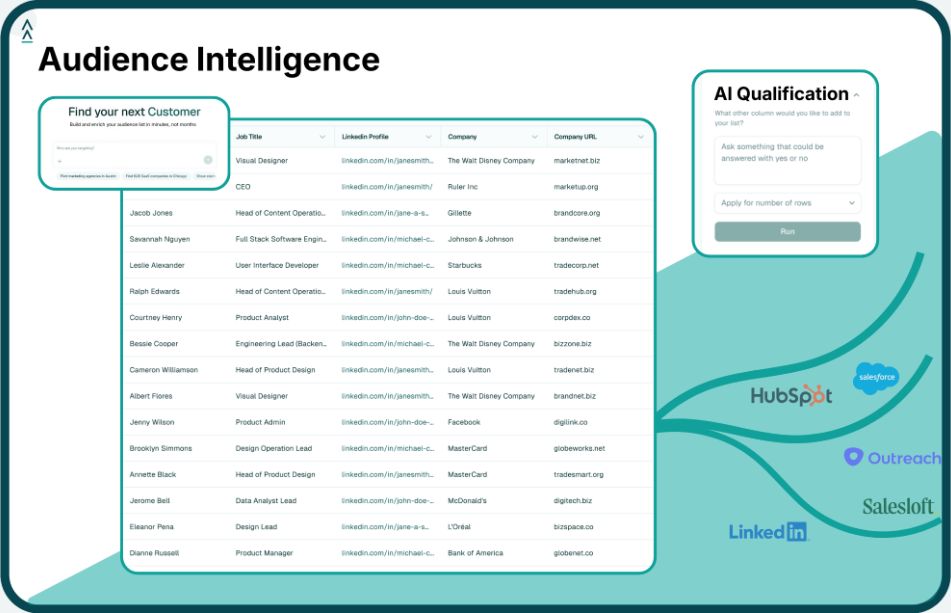
If you are exploring AI-native platforms that combine audience intelligence, signal-qualified leads, and end-to-end go-to-market automation in a single system, Landbase was built for exactly this approach.
Demandbase does not publish standard list prices. Every contract is custom-quoted based on a platform fee plus a flat per-user fee. Third-party estimates vary widely depending on modules, team size, and configuration. One public reference point is an AWS Marketplace listing showing a 12-month Demandbase One contract at $215,000. Vendr publishes anonymized contract data that can help you benchmark, but exact costs depend on your specific configuration.
Demandbase One is sales-assisted and custom-quoted, but Demandbase does offer free tools including a free website traffic tracking tool, a free Account ID edition, and an intent-data test drive. The full Demandbase One platform requires a commercial contract with annual or multi-year terms, and you must go through a sales process to receive a custom quote.
Demandbase One is the company's unified ABM platform that combines account identification, intent data, advertising, personalization, and sales intelligence. Core modules include Account Intelligence, Journey Stages, Dynamic Audiences, Sales Intelligence, Buying Groups, the Advertising DSP, Site Customization, and Agentbase AI agents (launched March 2025). The specific features available to you depend on your contract configuration.
Demandbase does not publicly list onboarding fees. Third-party sources have cited various onboarding costs, but these are unverified estimates. Onboarding typically covers data connections, CRM integration, initial campaign setup, and training. Some enterprise contracts bundle onboarding into the platform fee. Request an itemized onboarding quote during your sales process.
Both Demandbase and 6sense use custom-quoted pricing models, making direct comparison difficult without current contract data from each vendor. Third-party benchmarking sources like Vendr publish anonymized contract insights for both platforms, but exact averages should be verified directly from their current marketplace pages. Full-stack enterprise deployments on either platform can reach significant annual investments.
Yes. Demandbase contracts are negotiable. Vendr confirms that bundling, multi-year terms, and competitive pressure can affect Demandbase pricing. Common negotiation levers include multi-year commitments, competitive alternatives, end-of-quarter timing, unbundled line-item negotiation, prepayment discounts, and renewal caps. Check Vendr's current marketplace page for the latest data on buyer savings.
Additional costs can include onboarding, per-user fees (above any base seat allotment), professional services, annual price adjustments (per the Master Subscription Agreement, renewal fees are at then-current rates unless specified otherwise), advertising media spend, and potential data overage fees. These additional costs can meaningfully increase your first-year total investment beyond the platform fee. Request a full cost breakdown from Demandbase during your sales process.
For small businesses with limited ABM budgets, Demandbase's value depends on deal size and sales cycle. Demandbase also offers free tools and a free Account ID edition for teams not ready to commit to a full platform contract. Companies with smaller average deal sizes or short sales cycles may find it difficult to justify the investment in a full Demandbase One deployment.
The Demandbase advertising module (B2B DSP) pricing is not publicly listed by Demandbase. The module has its own platform fee, and media spend is billed separately. Minimum spend commitments vary by contract. Request advertising-specific pricing during your sales conversation to understand the total advertising investment, including both platform fee and media spend.
Implementation timing varies depending on the product mix, integrations, and customer readiness. Demandbase's implementation blog describes a structured onboarding process, but does not publish a universal timeline. Enterprise deployments with custom integrations may take longer than simpler configurations.
Tool and strategies modern teams need to help their companies grow.