.png)
.png)
.png)

Daniel Saks
Chief Executive Officer


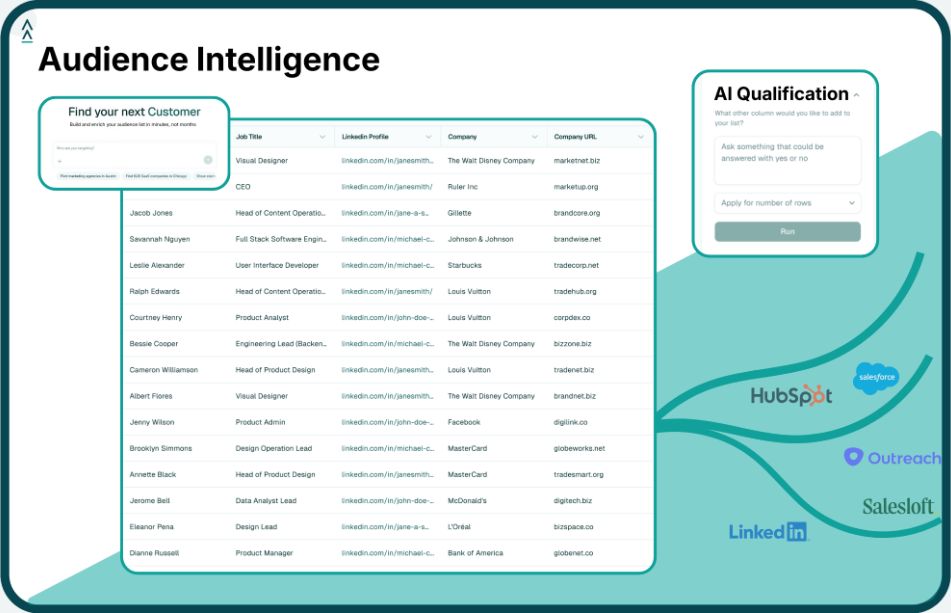
Most folks in the Go-to-Market space have heard whispers that the Salesforce Admin role might be on borrowed time, but honestly, the data tells a more nuanced story. While the classic "configuration-only" admin position is shrinking, the strategic value of Salesforce expertise is actually growing—but only for those who adapt. The role isn't dying; it's bifurcating into two distinct paths: strategic generalists who act as platform product managers, and technical specialists who dive deep into high-value clouds like Revenue Cloud or Agentforce. For admins looking to stay relevant, tools like Landbase's AI-qualified audience platform can bridge the gap between tactical maintenance and revenue-driving strategy by automating audience discovery and qualification.
The market reality is stark: 330% saturation means 3.4 qualified candidates compete for every open admin position, with admin talent supply growing 47% year-over-year while demand increased just 14%. This creates unprecedented competition for entry-level roles while simultaneously increasing demand for senior professionals who combine platform expertise with business acumen. The "learn an admin cert and coast" playbook no longer works—today's successful admins must demonstrate quantifiable business impact.
The Salesforce Admin job market has undergone a dramatic transformation in 2024-2025. While overall Salesforce ecosystem jobs grew 8% globally in 2025 (recovering from -37% in 2024 and -46% in 2023), admin-specific roles tell a different story. Admin supply grew 47% year-over-year while demand increased only 14%, creating the worst supply-demand ratio of any Salesforce role.
Market saturation reality:
This creates a painful "missing middle" problem: abundant junior talent with basic certifications cannot access entry-level roles (which have shrunk to 9% of listings), while employers struggle to find senior admins who combine platform expertise with business analysis, AI governance, or development capabilities.
The role itself has fundamentally evolved. Salesforce officially recognizes 5 core admin responsibilities in 2024, up from 4 previously, with the newly critical "Product Management" function. Modern admins act as platform strategists who implement seasonal releases, evaluate new features like Agentforce, drive adoption, and architect multi-cloud solutions—far beyond the historical "user management and field creation" scope.
The successful Salesforce Admin of 2025 operates as a platform product manager rather than a technical configurator. This shift means:
As Rebecca Saar, Sr. Director Admin Marketing at Salesforce, puts it: "Today, admins are the essential link between technology and business strategy." This strategic elevation is intentional—not a reaction to AI threats, but a natural evolution of the role's importance.
The market increasingly rewards specialization over generalization. Technical Architects saw 27% demand growth with only 4% supply growth in 2024-2025, creating the strongest job market of any Salesforce role. Meanwhile, "admin-adjacent" roles command significant premiums:
This specialization imperative means admins must choose their path carefully: either go strategic (moving laterally to Business Analyst, Product Owner, or Revenue Operations roles) or go deep (becoming experts in Revenue Cloud, Data Cloud, Agentforce, or vertical industries like financial services or healthcare).
A Salesforce Admin is the steward of an organization's most critical revenue technology platform. They ensure the CRM system aligns with business processes, maintains data integrity, and delivers measurable business outcomes. The role has evolved from simple user management to comprehensive platform governance.
Core responsibilities include:
The admin's strategic importance stems from their unique position bridging business needs with platform capabilities. They translate executive vision into technical reality while ensuring the platform remains secure, compliant, and performant.
Successful admins speak both "business" and "tech" languages. They understand revenue operations, customer journey mapping, and business metrics while also mastering Salesforce's technical capabilities. This dual fluency enables them to:
For admins looking to demonstrate this strategic value, tools like Landbase's agentic search can help by automatically surfacing high-intent prospects and qualified audiences that can be activated directly within Salesforce, turning the CRM from a data repository into a revenue acceleration engine.
Salesforce offers 48+ certifications in 2025, with the Platform Administrator exam recently updated to include Agentforce competencies. However, certification strategy has become more nuanced as the market matures.
Certification reality check:
The key insight is that certifications alone won't secure career advancement. Employers increasingly value demonstrated business impact over credential collection. As Jason Atwood, CEO of Arkus, advises: "Don't fluff up your resume; don't put clouds you haven't used. Just because you took a Trailhead on something doesn't mean you know that platform or cloud."
Strategic certification planning involves focusing on high-value areas rather than collecting badges:
The Salesforce AI Associate certification (available free until December 31, 2025) provides foundational knowledge for admins navigating the AI era, covering prompt engineering, AI governance, and ethical considerations.
The ROI of certifications depends heavily on specialization focus:
The most valuable certifications are those that align with market demand and organizational needs. For instance, Revenue Cloud expertise is particularly valuable given the complexity of modern subscription businesses and the critical role of accurate revenue recognition.
U.S. Salesforce Admin salaries show dramatic bifurcation based on skill specialization and strategic impact:
Salary ranges by role:
The 50%+ salary gap between "can configure" and "can strategize" reflects the market's clear preference for admins who demonstrate business impact rather than just technical competence.
Several key factors determine admin salary potential:
Notably, 33.9% of admins experienced salary declines in 2024-2025 despite the role's strategic importance, highlighting that simply holding an admin position doesn't guarantee compensation growth. Career advancement requires deliberate skill development and impact demonstration.
Salary potential varies significantly by location and industry:
For admins in saturated local markets, remote work opportunities can provide access to higher-paying roles in different geographic regions or industries.
The most successful Salesforce Admins in 2025 follow one of two clear career pathways:
Pathway 1: Strategic Generalist
Pathway 2: Technical Specialist
The admin-to-architect pathway remains viable but requires deliberate skill development:
This pathway requires strong technical aptitude and comfort with complex system design, but offers the highest compensation potential in the Salesforce ecosystem.
The Salesforce ecosystem provides multiple avenues for career advancement:
For admins facing resource constraints (58.7% work alone or in 2-4 person teams), the ecosystem provides critical support through peer knowledge sharing, best practice adoption, and external partnership opportunities.
AI is fundamentally reshaping the Salesforce Admin role, but not in the way many fear. Rather than replacing admins, AI is automating routine tasks while creating new governance responsibilities.
AI impact on admin work:
Successful admins are becoming AI orchestrators rather than just platform managers:
This evolution requires new skills in prompt engineering, data quality management, and AI governance—but these skills are highly valued and command significant salary premiums.
AI automation enables admins to shift from reactive "firefighting" to proactive strategic work:
This automation shift is critical for the 58.7% of admins who work alone or in small teams—it's the only way to manage expanding responsibilities across security, data management, AI deployment, and multi-cloud administration without burning out.
For admins looking to demonstrate strategic impact, Landbase's signals platform can help by automatically identifying high-intent prospects based on real-time buying signals, enabling admins to showcase measurable pipeline acceleration and revenue impact.
For Salesforce Admins navigating the complex landscape of 2025, Landbase offers a powerful solution to bridge the gap between tactical maintenance and strategic revenue impact. While Salesforce provides the platform infrastructure, Landbase delivers the intelligence layer that transforms CRM data into actionable revenue opportunities.
How Landbase empowers Salesforce Admins:
For the 58.7% of admins working alone or in small teams, Landbase acts as a force multiplier—automating the insight generation that would otherwise require dedicated data analysts or expensive third-party tools. Rather than drowning in reactive tickets, admins can use Landbase to identify strategic opportunities for revenue-driving Salesforce optimizations.
Most importantly, Landbase helps admins transition from "cost center" to "revenue driver" by providing the data-driven proof of value that justifies budget requests, headcount expansion, and career advancement. In a market where strategic impact matters more than technical configuration, Landbase provides the intelligence layer that makes admins indispensable.
The most in-demand skills combine traditional admin expertise with strategic capabilities: multi-cloud environment management (3-4 clouds average), AI governance and prompt engineering for Agentforce and Einstein Copilot, Revenue Cloud or Data Cloud specialization, business outcome articulation, and quantifiable ROI demonstration. Technical skills remain important, but the ability to translate platform capabilities into business value is what separates junior from senior admins in today's market.
While the Platform Administrator certification remains a baseline requirement (85%+ of job listings require it), certifications alone are insufficient for career advancement in 2025. Hands-on experience with specific clouds (Revenue, Data, CPQ) and demonstrated business impact now outweigh raw certification counts for landing roles and commanding premium salaries. The most valuable approach is strategic certification focused on high-demand specializations rather than collecting general badges.
Experienced admins typically follow one of two paths: strategic generalist (moving laterally to Business Analyst, Product Owner, or Revenue Operations roles with 25-50% salary increases) or technical specialist (deep-diving into Revenue Cloud, Data Cloud, Agentforce, or vertical industries with 15-25% salary premiums). The "pure admin" career path is declining, with only 9% of job listings representing generic admin roles despite 47% of the talent pool being admins.
Yes, Salesforce Admins can work remotely effectively, and this represents a significant opportunity given geographic salary variations (U.S. salaries are 5-10X higher than India equivalents). However, remote work requires strong communication skills to bridge the "business-tech" gap virtually, disciplined documentation practices, and proactive stakeholder management. The main challenge is demonstrating strategic impact remotely, which requires robust metrics and regular business outcome reporting.
Modern Salesforce Admins contribute to GTM strategy by acting as platform product managers who ensure the CRM aligns with revenue operations, governing AI agents that deliver personalized customer experiences, optimizing data models that support advanced analytics and forecasting, implementing automation that accelerates pipeline velocity, and demonstrating quantifiable ROI through measurable business impact. The most successful admins speak both "business" and "tech" languages, translating executive vision into technical reality while ensuring platform performance and security.
Tool and strategies modern teams need to help their companies grow.