.png)
.png)
.png)

Daniel Saks
Chief Executive Officer


Most folks think of customer experience as just a support function, but honestly, the science shows it's the operational backbone of revenue growth. CX Operations (Customer Experience Operations) is the system of people, processes, and technology that translates strategic customer experience vision into measurable daily execution across all touchpoints. For go-to-market teams, this means connecting AI-driven insights from platforms like Landbase's agentic AI directly to revenue outcomes through customer journey orchestration, predictive engagement, and automated personalization.
Now, implementing CX operations isn't just about deploying more technology. Its cross-functional nature requires alignment between IT, sales, marketing, and customer support teams to ensure systems are scalable and customer feedback translates into actionable improvements. Still, research shows a strong correlation between mature CX operations and financial performance. A 16-year study by Watermark Consulting found that CX leaders generated a total cumulative return 5.4 times greater than laggards. Furthermore, a recent Salesforce report found that 80% of customers believe the experience a company provides is as important as its products or services.
The business case for CX operations is clear, but the implementation can be tricky. If you're thinking about building or improving your CX operations, it's worth understanding the key components, measurement frameworks, and how modern AI platforms can accelerate your success—plus, you want to avoid the common pitfalls that sink most CX initiatives.
CX Operations encompasses the processes, systems, and teams that implement and sustain customer experience strategies across an organization. It's the operational engine that ensures your customer experience vision doesn't just live in PowerPoint decks but actually shows up in every customer interaction.
Unlike traditional customer service, which focuses on resolving individual issues, CX Operations takes a holistic view of the entire customer lifecycle. It coordinates initiatives across departments—marketing, IT, sales, and service—to ensure consistent, seamless experiences regardless of how customers interact with your brand.
Core components of CX Operations include:
The role is inherently cross-functional, requiring collaboration between traditionally siloed departments. This is why 78% of customers expect consistent experiences across departments, yet companies often struggle to deliver unified experiences.
CX Operations places customer journeys at the heart of business strategy. Rather than optimizing individual touchpoints in isolation, it designs and manages unified customer journeys across multiple channels and departments. This approach uses tools like Customer Data Platforms (CDPs) and Customer Journey Analytics (CJAs) to bridge gaps between marketing and customer care.
For B2B organizations, this means ensuring that prospects who engage with marketing content receive consistent messaging when they interact with sales teams, and that customer success teams have full context when onboarding new clients. The goal is to eliminate the friction that occurs when customers have to repeat information or experience inconsistent messaging across departments.
Well-executed CX operations deliver multiple quantifiable benefits that directly impact the bottom line. It's not just about making customers happy—it's about driving measurable business outcomes through operational excellence.
Organizations with mature CX operations can improve loyalty and satisfaction, leading directly to revenue growth. The numbers are compelling: a 16-year study found that CX leaders generated a total cumulative return 5.4 times greater than laggards. This performance gap exists because superior CX operations create a virtuous cycle of customer retention, referrals, and expansion revenue.
Business impact of mature CX operations:
These statistics demonstrate that CX operations has evolved from a cost center to a strategic revenue driver. Companies that invest in mature CX operations aren't just improving customer satisfaction—they're building competitive moats that are difficult for competitors to replicate.
CX operations also delivers operational cost savings by eliminating redundancies and streamlining service delivery. When customer journeys are well-designed and supported by integrated systems, companies can resolve issues faster, reduce repeat contacts, and improve agent efficiency.
The cost of poor CX execution is equally significant. According to Forrester's 2025 Customer Experience Index, 25% of U.S. brands saw a statistically significant decline in their CX scores, highlighting the difficulty in maintaining a high-quality customer experience. This creates a clear business case for investing in CX operations infrastructure.
Successful CX operations requires a structured approach that balances people, processes, and technology. It's not enough to deploy the latest tools—you need the right framework to ensure they deliver value.
The foundation of effective CX operations rests on three interconnected pillars:
Process Optimization:
People and Organization:
Technology Implementation:
For GTM platforms specifically, Landbase's AI qualification can inform CX operations by providing precise audience data for personalized customer interactions, enhancing operational efficiency in service outreach.
A CX-driven operating model requires alignment of three critical elements: the "three voices" that form the voice of the business. This model translates CX strategy into business value through backstage activities below the customer visibility line.
Most organizations struggle with operationalizing CX initiatives due to fragmented data, siloed departments, and outdated technology. Success requires treating CX as a strategic methodology for continuous business transformation rather than isolated projects.
The key is to start with data unification and cross-functional alignment before adding advanced automation. Technology alone fails without organizational readiness, which is why building organizational alignment is critical to CX success.
Modern CX operations increasingly relies on sophisticated technology stacks to deliver personalized, efficient experiences at scale. The right tools can amplify human capabilities and provide insights that drive continuous improvement.
Essential CX operations tools include:
For GTM platforms, Landbase Intelligence provides growth signals and insights that can be leveraged by CX operations to understand customer needs and market trends proactively. This enables teams to anticipate customer needs and adjust strategies before issues arise.
AI is transforming CX operations from reactive to proactive. By 2025, 90% of customer service organizations plan to use generative AI, with AI copilots augmenting rather than replacing human agents.
The goal is to take all customer context and run it through AI to summarize high-dimensionality information and suggest what's relevant to agents or make suggestions for customer communications. This approach can increase agent productivity by an average of 14%, and up to 34% for less experienced agents, while maintaining the human touch that customers value.
GTM-2 Omni's agentic AI can help manage and automate aspects of customer interaction strategy by identifying ideal customer profiles and market timing, enabling teams to engage prospects at the optimal moment with the right message.
Measuring and proving ROI of CX operations remains challenging, but the right metrics can demonstrate clear business impact. Traditional metrics like NPS and CSAT provide incomplete pictures without connecting to actual business outcomes.
While traditional metrics still have value, the future of CX measurement is moving toward more comprehensive approaches:
Traditional Metrics:
Business Impact Metrics:
According to Gartner predictions, over 75% of organizations are expected to stop using NPS alone as a success measure by 2025, requiring more comprehensive measurement approaches that connect CX scores directly to revenue impact.
Landbase provides detailed performance metrics to monitor list quality and signal accuracy, which can indirectly inform CX ops by optimizing who is being targeted for outreach and engagement. This ensures that CX efforts are focused on the highest-value prospects and customers.
The most effective CX operations use real-time analytics dashboards that link CX metrics to operational and financial performance. This enables teams to quickly identify problem areas, adjust strategies, and measure the impact of improvements.
Companies that close the feedback loop within 48 hours see the highest impact on customer retention, with those setting NPS growth targets growing 2x faster than those without targets. This demonstrates the importance of not just collecting feedback but acting on it quickly and systematically.
CX Operations has emerged as a critical career path for professionals who can bridge the gap between customer strategy and operational execution. The field requires a unique blend of analytical, technical, and interpersonal skills.
CX Operations professionals need expertise across multiple domains:
Technical Skills:
Analytical Skills:
Interpersonal Skills:
The CX Operations field is growing rapidly as organizations recognize its strategic importance. Common roles include CX Specialist, CX Manager, Operations Analyst, and Customer Journey Architect.
Professionals in this field often come from backgrounds in operations management, customer service, marketing, or data analytics. The key differentiator is the ability to think systematically about customer experiences while understanding the operational realities of implementation.
CX Operations must be integrated into the broader business strategy to be truly effective. This requires executive buy-in, cross-functional collaboration, and alignment with organizational goals.
The most successful CX operations are those that are treated as strategic imperatives rather than tactical initiatives. This means:
Building organizational alignment and breaking down silos remains one of the biggest challenges in CX operations execution.
The biggest barrier to effective CX operations is organizational silos. More than half of customers (55%) say it feels like they're dealing with separate departments rather than one unified company, highlighting the impact of departmental silos on the customer experience.
Breaking down these silos requires:
The future of CX operations is being shaped by emerging technologies and evolving customer expectations. Organizations that stay ahead of these trends will build significant competitive advantages.
Customer expectations continue to rise, with 80% of organizations expecting to compete primarily on CX. This creates pressure to deliver increasingly personalized, seamless experiences across all touchpoints.
Key trends shaping customer expectations include:
AI is the biggest driver of change in CX operations, with 90% of customer service organizations expected to use generative AI by 2025. The shift from reactive to proactive CX operations could fundamentally change the economics of customer service, reducing support costs by 30-50% while improving satisfaction.
Landbase's GTM-2 Omni, as an agentic AI model for GTM automation, directly aligns with future trends in leveraging advanced AI for understanding GTM data and customer intent, which can be extended to future CX operations. This enables organizations to anticipate customer needs and engage at the optimal moment with personalized messaging.
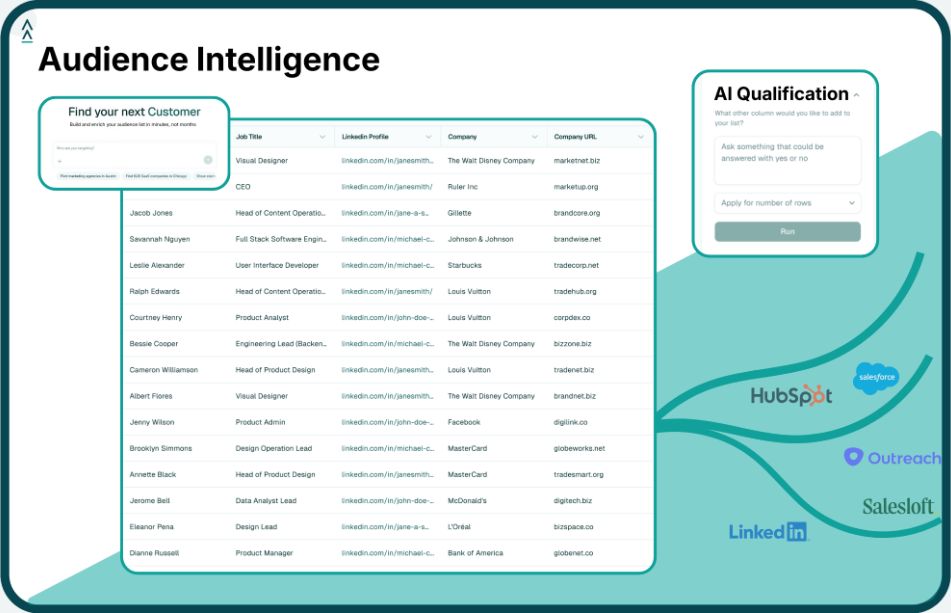
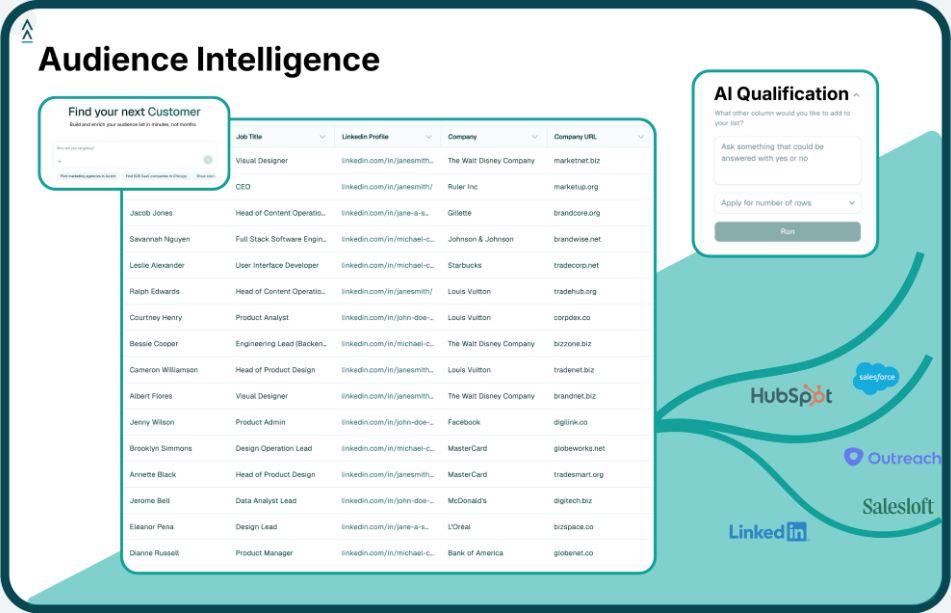
For organizations looking to build or improve their CX operations, Landbase offers a unique advantage through its agentic AI platform. Unlike traditional data providers that require complex workflows and technical expertise, Landbase's natural-language interface makes it easy to build AI-qualified audience lists in seconds.
The platform's GTM-2 Omni model, trained on billions of data points from 50M+ B2B campaigns, can identify ideal customer profiles and market timing signals that inform CX operations strategy. This enables teams to focus their efforts on the highest-value prospects and customers, ensuring that CX resources are allocated efficiently.
Landbase's free audience builder allows teams to test different targeting approaches quickly and iterate based on results. With the ability to export up to 10,000 contacts instantly, organizations can scale their CX operations without significant upfront investment or complex integrations.
For GTM teams specifically, Landbase bridges the gap between AI-generated insights and actual customer value delivery. By providing precise audience data and market timing signals, it enables teams to operationalize CX strategies that drive measurable business outcomes—exactly what modern CX operations requires.
Customer service focuses on resolving individual customer issues and inquiries, while CX Operations encompasses the entire system of people, processes, and technology that delivers consistent customer experiences across all touchpoints and departments. CX Operations is strategic and proactive, coordinating initiatives across marketing, IT, sales, and service to ensure seamless experiences. Customer service is typically reactive and tactical, addressing specific problems as they arise. The key distinction is that CX Operations takes a holistic, lifecycle view rather than focusing on isolated interactions.
AI transforms CX from reactive to proactive by enabling predictive analytics, hyper-personalization, and automated workflows. Organizations using AI in CX operations can see productivity increases of 14-34%, with 90% of customer service organizations planning to use generative AI by 2025. AI copilots augment human agents by providing context and suggestions, making teams more effective without replacing human judgment. The technology enables teams to anticipate customer needs and engage at the optimal moment with personalized messaging.
While traditional metrics like NPS and CSAT still have value, the most important CX Operations metrics connect directly to business outcomes: customer lifetime value, churn rate, expansion revenue, and cost to serve. According to Gartner, over 75% of organizations are predicted to stop using NPS alone as a success measure by 2025. More comprehensive approaches that demonstrate clear ROI are becoming essential. The key is linking CX scores to actual revenue impact and business performance.
Yes, small businesses can implement effective CX Operations by starting with the basics: unified customer data, clear processes, and cross-functional alignment. Technology like Landbase's free audience builder can help small teams access sophisticated targeting capabilities without significant investment. The key is to focus on consistency and quality rather than complexity. Small businesses can often move faster than larger organizations because they have fewer silos to break down and simpler organizational structures to align.
Tool and strategies modern teams need to help their companies grow.