.png)
.png)
.png)

Daniel Saks
Chief Executive Officer


Most folks think of Clay as just another data enrichment tool, but honestly, the platform has evolved into something much more complex—a GTM orchestration infrastructure that aggregates 150+ data providers into a single workflow engine. More and more teams are questioning whether Clay's complexity is still worth it in 2026, especially as new agentic AI platforms emerge that can build and qualify audiences using natural language without requiring GTM engineering expertise. The go-to-market landscape has shifted dramatically, with buyers demanding real-time intent signals and AI-driven qualification rather than static database access.
Now, Clay's approach of "waterfall enrichment"—sequentially querying multiple providers until finding the required data—does solve real coverage gaps. Independent testing showed this method improved email find rates from 40% to 78%, nearly doubling what single-source providers can deliver. But this comes with operational complexity: managing multiple API subscriptions, unpredictable credit consumption, and a steep learning curve that leaves many teams hiring consultants just to get started.
The science behind audience intelligence is moving beyond data aggregation toward autonomous qualification. If you're evaluating Clay for your 2026 GTM stack, it's worth understanding the trade-offs between orchestration complexity and AI-native simplicity—plus, you want to ensure you're not overpaying for infrastructure when purpose-built solutions might deliver better outcomes with less operational burden.
Clay functions as a workflow orchestration engine rather than a traditional data provider. Unlike ZoomInfo or Apollo that maintain proprietary databases, Clay pulls real-time data from external sources like Apollo, Clearbit, People Data Labs, and LinkedIn Sales Navigator. This creates coverage breadth impossible with single-source tools but introduces significant operational complexity.
Clay's core innovation is "waterfall enrichment"—sequentially querying multiple data providers until finding the required information. This approach directly addresses B2B data's 22.5% annual decay rate by aggregating multiple sources rather than relying on any single database.
How waterfall enrichment works:
The trade-off is clear: better coverage comes with higher operational complexity. Teams must understand credit consumption across providers and manage multiple API subscriptions. Independent testing confirmed that waterfall enrichment significantly improves email find rates, but this power requires expertise to wield effectively.
Clay introduced its biggest pricing change in company history, splitting credits into "Data Credits" (for enrichment) and "Actions" (for platform usage). This fundamentally changed the economic model for users.
Key pricing changes:
The real cost of ownership is more complex than advertised pricing suggests. Teams report spending $4,200-$9,600 annually when factoring in credit top-ups and required tool dependencies like Sales Navigator ($100/month) and email platforms.
The market has shifted from static database access to dynamic signal activation. Clay's introduction of "Web Intent" functionality in 2025-2026 demonstrates this trend, identifying companies visiting your website in real-time and triggering immediate sales alerts when high-fit accounts view pricing pages.
Traditional prospecting relied on firmographic lists that didn't reflect buying intent, leading to cold outreach at wrong timing. The emergence of real-time behavioral signals transforms this approach.
Signal evolution timeline:
Companies like ElevenLabs are using Web Intent to track when target accounts visit pricing/enterprise pages, triggering immediate sales alerts. This shift from "cold lists" to "warm signals" represents a fundamental change in how GTM teams operate.
Clay's Claygent AI agent has surpassed 1 billion runs in 2025, indicating massive adoption of AI-powered research automation. This addresses the "manual research bottleneck" that consumes 40+ hours weekly for SDR teams building contextualized lead lists.
AI research capabilities:
However, AI research agents can generate "hallucinated" insights if not properly validated. Teams must implement human review processes to ensure accuracy, adding another layer of operational complexity to the workflow.
The fundamental difference lies in architecture: Clay orchestrates external tools while agentic AI platforms integrate intelligence natively. This creates different trade-offs in terms of flexibility versus simplicity.
Clay's multi-source approach solves real coverage gaps but introduces cost unpredictability. Single-source data accuracy typically plateaus around 80-85% across major providers, making multi-source orchestration mathematically necessary for comprehensive coverage.
Enrichment comparison:
The key insight is that single-source providers have inherent coverage limitations, validating the need for multi-source approaches. However, the question becomes whether orchestration complexity is the best solution or if integrated architectures might deliver similar outcomes with less operational burden.
Clay requires teams to build workflows rather than toggle features. This creates a steep learning curve but massive payoff for those who master it. Teams running multi-channel Clay outbound see significantly improved engagement compared to typical cold outreach.
Complexity factors:
This infrastructure positioning validates market demand for GTM automation but creates opportunity for simpler alternatives that deliver comparable outcomes without requiring GTM engineering expertise.
The critical shift in 2026 is toward timing-based qualification. Static lists are no longer sufficient—teams need to reach prospects when they're actively showing buying intent through behavioral signals like website visits, funding events, and hiring surges.
Clay's Web Intent feature waterfalls across 7 providers (Snitcher, Demandbase, Dealfront, Warmly, Clearbit, People Data Labs, Versium) to maximize visitor identification. This transforms prospecting from cold outreach to warm signal activation.
Web Intent benefits:
However, Web Intent requires website traffic volume to be valuable—not suitable for pre-launch or low-traffic businesses. The feature also represents just one piece of a larger signal ecosystem that modern GTM teams need to manage effectively.
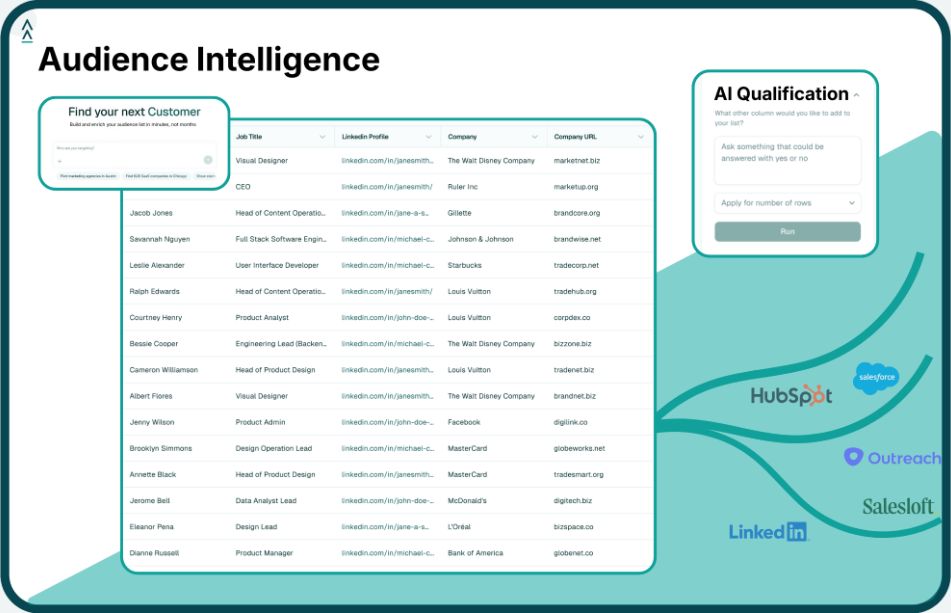
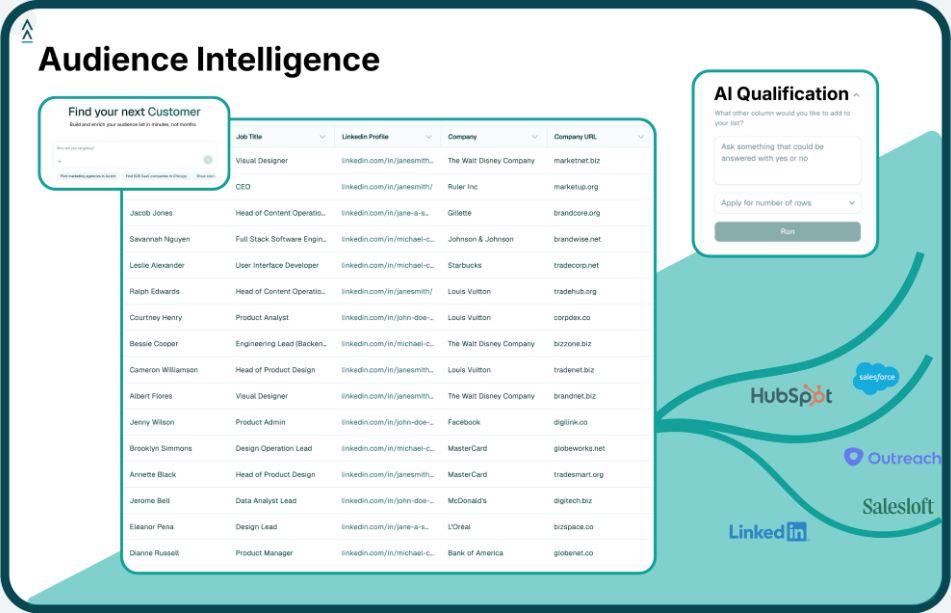
Modern agentic AI platforms go beyond data enrichment to provide AI-driven qualification. This means evaluating audience fit and timing using 1,500+ signals rather than just delivering contact information.
AI qualification capabilities:
The difference is fundamental: traditional tools deliver data while AI platforms deliver qualified audiences ready for immediate activation.
Clay's March 2026 pricing overhaul reflects a broader market shift toward monetizing workflow complexity over raw data access. This creates new challenges for accurate ROI calculation.
The advertised pricing tells only part of the story. Real-world costs include multiple components that teams often overlook during initial evaluation.
Typical annual Clay spend breakdown:
This totals $4,200-$9,600 annually, significantly higher than the advertised $1,800-$9,600 subscription pricing.
The question isn't just about cost—it's about value delivery and operational efficiency. Teams must evaluate whether Clay's flexibility justifies the complexity and hidden costs.
Value considerations:
For mid-market teams without dedicated RevOps resources, the operational burden of managing Clay's complexity may outweigh the benefits of its flexibility.
For teams evaluating Clay in 2026, Landbase offers a compelling alternative that addresses the core challenges of orchestration complexity while delivering comparable outcomes. Instead of requiring teams to manage 150+ provider integrations, Landbase provides an integrated platform that combines audience intelligence, real-time signals, and AI-driven qualification in a single system.
Landbase advantages over traditional orchestration:
Landbase's approach validates the market shift toward purpose-built platforms that deliver Clay-level outcomes without the operational complexity of managing multiple provider integrations. The platform's agentic AI model, trained on 50M+ B2B campaigns, interprets natural-language queries and delivers qualified audiences ready for immediate activation.
For mid-market teams without dedicated RevOps resources, Landbase represents a more accessible path to modern audience intelligence. The free tier allows teams to test the approach without financial commitment, while the integrated architecture eliminates the hidden costs and operational burden associated with orchestration platforms like Clay.
The 2026 GTM landscape is moving toward autonomous systems that handle repetitive work while empowering human relationships. This represents a fundamental shift from tool-centric approaches to outcome-focused platforms.
When machines handle the mundane tasks of data enrichment, list building, and initial qualification, humans can focus on what they do best—building relationships and closing deals. This aligns with the core insight that relationships and trust still matter in sales.
Autonomous GTM benefits:
The goal isn't to replace humans with AI—it's to enhance the human element by eliminating repetitive work that doesn't require human judgment.
Modern AI platforms serve as force multipliers for GTM teams, providing intelligence and automation that amplifies human capabilities rather than replacing them. This creates a virtuous cycle where better intelligence leads to better relationships, which leads to better outcomes.
AI empowerment cycle:
This cycle represents the future of GTM: autonomous systems that drive real revenue impact while keeping relationships and trust at the center of the sales process.
Agentic AI platforms go beyond static data delivery to provide autonomous qualification and audience building. They interpret natural-language queries, evaluate audience fit using 1,500+ signals, and deliver AI-qualified exports ready for immediate activation—eliminating the need for complex workflow building. Traditional data providers simply give you contact information, while agentic AI platforms deliver qualified, timing-optimized audiences.
Natural-language targeting eliminates the technical complexity of traditional audience building. Instead of building workflows across multiple tools, teams can type plain-English prompts like "CFOs at enterprise SaaS companies that raised funding in the last 30 days" and receive qualified audiences instantly. This dramatically reduces the time and expertise required while improving targeting precision.
Modern AI platforms are designed to integrate with existing GTM stacks. While CRM integrations are still emerging for many platforms, the focus is on delivering export-ready audiences that can be activated in existing tools like Gmail, Outlook, and LinkedIn without complex setup. This allows teams to adopt new intelligence capabilities without replacing their entire technology stack.
A free-tier platform allows teams to test modern AI capabilities without financial commitment. Unlimited prompt searches with up to 10,000 AI-qualified exports per session provide significant value while eliminating the risk of upfront investment in unproven technology. Teams can validate the approach with real use cases before deciding on paid tiers for higher volumes.
AI Qualification is critical for 2026 GTM success. Static lists are no longer sufficient—teams need qualified audiences that consider timing, intent, and fit simultaneously. AI-driven qualification ensures precision by evaluating audience fit using comprehensive signal analysis rather than just delivering contact information. This shift from data delivery to qualified audience delivery represents the fundamental evolution in go-to-market technology.
Tool and strategies modern teams need to help their companies grow.