.png)
.png)

Daniel Saks
Chief Executive Officer


Most folks think of go-to-market operations as just one big function, but honestly, the modern landscape has evolved into three distinct but interconnected roles: Sales Operations, Marketing Operations, and Revenue Operations. Each plays a critical part in driving business growth, but they focus on different aspects of the customer journey and organizational efficiency. With the right tools and strategies, these operations functions can work together seamlessly to create a frictionless path from prospect to customer.
The key to success in today's competitive B2B environment is understanding how these roles complement each other while maintaining their unique responsibilities. SalesOps focuses on optimizing the sales team's efficiency and effectiveness, MarketingOps ensures marketing campaigns deliver maximum ROI, and RevOps takes a holistic view across the entire revenue lifecycle. When these functions are aligned and empowered with the right technology, companies see dramatically improved pipeline velocity, higher conversion rates, and more predictable revenue growth.
If you're building or scaling your go-to-market team, it's essential to understand the distinctions between these roles, when to implement each, and how to leverage technology like Landbase to maximize their impact. Let's break down what each role entails and how they work together to drive business success.
Sales Operations (SalesOps) is the backbone of your sales organization, focused on enabling sales teams to sell more efficiently and effectively. SalesOps professionals handle the systems, processes, and data that keep your sales engine running smoothly.
SalesOps teams are responsible for a wide range of activities that directly impact sales performance:
The primary goal of SalesOps is to remove friction from the sales process, allowing Account Executives and SDRs to focus on what they do best—building relationships and closing deals.
A Sales Operations Manager typically reports to the VP of Sales or Chief Revenue Officer and serves as the strategic partner to the sales leadership team. They're responsible for:
The best SalesOps managers combine analytical thinking with business acumen, understanding both the technical systems and the human behaviors that drive sales success.
Effective SalesOps can dramatically improve sales team performance. Companies with mature SalesOps functions typically see:
SalesOps teams can use Landbase to build precise, AI-qualified prospect lists for their sales teams, improving efficiency and targeting without manual list building. This allows SalesOps to focus on strategic initiatives rather than spending time on tedious data gathering and list creation.
Marketing Operations (MarketingOps) is the strategic and technical engine that powers your marketing organization. MarketingOps professionals ensure that marketing campaigns are executed efficiently, measured accurately, and optimized for maximum ROI.
MarketingOps teams handle the critical infrastructure that enables marketing success:
MarketingOps bridges the gap between marketing strategy and execution, ensuring that campaigns run smoothly and deliver measurable results.
The modern marketing technology stack can include dozens of tools, from email marketing platforms to social media management systems to analytics dashboards. MarketingOps professionals are responsible for:
A well-optimized marketing tech stack can significantly reduce manual work and improve campaign execution speed.
Revenue Operations (RevOps) represents the evolution of go-to-market operations, taking a holistic view across the entire customer lifecycle. RevOps emerged as companies recognized the need for better alignment between sales, marketing, and customer success functions.
RevOps addresses the fundamental challenge that many companies face: siloed go-to-market functions that don't work together effectively. By creating a unified revenue operations function, companies can:
Companies with mature RevOps functions typically see around 19% higher revenue growth and significant reductions in customer churn.
The core responsibility of RevOps is to ensure that all customer-facing functions work together seamlessly. This includes:
RevOps leaders act as the connective tissue between departments, ensuring that everyone is working toward the same goals with consistent processes and data.
RevOps provides strategic value by:
RevOps leaders can utilize Landbase for overarching GTM strategy, ensuring consistent, high-quality audience discovery and qualification across all revenue-generating functions. This provides a foundation for unified targeting and messaging across the entire customer journey.
While these three functions work together, they have distinct scopes, responsibilities, and strategic focuses.
The reporting structure often reflects the scope and strategic importance of each function:
In companies with mature RevOps functions, SalesOps and MarketingOps may report into the RevOps organization, creating a unified operations structure.
There are areas where these functions naturally overlap:
The key is to establish clear roles and responsibilities while maintaining open communication and collaboration between functions.
The go-to-market operations landscape has evolved significantly over the past decade, moving from siloed functions to integrated, customer-centric approaches.
Historically, sales and marketing operated in separate silos with different goals, processes, and metrics. This led to:
The emergence of RevOps represents a recognition that revenue generation is a unified process that requires integrated operations, not separate functions working in isolation.
Companies that have successfully implemented integrated GTM operations see significant benefits:
The integrated approach also enables better customer experiences, as prospects and customers receive consistent messaging and seamless handoffs between functions.
Several trends are shaping the future of go-to-market operations:
GTM-2 Omni is an agentic AI model specifically built for GTM automation, empowering integrated operations teams to find and qualify customers using natural-language targeting. This represents the next evolution in go-to-market operations, where AI handles the repetitive work while humans focus on relationship building and strategic decision-making.
Technology is the foundation that enables modern go-to-market operations to function effectively. The right tech stack can dramatically improve efficiency, accuracy, and effectiveness.
SalesOps teams rely on several key technologies:
The key is to ensure these tools integrate seamlessly and provide a unified view of the customer.
MarketingOps teams depend on a robust marketing technology stack:
MarketingOps must ensure that all these tools work together to provide a seamless customer experience and accurate performance measurement.
RevOps requires technology that spans the entire customer journey:
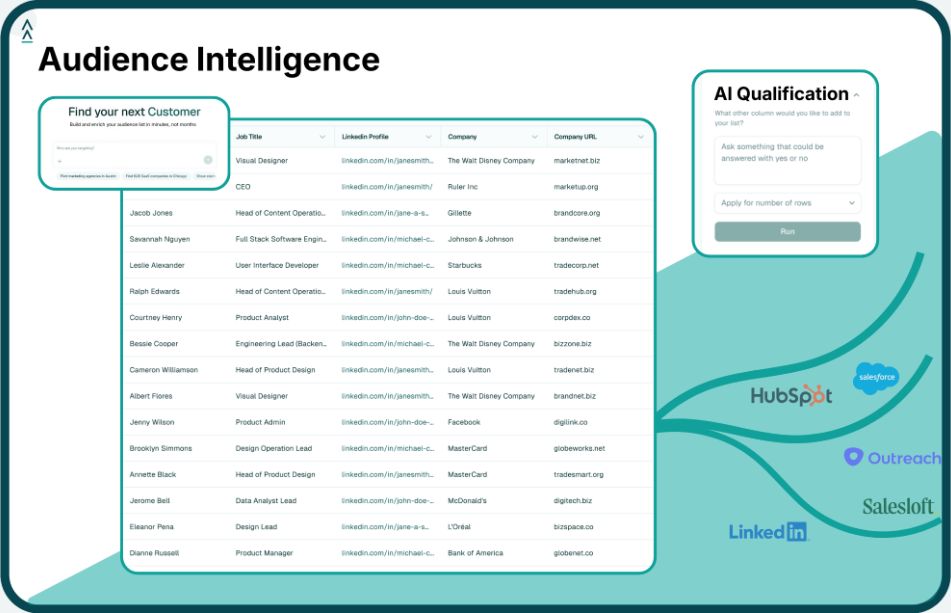
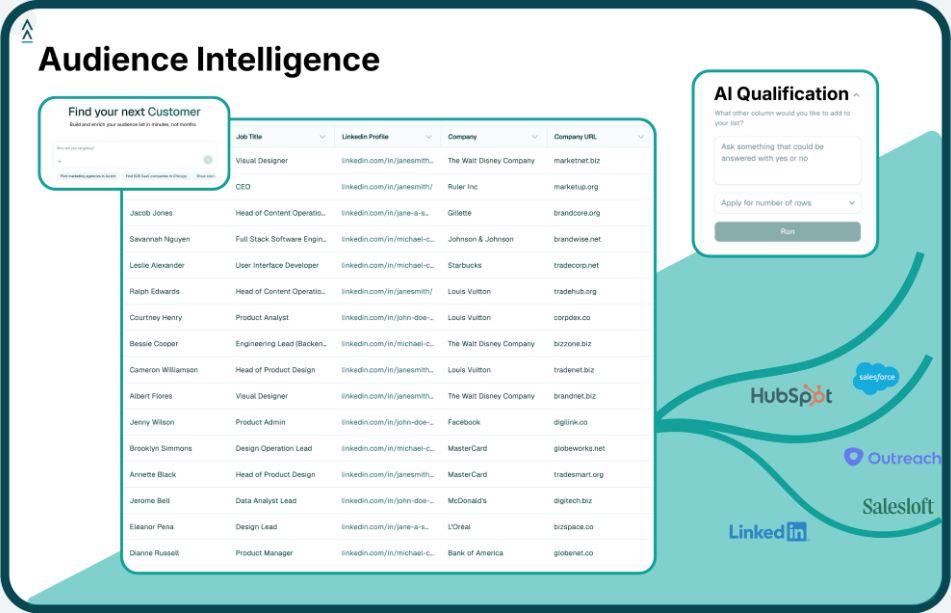
Landbase acts as a foundational AI-powered tool for all operations teams, providing instant, AI-qualified audiences that integrate into existing CRMs and sales engagement tools. GTM-2 Omni's advanced AI capabilities, including semantic search and ICP recognition, revolutionize how operations teams discover and qualify prospects. The VibeGTM Interface empowers operations professionals to build and refine targeted audience lists using natural language, accelerating GTM processes.
Effective operations require clear metrics and KPIs to measure performance and drive continuous improvement.
SalesOps teams should track these key metrics:
These metrics help SalesOps identify bottlenecks and opportunities for process improvement.
MarketingOps teams should focus on these metrics:
These metrics help MarketingOps optimize campaigns and improve marketing ROI.
RevOps teams should track these end-to-end metrics:
Landbase Intelligence provides critical growth signals, Trust Score, and TAM insights, enabling operations teams to measure impact and optimize strategies effectively. These metrics provide a holistic view of revenue performance and help RevOps identify opportunities for improvement across the entire customer journey.
In today's competitive B2B landscape, operations teams need technology that can keep pace with rapid market changes and evolving customer expectations. Landbase provides a unified solution that empowers SalesOps, MarketingOps, and RevOps teams to find and qualify their next customer in seconds.
SalesOps teams can use Landbase to:
With Landbase's free, no-login audience builder, SalesOps teams can instantly generate AI-qualified lists of up to 10,000 contacts, ready for immediate activation in their existing tools.
MarketingOps teams benefit from Landbase by:
Landbase's AI-qualified audiences ensure that marketing campaigns reach the right prospects at the right time, dramatically improving campaign performance and ROI.
RevOps leaders can leverage Landbase to:
Landbase helps all ops roles find and qualify their next customer in seconds using natural-language targeting, reclaiming time for strategic initiatives. With access to 300M+ contacts and 24M+ companies, powered by GTM-2 Omni's agentic AI model trained on billions of GTM data points, Landbase provides the foundation for modern, integrated go-to-market operations.
While smaller companies can initially manage without a dedicated MarketingOps team, having specialized expertise becomes increasingly essential as marketing activities grow in complexity and scale. As companies implement more marketing technologies, run multi-channel campaigns, and require sophisticated attribution modeling, MarketingOps becomes critical for maximizing ROI and ensuring measurable results. Most B2B companies reaching $5-10M in revenue begin to recognize the need for dedicated MarketingOps support.
Startups should consider implementing Revenue Operations when they reach $10-15M in annual revenue or when they notice significant misalignment between sales and marketing functions affecting growth. However, even early-stage companies can benefit from RevOps principles by establishing unified processes and data standards from the beginning. Clear indicators that RevOps is needed include inconsistent customer handoffs, siloed department goals, fragmented data across systems, and difficulty forecasting revenue accurately.
The most important technologies for RevOps include integrated CRM and marketing automation platforms that ensure seamless data flow, customer data platforms for unified customer views, and revenue intelligence tools for forecasting and pipeline management. AI-powered audience discovery platforms like Landbase are becoming essential for consistent targeting across all functions. The key is ensuring that all systems work together seamlessly with consistent customer definitions and unified reporting capabilities.
These functions are not mutually exclusive and naturally overlap in many critical areas like lead management, technology stack integration, and process design. The most effective go-to-market organizations ensure close collaboration between these functions with clear role definitions and open communication. RevOps often serves as the umbrella function that coordinates and aligns SalesOps and MarketingOps activities, ensuring that all efforts contribute to unified revenue goals while each function maintains specialized expertise in their domain.
Tool and strategies modern teams need to help their companies grow.