March 3, 2026

RevOps Roles and Responsibilities

Discover RevOps roles, responsibilities, and team structures that drive revenue growth. Learn how AI-powered tools accelerate RevOps effectiveness and align sales, marketing, and customer success teams.
  • Button with overlapping square icons and text 'Copy link'.
Table of Contents

Major Takeaways

What is the primary purpose of Revenue Operations in modern B2B companies?
RevOps unifies sales, marketing, and customer success under a single operational framework with shared goals, metrics, and data governance to eliminate silos and create a single source of truth for revenue operations.
How should companies structure their RevOps teams as they grow?
Team structure should match company stage: 1 generalist for startups under 50 employees, 2-4 specialists for growth-stage companies (50-500 employees), and specialized teams organized by four pillars (Operations, Enablement, Insights, Tools) for enterprises with 500+ employees.
What measurable impact does mature RevOps deliver?
Companies with mature RevOps functions see 10-20% increases in sales productivity according to Boston Consulting Group, 36% more revenue growth according to Forrester research, and are 1.4 times more likely to exceed revenue goals by 10% or more based on Deloitte Digital's 2024 research.

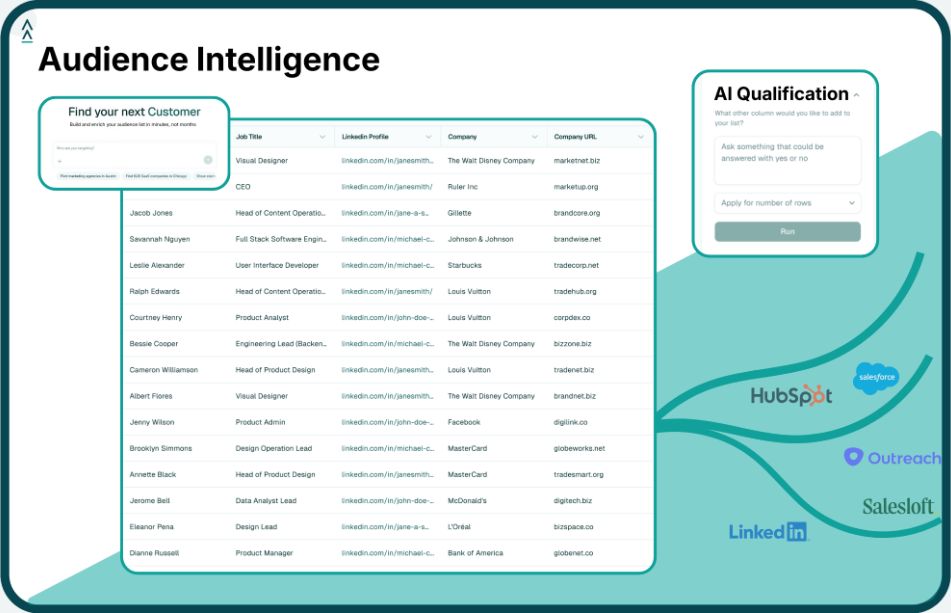
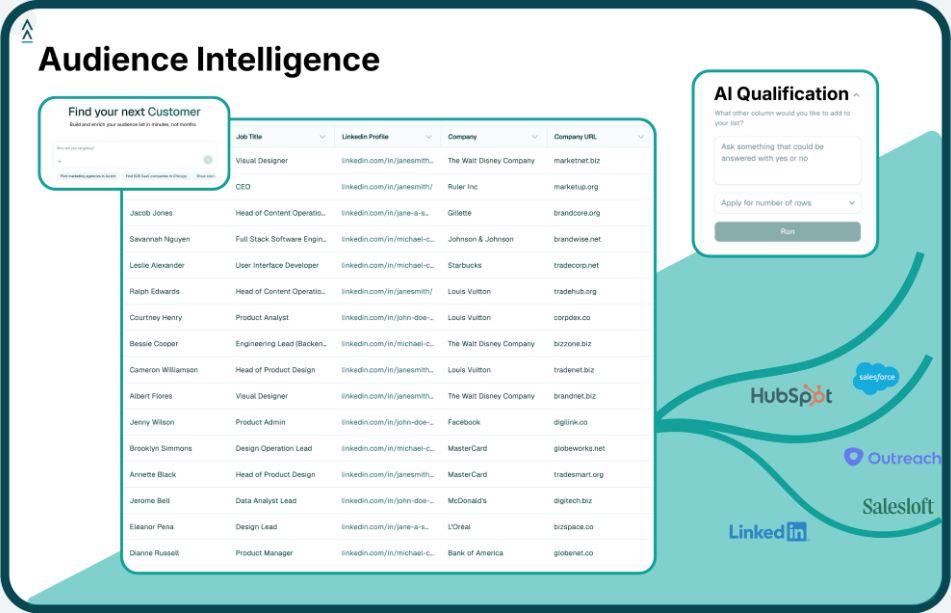
Most companies think of Revenue Operations (RevOps) as just another operational function, but honestly, it's the strategic backbone that aligns sales, marketing, and customer success around a unified revenue engine. More and more high-growth companies are discovering that AI-powered audience discovery can dramatically accelerate RevOps effectiveness by providing instant access to precisely targeted, AI-qualified prospect lists ready for immediate activation. RevOps breaks down traditional departmental silos to create aligned processes, shared metrics, and unified data governance across the entire customer lifecycle—from initial marketing outreach through sales conversion to onboarding, retention, and expansion.

Now, implementing RevOps isn't just about hiring new roles—it's about fundamentally restructuring how your go-to-market teams operate. Gartner predicted in 2021 that 75% of the highest-growth companies would deploy a RevOps model by 2025. Separately, Deloitte Digital's 2024 research found that organizations with established RevOps functions were 1.4 times more likely to exceed their revenue goals by 10% or more. The key is understanding which roles you need, when you need them, and how to leverage modern AI tools to maximize their impact.

The research behind effective RevOps implementation is clear: it takes 6-12 months for full implementation, requires executive-level buy-in, and works best when you match your team structure to your company stage. If you're thinking about building or optimizing your RevOps function, it's worth learning about the specific roles, responsibilities, and AI-powered tools that can accelerate your success.

Key Takeaways

  • RevOps unifies sales, marketing, and customer success under a single operational framework with shared goals and metrics
  • Team structure should match company stage: 1 generalist for startups, 2-4 specialists for growth-stage, and specialized teams for enterprises
  • The four pillars of RevOps—Operations, Enablement, Insights, and Tools—must work together as an interconnected system
  • AI-powered tools like Landbase can dramatically accelerate audience discovery and qualification, providing RevOps teams with immediate access to high-quality prospect data
  • Success requires executive sponsorship, foundational data quality, and cultural change management alongside technical implementation
  • Companies with mature RevOps see 10-20% productivity increases per Boston Consulting Group and 36% more revenue growth per Forrester research

Understanding the Strategic Imperative of Revenue Operations

Revenue Operations serves as the operational backbone that aligns revenue-generating teams around shared goals, unified data, and standardized processes. It eliminates conflicting objectives, reduces operational friction, and creates a single source of truth for revenue operations across the organization.

The Four Pillars Framework

Effective RevOps functions are built on four interconnected pillars that work together as a unified system:

Operations Pillar

  • Maps entire revenue pipeline from marketing to sales to support
  • Standardizes workflows and establishes governance
  • Ensures seamless handoffs between departments
  • Removes friction points that slow deals or confuse customers

Enablement Pillar

  • Develops training programs for new tools and processes
  • Creates and maintains sales playbooks and content libraries
  • Drives adoption of strategy, messaging, and tools across funnel
  • Provides ongoing coaching and development

Insights Pillar

  • Builds and maintains reporting dashboards
  • Conducts continuous analysis of revenue performance
  • Tracks leading and lagging indicators
  • Provides forecasting and predictive analytics

Tools (Technology) Pillar

  • Procures and evaluates new platforms and tools
  • Integrates systems to ensure seamless data flow
  • Maintains and optimizes existing technology
  • Ensures teams have access to right capabilities without creating silos

When one pillar weakens, the others feel the strain, which is why effective RevOps leaders invest across all four areas simultaneously.

Strategic Business Impact

The business case for RevOps is compelling. Companies that implement mature RevOps functions see:

  • 10-20% increases in sales productivity according to Boston Consulting Group
  • 36% more revenue growth compared to peers according to Forrester research
  • Improved forecast accuracy that builds executive confidence
  • Reduced operational friction between departments

Annual Recurring Revenue (ARR) remains one of the most important metrics for engaging leadership, highlighting the direct connection between RevOps effectiveness and business outcomes.

Revenue Operations vs. Sales Operations: Defining the Delineation

Many companies start with Sales Operations and wonder if they need RevOps. The key difference lies in scope and perspective.

Scope Expansion

Sales Operations focuses narrowly on optimizing the sales function:

  • Sales process efficiency
  • CRM management for sales teams
  • Sales compensation and quotas
  • Deal desk support
  • Sales forecasting accuracy

Revenue Operations takes a holistic view across the entire customer lifecycle:

  • Unified GTM strategy across sales, marketing, and customer success
  • End-to-end lead-to-cash process optimization
  • Cross-functional data governance and reporting
  • Shared metrics and incentive alignment
  • Technology stack integration across all revenue teams

Organizational Impact

The shift from Sales Operations to RevOps represents a fundamental change in organizational philosophy. Instead of optimizing individual department performance, RevOps focuses on optimizing the entire revenue engine.

Key differences in practice:

  • Sales Ops measures sales team performance; RevOps measures company-wide revenue health
  • Sales Ops manages sales tools; RevOps manages the integrated revenue technology stack
  • Sales Ops optimizes sales processes; RevOps optimizes the entire customer journey
  • Sales Ops reports to sales leadership; RevOps typically reports to CRO, CEO, CFO, or COO

This broader perspective is essential for companies that have separate sales, marketing, and customer success functions and need to break down silos that create conflicting objectives and inefficient handoffs.

Core Responsibilities of a Revenue Operations Manager

The Revenue Operations Manager role varies significantly by company stage, but core responsibilities remain consistent across organizations.

Process Optimization and Governance

Revenue Operations Managers are responsible for:

  • Taking stock of existing policies, procedures, and processes
  • Evaluating effectiveness and driving continuous improvement
  • Documenting and standardizing core workflows
  • Establishing governance models for revenue operations
  • Ensuring seamless handoffs between departments

Key activities include:

  • Mapping the entire revenue pipeline from lead generation to customer expansion
  • Identifying and eliminating friction points that slow deals or create confusion
  • Standardizing data definitions and processes across teams
  • Creating playbooks and documentation for consistent execution
  • Monitoring process adherence and driving continuous improvement

Data Management and Analytics

Data integrity is foundational to RevOps success. Revenue Operations Managers must:

  • Integrate centralized data from various sources
  • Provide deep insights into revenue engine performance
  • Build and maintain reporting dashboards
  • Ensure data accuracy and consistency
  • Transform raw data into actionable intelligence

Critical data responsibilities:

  • Consolidating customer data from disconnected systems
  • Establishing single source of truth for revenue metrics
  • Creating unified definitions so all teams use the same calculations
  • Building dashboards that aggregate data across systems
  • Identifying trends and opportunities from data analysis

This is where tools like Landbase Intelligence become invaluable, providing growth signals and insights that help RevOps managers monitor performance and identify strategic opportunities.

Key Revenue Operations Roles and Their Impact on Business Growth

Team structure should match company stage, with roles evolving as organizations grow.

Startups & Early-Stage (Under 50 Employees)

Team Size: 1 versatile generalist
Common Role: Revenue Operations Manager or Sales Operations Analyst with cross-functional responsibilities

Primary responsibilities:

  • Basic CRM setup and data cleanup
  • Simple process documentation
  • Department-level reporting dashboards
  • Aligning sales and marketing on lead definitions
  • Supporting leadership with basic forecasting

Signs you need your first hire:

  • Lack of alignment between sales and marketing on lead definitions
  • Teams struggle to access unified revenue data
  • Leadership can't forecast revenue accurately

Growth-Stage (50-500 Employees)

Team Size: 2-4 specialists
Common Roles:

  • Revenue Operations Manager (overseeing strategy)
  • Sales Operations Analyst (CRM and pipeline reporting)
  • Marketing Operations Specialist (automation and lead flow)
  • Optional: Systems Administrator or Data Analyst

Specialized responsibilities:

  • Revenue Operations Manager: Cross-functional coordination, strategic oversight, executive reporting
  • Sales Operations Analyst: Pipeline analytics, sales process optimization, CRM administration
  • Marketing Operations Specialist: Campaign management, lead scoring, marketing automation
  • Systems Administrator: Technology integration, data flow management, system maintenance

This is where VibeGTM Interface becomes particularly valuable, empowering RevOps specialists to build and refine targeted audiences using natural language queries, leveraging AI assistance to support strategic growth initiatives.

Enterprise (500+ Employees)

Team Size: Large structured team organized by four pillars
Reporting Structure: Usually to CRO, CEO, CFO, or COO

Specialized Roles:

  • VP/Director of Revenue Operations (strategic leadership)
  • Revenue Operations Systems Manager (tech stack ownership)
  • Revenue Operations Analyst/Forecasting Analyst (data analysis and projections)
  • Sales Operations Manager (sales process optimization)
  • Enablement and Training Personnel (adoption and skill development)
  • Data Analysts/BI Specialists (dashboards and insights)

Driving Efficiency: How RevOps Streamlines Sales Operations Jobs

RevOps doesn't replace Sales Operations—it enhances and expands it to create more efficient workflows across the entire revenue organization.

Workflow Automation and Optimization

RevOps streamlines traditional sales operations functions by:

  • Automating routine tasks like lead routing and data entry
  • Creating standardized workflows that reduce manual intervention
  • Integrating systems to ensure seamless data flow
  • Providing sales teams with ready-to-engage, qualified prospects

Key efficiency gains:

  • Lead scoring and prospect qualification: Automated scoring based on firmographic, behavioral, and intent data
  • Sales enablement: Centralized content libraries and playbooks accessible to all reps
  • Deal desk support: Standardized approval processes and discount guidelines
  • CRM hygiene: Automated data validation and enrichment processes
  • Quota setting: Data-driven territory and quota assignment based on market potential

This is where Landbase Outbound provides immediate value, identifying and qualifying prospects along their journey and providing sales teams with ready-to-engage audiences to streamline their operations.

Cross-Functional Alignment Benefits

The biggest efficiency gains come from eliminating the friction between departments:

  • Marketing passes truly qualified leads to sales
  • Sales provides timely feedback to marketing on lead quality
  • Customer success receives complete handoff information from sales
  • All teams share the same definitions, metrics, and goals

This alignment reduces wasted effort, improves conversion rates, and accelerates the entire revenue cycle.

Building a Modern RevOps Team: Essential Skills and Hiring for Future Growth

Hiring the right RevOps talent requires understanding both technical and soft skills needed for success.

Essential Skills Framework

Technical Skills:

  • CRM platform expertise (Salesforce, HubSpot) - Advanced
  • Data analysis and SQL/Excel proficiency - Advanced
  • Marketing automation tools knowledge - Intermediate to Advanced
  • BI/analytics platforms (Tableau, Looker) - Intermediate
  • Integration and API understanding - Basic to Intermediate
  • Process mapping and documentation - Advanced

Business Skills:

  • Revenue metrics and financial acumen - Advanced
  • Sales methodology knowledge - Intermediate to Advanced
  • Marketing funnel understanding - Intermediate to Advanced
  • Customer success operations - Intermediate
  • Forecasting and modeling - Advanced
  • Strategic planning - Advanced

Critical Soft Skills:

  • Cross-functional collaboration and diplomacy - Essential
  • Change management and stakeholder engagement - Essential
  • Communication (written and verbal) - Essential
  • Problem-solving under pressure - Essential
  • Empathy and understanding of team needs - Essential
  • Data-driven storytelling - Essential
  • Ability to "translate" between technical and business stakeholders - Essential

Recruiting Strategy by Stage

Early-Stage Hiring:

  • Look for generalists with experience across sales, marketing, and operations
  • Prioritize adaptability and learning agility over specific tool expertise
  • Value candidates who can operate with minimal supervision
  • Focus on foundational skills that can grow with the organization

Growth-Stage Hiring:

  • Hire specialists who can dive deep into specific areas
  • Look for candidates with experience in similar company stages
  • Prioritize candidates who understand both strategy and execution
  • Value experience with scaling processes and systems

Enterprise Hiring:

  • Seek candidates with experience in complex, matrixed organizations
  • Prioritize change management and stakeholder management skills
  • Look for deep expertise in specific RevOps domains
  • Value experience with large-scale system implementations

Leveraging AI for Enhanced Revenue Operations: The Autonomous GTM

Artificial intelligence is transforming RevOps from a primarily operational function to a strategic, predictive capability.

Agentic AI for GTM Automation

Modern AI platforms like GTM-2 Omni are specifically designed for go-to-market automation, trained on billions of data points from 50M+ B2B campaigns and sales conversations. This agentic AI model can:

  • Interpret natural-language queries to build and qualify audiences instantly
  • Learn from billions of GTM data points and 50M sales interactions
  • Perform semantic search, ICP recognition, and contact qualification
  • Evaluate audience fit and timing using 1,500+ signals
  • Identify companies matching ICP profiles across signals

Practical AI Applications in RevOps

Audience Discovery and Qualification:

  • Type plain-English prompts like "SaaS startups in Europe hiring for RevOps"
  • Receive AI-qualified exports of up to 10,000 contacts instantly
  • Activate audiences immediately in existing tools without complex setup
  • Continuously refine targeting based on performance feedback

Predictive Analytics and Scoring:

  • Analyze market signals, buying patterns, and engagement data to score prospects
  • Forecast campaign performance based on historical data patterns
  • Identify optimal engagement timing using real-time intent tracking
  • Surface look-alike companies that match successful customer profiles

Automated Market Intelligence:

  • Monitor market events including funding rounds, job changes, and conference attendance
  • Track technology stack changes that indicate buying intent
  • Identify competitor customers experiencing churn or service issues
  • Surface companies showing multiple buying signals simultaneously

The Landbase Platform offers a free, no-login audience builder that provides RevOps teams with immediate access to AI-qualified exports, dramatically accelerating the audience discovery process while maintaining data quality and precision.

Measuring Success: Key Performance Indicators in Revenue Operations

Effective RevOps functions track metrics across the entire customer lifecycle, not just departmental silos.

Revenue Metrics

  • Annual Recurring Revenue (ARR): Total predictable annual revenue from subscriptions
  • Monthly Recurring Revenue (MRR): Monthly baseline revenue showing growth trends
  • Net Revenue Retention (NRR): Revenue retained from existing customers including expansions/churn
  • Customer Lifetime Value (CLV): Total revenue expected from a customer over relationship lifetime
  • Customer Acquisition Cost (CAC): Total cost to acquire new customer (sales + marketing expenses)

Pipeline & Sales Metrics

  • Pipeline Velocity: Speed at which leads move through funnel to closed revenue
  • Win/Loss Ratio: Ratio of deals won vs deals lost\
  • Average Deal Size: Average revenue per closed deal
  • Sales Forecast Accuracy: Variance between forecasted and actual revenue
  • Pipeline Coverage Ratio: Total pipeline value vs quota

Cross-Functional Alignment Metrics

  • Marketing Qualified Leads (MQLs): Leads ready to pass to sales
  • Cost Per Lead: Investment required to generate each lead
  • Lead-to-Opportunity Conversion: % of leads that become sales opportunities
  • Customer Churn Rate: % of customers who stop using service
  • Customer Health Score: Composite metric of engagement and usage

Best Practice: Start with 5-7 key metrics that all teams agree on, then build from there as your RevOps function matures. Create unified definitions so everyone uses the same calculations.

Tools like Landbase Intelligence provide additional insights through GTM Trust Score Assessment, which can be linked to improved marketing ROI and decreased cost per lead.

Landbase: Accelerating RevOps Success with AI-Powered Audience Discovery

For RevOps teams looking to accelerate their impact, Landbase offers a unique combination of agentic AI, comprehensive data, and frictionless user experience that directly addresses the core challenges of modern revenue operations.

Why Landbase stands out for RevOps teams:

Instant Audience Discovery: Instead of spending weeks building complex queries across multiple data platforms, RevOps professionals can type plain-English prompts like "CMOs at cybersecurity startups (51–200 employees) adding new marketing automation tools" and receive AI-qualified audiences ready for immediate activation. This dramatically accelerates the audience building process while maintaining precision.

Comprehensive Data Foundation: With 300M+ contacts and 24M+ companies, plus 1,500+ unique signals including firmographic, technographic, intent, hiring, and funding data, Landbase provides the comprehensive data foundation that RevOps teams need to make informed decisions across the entire customer lifecycle.

AI Qualification Precision: Landbase's GTM-2 Omni model doesn't just find contacts—it qualifies them using both online and offline AI qualification to ensure audience fit and timing. This means RevOps teams can trust that their prospect lists are not just large, but highly relevant and ready to engage.

Frictionless Integration: The ability to export up to 10,000 contacts instantly and activate them in existing tools means RevOps teams can immediately leverage Landbase insights without disrupting their current technology stack or workflows.

Cost Efficiency: With a free tier that includes unlimited prompt searches and up to 10,000 exports per session, Landbase provides immediate value to RevOps teams without requiring significant upfront investment or complex implementation.

For RevOps professionals tasked with building high-quality prospect lists, optimizing go-to-market strategies, and driving revenue growth, Landbase represents a significant acceleration in both speed and precision. The platform's agentic AI approach eliminates the traditional trade-off between speed and accuracy, allowing teams to move fast while maintaining the data quality essential for RevOps success.

Frequently Asked Questions

Why is a career in Revenue Operations growing in demand?

Gartner predicted in 2021 that 75% of the highest-growth companies would deploy a RevOps model by 2025, driven by the need to break down departmental silos and create unified revenue engines. Companies with mature RevOps functions are 1.4 times more likely to exceed revenue goals by 10% or more according to Deloitte Digital's 2024 research, making RevOps professionals essential for business success in competitive markets. Additionally, RevOps drives measurable improvements including 10-20% sales productivity increases and 36% more revenue growth compared to peers. The cross-functional nature of the role offers diverse career development opportunities and exposure to strategic business decisions.

How does artificial intelligence (AI) contribute to effective Revenue Operations?

AI transforms RevOps from operational to strategic by enabling predictive analytics, automated audience discovery, and real-time market intelligence. Agentic AI models like GTM-2 Omni can interpret natural-language queries, qualify prospects using 1,500+ signals, and surface optimal engagement opportunities, dramatically accelerating the audience building process while maintaining precision. AI applications in RevOps include automated lead scoring based on firmographic and behavioral data, forecasting campaign performance using historical patterns, and monitoring market events like funding rounds and technology stack changes. This enables RevOps teams to move from reactive reporting to proactive strategy execution.

What are the essential skills required for a Revenue Operations Manager?

Essential skills include advanced CRM platform expertise (Salesforce, HubSpot), data analysis proficiency with SQL/Excel, cross-functional collaboration abilities, change management experience, and strategic thinking capabilities. Technical competencies also include marketing automation knowledge, BI/analytics platforms, and process mapping documentation skills. Critical soft skills include exceptional communication (written and verbal), problem-solving under pressure, empathy for team needs, data-driven storytelling, and the ability to translate between technical and business stakeholders. The most successful RevOps managers combine technical depth with business acumen and diplomatic skills to drive organizational change.

How can a company start building or optimizing its RevOps function?

Start by securing executive sponsorship, then follow a structured approach: 60-day assessment and strategy phase to evaluate current state, 120-day foundation building including data cleanup, process standardization, and CRM configuration, followed by ongoing optimization. Match team structure to company stage—1 generalist for startups under 50 employees, 2-4 specialists for growth-stage companies (50-500 employees), and specialized teams organized by the four pillars (Operations, Enablement, Insights, Tools) for enterprises with 500+ employees. Focus on establishing unified definitions, shared metrics, and cross-functional alignment before expanding team size or technology investments.

Build a GTM-ready audience

  • Button with overlapping square icons and text 'Copy link'.

Turn this list into a GTM-ready audience

Match this list to your ICP, prioritize accounts, and identify who to contact using live growth signals.

Stop managing tools. 
Start driving results.

See Agentic GTM in action.
Get started
Our blog

Lastest blog posts

Tool and strategies modern teams need to help their companies grow.

Discover RevOps roles, responsibilities, and team structures that drive revenue growth. Learn how AI-powered tools accelerate RevOps effectiveness and align sales, marketing, and customer success teams.

Daniel Saks
Chief Executive Officer

GTM Ops transforms go-to-market strategy into predictable revenue by aligning people, processes, data, and technology across sales, marketing, and customer success. Learn how companies achieve 23% faster revenue growth with mature GTM operations frameworks.

Daniel Saks
Chief Executive Officer

Understanding SalesOps, MarketingOps, and RevOps is critical for modern B2B growth. Learn how these three distinct but interconnected operations functions drive efficiency, alignment, and predictable revenue.

Daniel Saks
Chief Executive Officer

How GTM teams turn this list into pipeline

See how GTM teams use fastest-growing lists to define TAM, prioritize accounts, and launch campaigns.