March 3, 2026

What Does a RevOps Manager Do?

Discover what a RevOps Manager does, from bridging sales and marketing silos to driving revenue growth. Learn about responsibilities, salary ($100K-$325K+), career paths, and how AI is transforming this fast-growing role.
  • Button with overlapping square icons and text 'Copy link'.
Table of Contents

Major Takeaways

What is the primary value a RevOps Manager delivers to an organization?
RevOps Managers eliminate silos between sales, marketing, and customer success by creating unified processes, shared metrics, and seamless data flow, resulting in measurable improvements in revenue growth and profitability.
What compensation can RevOps Managers expect in 2025?
RevOps Manager salaries range from $100K-$160K for entry-level positions to $150K-$235K for experienced managers, with Directors earning $180K-$215K and VPs commanding $180K-$325K+ depending on experience and location.
How is AI transforming the RevOps role?
AI is automating routine RevOps tasks like data entry, report generation, and basic analysis, allowing RevOps Managers to shift focus from tactical execution to strategic governance, with agentic AI tools enabling natural-language audience building and qualification.

Most folks think of operations roles as just keeping the lights on, but honestly, the Revenue Operations (RevOps) Manager has become the strategic linchpin that drives predictable, scalable growth in modern B2B companies. More and more organizations are discovering that dedicated RevOps teams deliver measurable improvements in revenue growth and operational efficiency compared to those with siloed operations. At the heart of this role is eliminating the chaos between sales, marketing, and customer success by creating unified processes, shared metrics, and seamless data flow across all revenue-generating teams.

Now, the RevOps Manager's job is trickier than it might seem. They need to balance technical expertise with strategic vision, navigate complex organizational politics, and translate business objectives into operational reality. Still, recent research highlights significant RevOps growth, with over 174,000 job postings for RevOps-related roles, making it one of the fastest-growing career paths in B2B SaaS.

The science behind effective RevOps is still evolving, but so far, the results are clear: companies that successfully implement RevOps see measurable improvements in sales productivity (10-20% gains), go-to-market efficiency (30% cost reduction), and overall revenue predictability. If you're considering a career in RevOps or looking to hire for this role, it's worth understanding the specific responsibilities, required skills, and how modern tools like Landbase's AI-powered platform can supercharge RevOps effectiveness.

Key Takeaways

  • RevOps Managers bridge sales, marketing, and customer success to eliminate silos and create unified revenue processes across all revenue-generating teams
  • Success requires both technical proficiency (CRM, analytics, automation) and strategic skills (process design, change management, cross-functional leadership)
  • Compensation reflects strategic value: experienced managers command $150K-$235K base salary plus performance bonuses
  • AI and automation are transforming the role from tactical execution to strategic governance, with tools enabling natural-language audience building
  • The role shows clear advancement opportunities from Analyst ($65K-$85K) to VP of Revenue Operations ($180K-$325K+) with year-over-year salary growth

Understanding the Core Role of a Revenue Operations (RevOps) Manager

RevOps Managers serve as the operational backbone connecting sales, marketing, and customer success by eliminating data silos, standardizing processes, and creating a unified view of the customer journey. Unlike traditional operations roles confined to single departments, RevOps Managers operate cross-functionally to ensure all revenue-generating teams work toward shared goals with consistent metrics and seamless handoffs.

The role focuses on four key pillars:

  • People alignment - Ensuring sales, marketing, and customer success teams collaborate effectively
  • Process optimization - Streamlining workflows from lead capture to customer retention
  • Technology stack management - Maintaining and integrating the tools that power revenue operations
  • Data governance - Establishing standards for data quality, definitions, and reporting

Defining Revenue Operations: Beyond Sales and Marketing

RevOps emerged as companies realized that traditional siloed approaches to sales operations and marketing operations created friction, dropped opportunities, and competing priorities. Marketing would focus on MQLs (Marketing Qualified Leads), sales on closed-won deals, and customer success on retention metrics, without a unified view of the complete customer journey.

RevOps solves this by establishing shared KPIs across teams, such as customer lifetime value, pipeline velocity, and revenue retention. This creates alignment where all teams work toward the same business outcomes rather than departmental metrics that might conflict with overall company goals.

Key Responsibilities of a RevOps Leader

RevOps Managers handle diverse responsibilities that balance tactical execution with strategic planning:

  • CRM system management and administration
  • Sales forecasting and pipeline analytics
  • Revenue intelligence reporting and dashboards
  • Sales enablement program development
  • Lead routing and territory design
  • Compensation plan administration
  • Tech stack integration and optimization
  • Cross-functional process improvement

The role typically spends 30-40% of time on analytics, 25-30% on cross-team collaboration, 20-25% on systems administration, and 15-20% on strategic planning, making it one of the most varied positions in the modern B2B organization.

Driving Efficiency and Growth: How RevOps Managers Optimize Business Operations

RevOps Managers are growth accelerators who optimize the entire go-to-market motion through data-driven insights and process improvements. They identify bottlenecks in the revenue engine and implement solutions that directly impact business outcomes.

Streamlining the Go-to-Market Motion

One of the primary ways RevOps drives efficiency is by mapping and optimizing the complete customer journey from first touch to expansion revenue. This involves:

  • Creating clear service level agreements (SLAs) for lead handoffs between marketing and sales
  • Implementing automated lead scoring and routing to ensure high-priority prospects get immediate attention
  • Establishing consistent definitions for lead stages and qualification criteria
  • Building unified dashboards that provide real-time visibility into pipeline health

Companies that effectively implement these RevOps practices report significant cost reductions in go-to-market operations and significantly improved lead conversion rates.

Leveraging Data for Operational Insights

RevOps Managers use data analytics to identify opportunities for improvement and measure the impact of operational changes. They track metrics like:

  • Sales cycle length by segment and deal size
  • Conversion rates at each stage of the funnel
  • Pipeline velocity and coverage ratios
  • Customer acquisition cost (CAC) and lifetime value (LTV)

By analyzing these metrics, RevOps can make evidence-based recommendations for process changes, resource allocation, and strategic initiatives that drive measurable business impact.

The Role of a RevOps Manager in Sales Operations and Strategy

While RevOps encompasses marketing and customer success operations, much of the role's focus centers on optimizing sales operations and strategy. RevOps Managers support sales teams with the data, tools, and processes they need to be more effective.

Supporting Sales Teams with Data and Tools

RevOps Managers provide sales teams with the intelligence they need to prioritize effectively and engage prospects with relevant messaging. This includes:

  • Building targeted prospect lists based on ideal customer profile (ICP) criteria
  • Providing real-time intent data to identify prospects actively researching solutions
  • Creating territory designs that ensure fair and efficient market coverage
  • Developing sales playbooks and battle cards for different scenarios and competitors

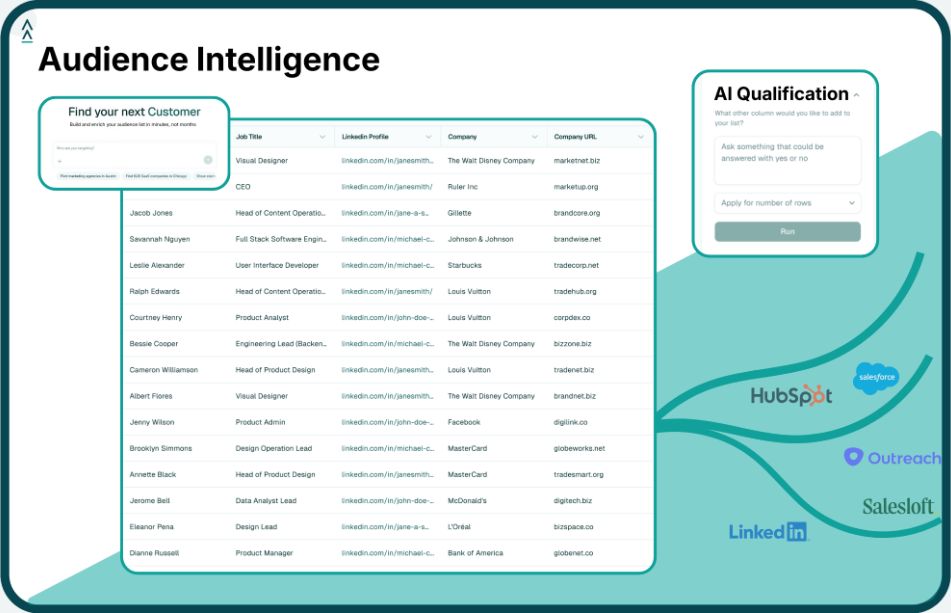
With Landbase's AI-qualified lists, RevOps managers can build high-quality prospect lists in seconds, enabling sales teams to focus on selling rather than list building.

Optimizing the Sales Cycle for Better Conversion

RevOps Managers analyze the sales cycle to identify bottlenecks and implement solutions that accelerate deal progression. This might involve:

  • Redesigning lead scoring models to better predict conversion likelihood
  • Implementing automated follow-up sequences for stalled opportunities
  • Creating approval workflows for discount requests and complex deals
  • Establishing clear criteria for opportunity qualification and advancement

These optimizations directly impact sales productivity, with organizations reporting 10-20% sales productivity gains after implementing effective RevOps functions.

Average Salary and Career Outlook for RevOps and Operations Managers

RevOps Manager compensation has grown significantly as companies recognize the strategic value this role delivers. The compensation structure reflects both the technical expertise required and the business impact achieved.

Compensation Trends and Market Value

RevOps Manager compensation varies by experience level and geographic location:

  • Entry-level managers (1-2 years experience): $100K-$160K base salary plus ~10% OTE
  • Experienced managers (3+ years experience): $150K-$235K base salary plus ~20% OTE
  • Directors: $180K-$215K base salary
  • VPs: $180K-$325K+ base salary

Tech hubs like San Francisco and New York pay 20-30% premiums over national averages, though experience matters significantly for RevOps Manager compensation compared to other sales roles. The role shows 5% year-over-year salary growth, outpacing general market averages.

Career Progression Pathways

The RevOps career path offers clear advancement opportunities:

  • Analyst/Specialist ($65K-$85K)
  • Manager ($100K-$235K)
  • Senior Manager
  • Director ($140K-$215K)
  • VP of Revenue Operations ($180K-$325K+)
  • Chief Revenue Officer ($226K-$300K+)

The transition from manager to director represents the biggest career bottleneck, requiring a shift from technical excellence to organizational influence and business acumen. Professionals advance most successfully by developing deep expertise in one area (territory design, forecasting, data architecture) while building broad cross-functional relationships.

The Intersection of RevOps and Marketing Operations: A Unified Approach

RevOps creates a unified framework that aligns marketing and sales operations under shared goals and metrics. This eliminates the traditional friction between departments and creates a seamless customer experience.

Aligning Marketing and Sales with a RevOps Framework

RevOps establishes shared definitions and processes that ensure marketing and sales work as a unified team:

  • Shared lead definitions: Clear criteria for what constitutes a marketing qualified lead (MQL) and sales qualified lead (SQL)
  • Unified attribution models: Consistent tracking of marketing's contribution to pipeline and revenue
  • Collaborative content development: Marketing creates assets based on sales feedback and prospect needs
  • Joint campaign planning: Marketing and sales collaborate on campaign strategy and execution

This alignment results in measurable improvements in lead acceptance rates and significantly improved marketing ROI.

Optimizing Marketing Campaigns Through Data-Driven Insights

RevOps Managers help marketing teams optimize campaigns through data analysis and performance tracking:

  • Analyzing campaign performance by segment, channel, and content type
  • Identifying high-performing messaging and creative elements
  • Tracking lead quality and conversion rates by campaign source
  • Measuring customer acquisition cost (CAC) and lifetime value (LTV) by marketing channel

By integrating AI-qualified audiences into broader marketing and sales strategies, RevOps managers can generate high-intent leads and track performance to boost efficiency and ROI.

Future-Proofing Go-to-Market with Agentic AI: A RevOps Perspective

AI and automation are transforming the RevOps role from tactical execution to strategic governance. Industry analysts predict AI will increasingly automate routine RevOps tasks in coming years, fundamentally shifting the role's focus.

How AI is Transforming RevOps Functions

AI is revolutionizing key RevOps functions:

  • Predictive analytics: AI models forecast revenue with greater accuracy by analyzing historical patterns and real-time signals
  • Automated data enrichment: AI continuously updates contact and company information, maintaining data quality at scale
  • Intelligent lead scoring: Machine learning models identify high-value prospects based on behavioral and firmographic signals
  • Process automation: AI agents handle routine tasks like data entry, report generation, and workflow management

Leveraging Agentic AI for Superior Audience Discovery

Landbase's GTM-2 Omni is specifically built for GTM automation and demonstrates how agentic AI can enhance RevOps effectiveness. Trained on billions of data points from 50M+ B2B campaigns, GTM-2 Omni can:

  • Interpret natural-language queries to build and qualify audiences instantly
  • Evaluate prospects using 1,500+ signals to ensure audience fit and timing
  • Generate AI-qualified export lists ready for immediate activation
  • Continuously learn from feedback to improve targeting precision

This allows RevOps leaders to focus on strategic initiatives rather than manual list building and data processing.

Key Metrics and KPIs Success-Driven RevOps Managers Track

RevOps Managers are data-driven by nature, tracking specific metrics that measure the health and effectiveness of the revenue engine.

Measuring the Health of the Revenue Engine

Key metrics RevOps Managers track include:

  • Customer lifetime value (CLTV): Total revenue expected from a customer over their relationship
  • Customer acquisition cost (CAC): Total cost to acquire a new customer
  • CLTV:CAC ratio: Measures efficiency of customer acquisition (3:1 or higher is typically healthy)
  • Sales cycle length: Average time from lead creation to closed-won deal
  • Pipeline velocity: Speed at which opportunities move through the sales funnel
  • Win rates: Percentage of opportunities that convert to closed-won deals
  • Forecast accuracy: How closely actual results match predicted outcomes

Most RevOps professionals track these metrics to drive accountability and continuous improvement.

Driving Accountability with Data

RevOps Managers use these metrics to:

  • Identify underperforming segments or processes
  • Allocate resources more effectively
  • Set realistic targets and quotas
  • Measure the impact of operational changes
  • Provide executive leadership with accurate revenue forecasts

Building a Modern RevOps Tech Stack: Essential Tools and Integrations

RevOps Managers are responsible for selecting, implementing, and maintaining the technology stack that powers revenue operations.

Essential Components of a RevOps Tech Stack

A modern RevOps tech stack typically includes:

  • CRM systems: Salesforce, HubSpot, or Microsoft Dynamics as the central database
  • Marketing automation platforms: Marketo, HubSpot, or Pardot for campaign management
  • Sales engagement platforms: Outreach, Salesloft, or Reply.io for sales outreach
  • Business intelligence tools: Tableau, Looker, or Power BI for data visualization
  • Data enrichment services: Landbase, ZoomInfo, or Clearbit for contact and company data
  • Conversation intelligence: Gong or Chorus for call analysis and coaching
  • Revenue intelligence: Clari or Aviso for forecasting and pipeline management

Integrating Systems for Seamless Data Flow

The key to an effective RevOps tech stack is seamless integration between tools. RevOps Managers ensure that:

  • Data flows bi-directionally between systems to maintain consistency
  • Automated workflows trigger appropriate actions across platforms
  • Reporting dashboards pull from multiple sources for comprehensive visibility
  • Data quality is maintained through validation and enrichment processes

Landbase seamlessly integrates with existing tools like Gmail and Outlook, with future integrations planned for Salesforce and HubSpot, making it a valuable addition to any RevOps tech stack for audience discovery and qualification.

Landbase: The AI-Powered Solution for Modern RevOps Managers

For RevOps Managers looking to supercharge their audience discovery and qualification capabilities, Landbase offers a unique solution that directly addresses the challenges of building targeted prospect lists in today's complex B2B landscape.

Why Landbase Stands Out for RevOps Teams

Landbase's platform, powered by GTM-2 Omni (the first agentic AI model specifically built for go-to-market automation), solves several critical pain points for RevOps Managers:

  • Natural-language targeting: Instead of wrestling with complex filters and Boolean queries, RevOps Managers can simply type a plain-English prompt like "CFOs at enterprise SaaS companies (1000+ employees) that raised funding in the last 30 days" and receive an AI-qualified export instantly.
  • AI Qualification: Landbase's AI doesn't just find contacts—it qualifies them using 1,500+ unique signals including firmographic, technographic, intent, hiring, and funding data to ensure prospects are truly ready to engage.
  • Instant activation: With the ability to export up to 10,000 contacts per session, RevOps Managers can immediately activate audiences in their existing tools without complex data processing or manual cleanup.
  • Free access: Unlike traditional data providers that charge significant fees, Landbase offers unlimited prompt searches and exports with no login required, making it accessible for teams of any size.

Real Impact for RevOps Functions

Landbase directly supports key RevOps responsibilities:

  • Sales enablement: Provide sales teams with AI-qualified prospect lists that are ready for immediate outreach
  • Campaign targeting: Build highly specific audience segments for marketing campaigns using natural language
  • Market intelligence: Monitor real-time signals like funding rounds, job changes, and tech stack changes to identify buying opportunities
  • Process efficiency: Reduce the time spent on manual list building from hours to seconds, freeing up RevOps teams for strategic work

The Future of Operations: Opportunities and Challenges for RevOps Professionals

The RevOps role continues to evolve rapidly, presenting both exciting opportunities and significant challenges for professionals in this field.

Adapting to Emerging Technologies and Trends

RevOps professionals must stay ahead of technological changes:

  • AI and machine learning: Understanding how to leverage AI for predictive analytics, process automation, and intelligent recommendations
  • Privacy regulations: Navigating GDPR, CCPA, and other data privacy requirements while maintaining effective targeting
  • Remote work dynamics: Optimizing processes and tools for distributed sales and marketing teams
  • Composable architectures: Moving away from monolithic platforms toward best-of-breed tools that integrate seamlessly

Developing Leadership Skills for the Evolving RevOps Landscape

As the role matures, RevOps professionals need to develop skills beyond technical expertise:

  • Change management: Leading organizational transformation and overcoming resistance to new processes
  • Executive communication: Translating operational insights into business impact for C-level stakeholders
  • Strategic thinking: Moving beyond tactical execution to drive long-term revenue strategy
  • Cross-functional leadership: Building influence across departments without direct authority

The most successful RevOps professionals will be those who can balance technical mastery with strategic vision and organizational leadership, positioning themselves as true revenue architects rather than just operational support.

Frequently Asked Questions

What is the primary difference between a RevOps Manager and a Sales Operations Manager?

A Sales Operations Manager focuses exclusively on optimizing sales processes, tools, and performance within the sales department. A RevOps Manager takes a broader, cross-functional approach that aligns sales, marketing, and customer success operations under unified processes, metrics, and goals to optimize the entire revenue engine. This creates seamless handoffs between departments and eliminates the silos that traditionally create friction and dropped opportunities.

How does a RevOps Manager contribute to a company's revenue growth?

RevOps Managers contribute to revenue growth by eliminating operational friction between departments, implementing data-driven processes that improve conversion rates, and providing sales and marketing teams with actionable intelligence. They create unified visibility into pipeline health and improve forecasting accuracy, which enables better resource allocation and strategic decision-making. Companies with dedicated RevOps functions report measurable improvements in revenue growth and operational efficiency compared to those with siloed operations.

What are the essential skills required to be a successful RevOps Manager?

Successful RevOps Managers combine technical proficiency (CRM platforms like Salesforce/HubSpot, marketing automation tools, BI/analytics software, data management systems) with strategic capabilities (revenue forecasting, process design, cross-functional communication, change management). They need analytical thinking to interpret complex data sets, problem-solving abilities to identify and resolve bottlenecks, and collaboration skills to align competing departmental priorities. The ability to translate technical insights into business impact for executive stakeholders is equally critical.

Is a RevOps role more strategic or tactical?

The RevOps role encompasses both strategic and tactical elements. RevOps Managers spend significant time on tactical execution (ensuring systems work properly, maintaining data quality, generating reports) while also engaging in strategic planning (identifying bottlenecks, designing processes, aligning cross-functional goals). The balance shifts as professionals advance in their careers, with senior RevOps leaders focusing more on strategic initiatives and organizational influence. Entry-level managers typically spend more time on tactical work, while VPs and Directors drive strategic vision.

Build a GTM-ready audience

  • Button with overlapping square icons and text 'Copy link'.

Turn this list into a GTM-ready audience

Match this list to your ICP, prioritize accounts, and identify who to contact using live growth signals.

Stop managing tools. 
Start driving results.

See Agentic GTM in action.
Get started
Our blog

Lastest blog posts

Tool and strategies modern teams need to help their companies grow.

Discover RevOps roles, responsibilities, and team structures that drive revenue growth. Learn how AI-powered tools accelerate RevOps effectiveness and align sales, marketing, and customer success teams.

Daniel Saks
Chief Executive Officer

GTM Ops transforms go-to-market strategy into predictable revenue by aligning people, processes, data, and technology across sales, marketing, and customer success. Learn how companies achieve 23% faster revenue growth with mature GTM operations frameworks.

Daniel Saks
Chief Executive Officer

Understanding SalesOps, MarketingOps, and RevOps is critical for modern B2B growth. Learn how these three distinct but interconnected operations functions drive efficiency, alignment, and predictable revenue.

Daniel Saks
Chief Executive Officer

How GTM teams turn this list into pipeline

See how GTM teams use fastest-growing lists to define TAM, prioritize accounts, and launch campaigns.