.png)
.png)

Daniel Saks
Chief Executive Officer


API security has transformed from a niche concern to a mission-critical priority, with 95% of API attacks originating from authenticated sessions in recent reports. As global API traffic now comprises over 71% of internet traffic, the market has responded with significant investment activity. For go-to-market teams targeting cybersecurity buyers, identifying these emerging leaders requires access to real-time funding signals and market intelligence. Platforms like Landbase's audience discovery enable teams to pinpoint organizations researching data privacy and governance, ensuring precise targeting of security decision-makers when they're most receptive.
Salt Security delivers the only AI-infused platform covering the complete API security journey—from discovery and governance to runtime protection. The platform automatically discovers all APIs across an organization's entire API fabric, including shadow and zombie APIs that traditional tools miss. Using advanced behavioral analysis, Salt Security establishes baselines for normal API behavior and detects anomalies that indicate attacks in real-time.
Traceable Security (now Traceable AI) provides complete API security covering discovery, posture management, security testing, attack detection, and threat hunting. The platform offers deep API analytics that map the complete API attack surface and identify vulnerabilities across the entire lifecycle. Their Global State of API Security Report provides industry-leading insights into current threats and best practices.
Wallarm delivers API security through a hybrid SaaS model that combines real-time protection monitoring with automated API discovery. The platform specializes in protecting APIs from sophisticated attacks, with a particular focus on emerging threats targeting AI agents. Their no-code tool makes API security accessible to users without programming experience, lowering the barrier to implementation.
Noname Security pioneered comprehensive API discovery and continuous monitoring, specializing in identifying shadow APIs that organizations didn't know existed. The platform provided complete visibility into API traffic, detected vulnerabilities, and offered attack detection and response capabilities. Their technology has now been integrated into Akamai's broader security portfolio following acquisition.
Cequence Security provides cloud-based API security with a strong specialization in bot mitigation and fraud prevention. The platform offers comprehensive visibility into API traffic without sacrificing internal accuracy, combining API security posture management with runtime threat detection. Their approach addresses both malicious bots and sophisticated API attacks targeting business logic.
42Crunch delivers enterprise-grade API security with a developer-first approach, focusing on shift-left security practices that find vulnerabilities during development rather than after deployment. The platform provides automated API security testing, risk scoring, compliance checking, and seamless CI/CD integration. Their comprehensive solution spans discovery through remediation in a single platform.
Approov specializes in mobile app and API security, providing mobile app attestation and runtime application self-protection specifically designed for mobile-to-API communication channels. The platform ensures that only legitimate mobile applications can access backend APIs, preventing reverse engineering and man-in-the-middle attacks targeting mobile applications.
Equixly delivers AI-driven API security with cloud computing integration, focusing on B2B software companies in the European market. The platform leverages artificial intelligence to provide comprehensive API protection, with a particular emphasis on GDPR-compliant security practices that resonate with European enterprises.
Corsha specializes in machine-to-machine API security with a focus on zero-trust API authentication and identity management. The platform addresses the growing need for secure authentication between automated systems, microservices, and cloud-native applications where traditional user-based authentication doesn't apply.
NightVision provides automated API security testing with a focus on vulnerability assessment and security posture management. The platform emphasizes automation to reduce manual security work, enabling organizations to continuously test their APIs for vulnerabilities without requiring extensive security expertise.
The API security market has evolved from a specialized niche to a critical component of enterprise cybersecurity strategy. With APIs now serving as a primary attack vector for application breaches according to industry analysts, the companies on this list represent the forefront of innovation in protecting digital business infrastructure.
For go-to-market teams targeting cybersecurity buyers, understanding these market dynamics is essential. Organizations across financial services, healthcare, and technology sectors are actively researching and implementing API security solutions, creating high-intent buying opportunities. Landbase's audience intelligence enables precise identification of these prospects by tracking signals like funding rounds, hiring activity, and technology stack changes.
This list highlights the fastest-growing API security companies based on:
All companies included are verified as active and relevant to the current API security landscape, with data sourced from industry reports and verified cybersecurity sources.
The rapid growth and innovation in API security create significant opportunities for B2B companies serving the cybersecurity market. However, identifying the right prospects at the right time requires access to real-time market intelligence and sophisticated targeting capabilities.
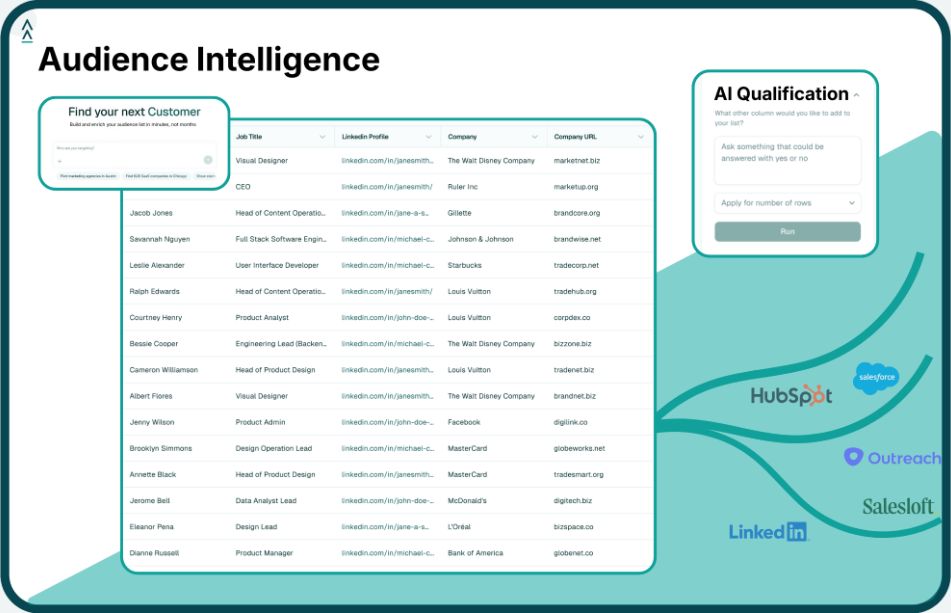
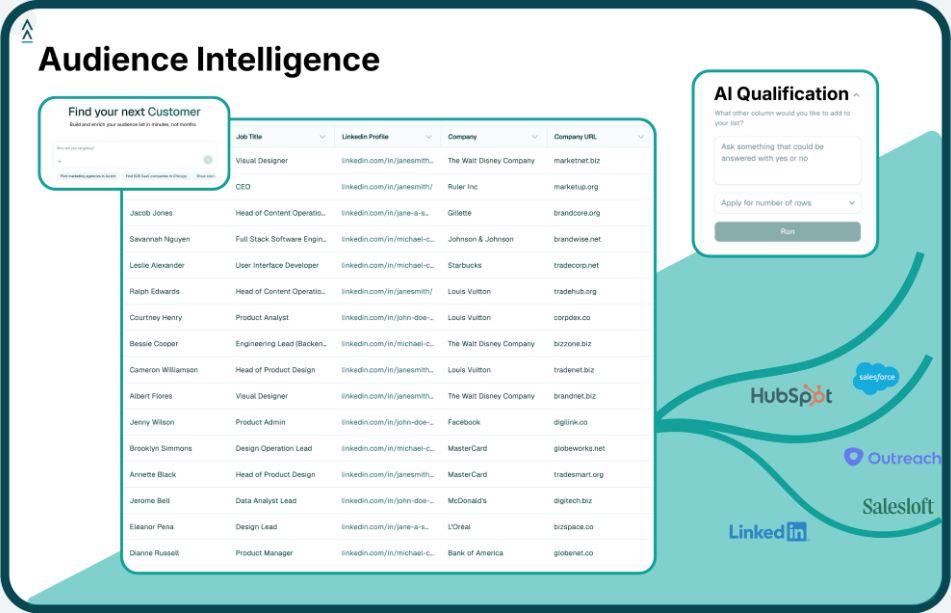
This is where Landbase's agentic AI provides a strategic advantage. By combining 300M+ contacts with 1,500+ unique signals—including funding rounds, hiring activity, technology stack changes, and conference attendance—Landbase enables go-to-market teams to build highly targeted audiences using natural language prompts.
For example, teams can instantly generate prospect lists with prompts like: "CISOs at financial services companies that raised funding in the last 6 months and are researching API security solutions." The platform's AI qualification capabilities ensure that exported contacts are not only relevant but also represent high-intent buying opportunities.
By leveraging Landbase's real-time tracking and market event monitoring, sales and marketing teams can:
In the rapidly evolving API security market, timing and precision are critical. Landbase's frictionless audience discovery platform ensures that go-to-market teams can capitalize on these opportunities without the friction of traditional data platforms.
API security involves protecting application programming interfaces from attacks and unauthorized access. It's essential because APIs now comprise over 71% of all internet traffic and serve as a primary attack vector for application breaches. With the vast majority of API attacks originating from authenticated sessions, robust API security is critical for protecting sensitive data and maintaining business continuity. Modern businesses rely on APIs to connect applications, services, and data, making API security a foundational element of enterprise cybersecurity strategy.
Fastest-growing API security companies differentiate through specialized focus on API-specific threats rather than general cybersecurity. They leverage AI and machine learning for behavioral analysis and anomaly detection, provide comprehensive discovery of shadow APIs that traditional tools miss, and offer specialized protection for emerging attack vectors like AI agents. Companies like Salt Security and Wallarm have pioneered innovations specifically for API protection, demonstrating the pace of specialized innovation that general cybersecurity firms often can't match.
Essential API security tools include comprehensive API discovery platforms that identify shadow and zombie APIs, runtime protection with behavioral analysis capabilities, API security posture management for continuous monitoring, and specialized testing tools for vulnerability assessment. Leading platforms from companies like Salt Security and Traceable Security provide integrated solutions covering the complete API lifecycle from discovery through protection. Organizations should prioritize tools that offer both real-time threat detection and shift-left security practices to prevent vulnerabilities before deployment.
AI plays a central role in next-generation API security by enabling behavioral analysis that establishes baselines for normal API behavior and detects anomalies indicating attacks. AI-powered platforms can automatically discover all APIs across an organization's infrastructure, provide predictive threat intelligence, and offer automated protection against sophisticated attacks. The emergence of agentic AI protection demonstrates how artificial intelligence is both creating new threats and providing solutions, with companies like Wallarm pioneering protection specifically designed for AI agents and automated systems.
Companies can implement effective API security practices by adopting a comprehensive approach that includes complete API discovery to eliminate blind spots, continuous monitoring and testing throughout the development lifecycle, and runtime protection with real-time threat detection. Following frameworks like the OWASP API Security Top 10 provides foundational guidance, while leveraging specialized API security platforms ensures comprehensive protection aligned with regulatory requirements. European companies particularly benefit from platforms like Equixly that incorporate GDPR-compliant security practices from the ground up.
Common challenges for API security startups include competing against well-funded incumbents, demonstrating clear differentiation in a crowded market, and overcoming enterprise buying cycles that favor established vendors. However, the $450 million acquisition of Noname Security by Akamai in 2024 demonstrates that successful differentiation and market validation can lead to significant strategic value. Startups must focus on solving specific, acute pain points better than general cybersecurity platforms while building strong technical credibility through research contributions and innovative protection capabilities.
Tool and strategies modern teams need to help their companies grow.