.png)
.png)

Daniel Saks
Chief Executive Officer


Payment technology is experiencing its most dynamic growth since the pandemic boom—but this time, it's anchored in profitability and real market impact. Global fintech funding hit $10.3 billion in Q1 2024, with payment infrastructure and embedded finance leading the charge. From Stripe processing $1.4 trillion to Ramp's 5.5× volume growth, these companies are reshaping how money moves. For go-to-market teams targeting these high-growth payment companies, platforms like Landbase enable you to find and qualify prospects using natural-language targeting, helping you identify decision-makers at companies showing the exact growth signals and funding activity that indicate buying readiness.
Stripe provides API-first payment infrastructure that enables businesses to accept payments, send payouts, and manage financial operations. The platform powers everything from simple e-commerce transactions to complex global payment flows for enterprise companies. Stripe's comprehensive suite includes billing, fraud prevention, financial services, and embedded finance capabilities.
Stripe has become the de facto payment infrastructure for the internet, enabling developers to easily integrate payments into any application. The company's API-first approach has democratized access to sophisticated payment capabilities, allowing startups and enterprises alike to build global payment experiences without the complexity of traditional payment processors. Stripe achieved profitability in 2024, demonstrating a sustainable business model while processing $1.4 trillion and powering half of Fortune 100 companies and millions of businesses globally.
Ramp offers an all-in-one corporate spend management platform that combines corporate cards, expense management, vendor payments, and procurement in a single solution. The platform uses AI to identify cost savings opportunities and provides real-time visibility into company spending.
Ramp is redefining how businesses manage corporate spend by combining multiple financial functions into one platform. The company's AI-driven approach to cost savings has resonated with businesses looking to optimize expenses while maintaining operational efficiency, making it a critical platform for modern finance teams. Payment volume grew from $10B to $55B representing 5.5× growth in 2 years, while customers collectively saved $2 billion through AI-powered cost optimization.
Adyen provides a unified global payment platform that processes payments across 250+ payment methods worldwide. The company's single-stack architecture handles payments across online, mobile, and in-store channels, serving large enterprise clients with complex payment requirements.
Adyen's unified technical architecture has become the gold standard for global enterprises that need to process payments across multiple channels and regions. The company's direct relationships with card schemes and comprehensive payment method support make it a critical infrastructure provider for companies operating at global scale. Built as a single system rather than assembled components, providing superior efficiency with direct integrations with card schemes for better performance and reliability.
Plaid provides secure, standardized access to financial data through APIs, enabling fintech applications to connect with bank accounts and financial institutions. The platform powers identity verification, account verification, and payment initiation for thousands of fintech apps.
Plaid serves as the critical infrastructure layer that enables the entire fintech ecosystem. By providing secure, standardized access to financial data, Plaid has removed one of the biggest barriers to fintech innovation, allowing developers to build new financial products without having to establish individual relationships with thousands of financial institutions. The platform powers 8,000+ fintech apps and reaches half of all Americans with identity verification seeing 400% usage growth and payments product experiencing 3× usage increase.
Klarna pioneered the Buy Now Pay Later (BNPL) model, offering consumers interest-free installment payments for online purchases. The company has expanded into a comprehensive shopping platform with price comparison, product discovery, and rewards features.
Klarna has transformed consumer payment behavior by making flexible payment options accessible at checkout. The company's expansion into a full shopping platform positions it as a competitor to traditional e-commerce marketplaces, giving consumers more control over their payment experience while providing merchants with increased conversion rates. Serving 114 million active users globally and partnering with 500,000+ merchants worldwide, Klarna went public in 2025, demonstrating market confidence in the BNPL model.
Block operates a dual-sided ecosystem with Square serving merchants and Cash App serving consumers. The company provides payment processing, point-of-sale systems, payroll, lending, and consumer financial services through its integrated platforms.
Block revolutionized small business payments by making card acceptance accessible to businesses of all sizes. The company's integrated ecosystem approach has created strong network effects, while its expansion into consumer finance through Cash App has positioned it as a comprehensive financial services platform. Created a new category in small business payments with the iconic white square card reader, building a two-sided network effect between merchants (Square) and consumers (Cash App) while expanding into blockchain technology and Bitcoin initiatives.
Wise provides international money transfer services with real exchange rates and transparent fees. The platform offers multi-currency borderless accounts, debit cards for spending in 50+ currencies, and business payment solutions.
Wise disrupted the international money transfer industry by introducing radical transparency in pricing and exchange rates. The company's approach has forced traditional banks and money transfer services to improve their offerings, ultimately benefiting consumers and businesses that need to send money across borders. Serving 16+ million customers globally, Wise processes £100+ billion annually in cross-border transfers using real mid-market exchange rates without hidden markups.
Parafin provides embedded capital to small and medium businesses through partnerships with platforms like Amazon, DoorDash, Walmart, and TikTok Shop. The company uses machine learning-based underwriting to provide funding at the exact moment businesses need it.
Parafin represents the future of SMB financing by embedding capital directly into the platforms where businesses operate. This approach eliminates the friction of traditional lending processes and provides capital at the point of need, making it a critical enabler for SMB growth in the digital economy. Transaction volume grew 400% since Series B, funding $1 billion annually to SMBs through strategic partnerships with major platforms where SMBs actually operate.
Navan (formerly TripActions) provides an all-in-one travel, corporate card, and expense management platform. The company combines travel booking, corporate cards, and automated expense reporting in a single integrated solution.
Navan demonstrates how embedded financial services can create new revenue streams within traditional business categories. The company's fintech arm is growing faster than its core travel business, showing how integrated financial services can drive significant value for both the platform and its customers. Fintech business growing 100% annually while overall revenue growing 40% average with travel bookings nearly 2× year-over-year.
Highnote provides a modern card issuing platform that makes it easy for non-bank businesses to launch credit, debit, and prepaid card programs. The platform combines issuing, acquiring, and credit programs in a unified API with real-time transaction tracking.
Highnote is democratizing card issuing by providing modern infrastructure that makes it accessible to non-bank businesses. The company's unified API approach eliminates the complexity traditionally associated with launching card programs, enabling the next generation of embedded finance applications. Raised $278M in total funding and serves 1,000+ customers including major financial institutions like BNY Mellon, achieving significant scale in just 4 years since founding.
The payment technology sector's rapid growth creates significant opportunities for B2B companies serving this market. However, identifying the right prospects at the right time requires access to real-time signals and sophisticated targeting capabilities.
Traditional approaches to finding prospects in the fintech space often rely on static firmographic data that quickly becomes outdated. The fastest-growing payment companies are dynamic entities that raise funding, expand teams, and change technology stacks frequently. To effectively target these companies, go-to-market teams need access to real-time signals like recent funding rounds, hiring activity, and technology stack changes.
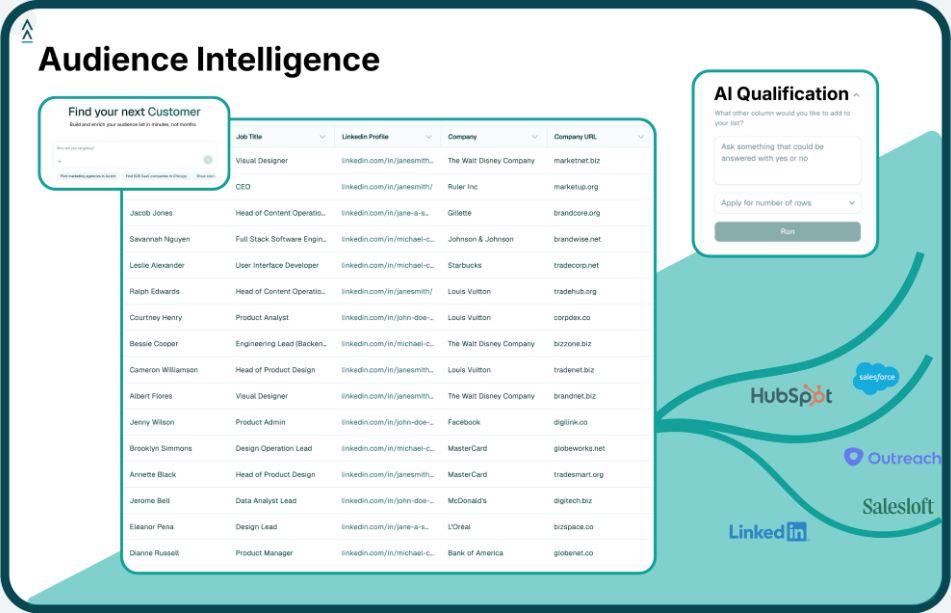
This is where agentic AI platforms like Landbase become essential. Instead of manually filtering through databases or writing complex queries, sales and marketing teams can use natural-language prompts to identify prospects showing the exact signals that indicate buying readiness. For example, prompts like "CFOs at payment processing companies that raised Series C funding in the last 6 months" or "CTOs at fintech startups with 200+ employees hiring for security roles" can instantly generate AI-qualified audiences ready for outreach.
By combining 300 million+ contacts with 1,500+ unique signals across firmographic, technographic, intent, hiring, and funding data, platforms like Landbase enable go-to-market teams to build targeted lists in seconds instead of days. This approach dramatically reduces time-to-value and ensures that outreach efforts are focused on prospects who are most likely to be in the market for new solutions.
A fastest-growing payment tech company demonstrates exceptional growth velocity in key metrics like transaction volume, revenue, user/customer acquisition, or funding raised. Unlike market cap rankings that favor established companies, growth-focused lists prioritize companies showing rapid scaling in 2024-2025, such as Stripe's 38% YoY growth or Ramp's 5.5× volume growth. These companies typically combine strong revenue expansion with significant market impact and customer adoption rates that outpace industry averages.
Funding is critical for fintech startups as it provides the capital needed to scale operations, acquire customers, and develop technology in a competitive market. The $10.3 billion in Q1 2024 global fintech funding demonstrates strong investor confidence in the sector. Recent funding rounds also serve as buying signals for B2B companies, indicating that these startups have capital to invest in new solutions and are likely expanding their teams and operations. Well-funded fintechs can also weather market volatility while continuing to innovate.
AI plays a dual role in payment tech growth. First, many of these companies use AI internally to power their services—Ramp uses AI for cost savings optimization, while Plaid uses machine learning for identity verification. Second, AI-powered go-to-market platforms help these companies scale efficiently by enabling them to identify and target high-value prospects using sophisticated signal analysis and natural-language targeting. AI also enhances fraud detection, underwriting accuracy, and personalized customer experiences across payment platforms.
To effectively target high-growth payment companies, focus on real-time signals rather than static firmographic data. Look for companies that have recently raised funding, are actively hiring for relevant roles, or have changed their technology stack. Platforms like Landbase enable you to use natural-language targeting to identify prospects based on these dynamic signals, ensuring your outreach is timely and relevant to companies that are actively in the market for new solutions. Combining multiple signals like funding events, hiring patterns, and technology adoption increases targeting precision significantly.

Tool and strategies modern teams need to help their companies grow.







