.png)
.png)

Daniel Saks
Chief Executive Officer


The global logistics industry faces massive inefficiencies costing trillions annually—but a new generation of tech companies is turning that problem into opportunity. From autonomous delivery robots navigating city sidewalks to AI systems making millions of supply chain decisions daily, logistics technology has reached an inflection point. The market is growing at 19-23% annually, with over 92,500 new jobs created in the past year alone. For go-to-market teams in the logistics sector, identifying and engaging with these high-growth companies—or leveraging similar AI-powered targeting for their own prospects—is crucial. Platforms like Landbase's agentic AI enable logistics tech companies to find and qualify their ideal customers using natural-language prompts, accelerating growth in this rapidly evolving market.
Nuro designs and operates a fleet of custom-built autonomous delivery vehicles specifically for local goods transport. Unlike traditional self-driving cars, Nuro's vehicles are smaller, electric, and designed exclusively for cargo. The company focuses on safe, neighborhood-scale deliveries for groceries, food, and parcels, with partnerships spanning major retailers and logistics providers.
Nuro pioneered purpose-built autonomous vehicles that reduce delivery costs by up to 50% while eliminating carbon emissions from traditional delivery methods. The company achieved FDA approval enabling prescription medication delivery, expanding use cases beyond traditional parcels. Their strategic Walmart partnership validates autonomous delivery at enterprise scale, demonstrating the technology's readiness for mainstream adoption.
Symbotic designs and implements AI-powered warehouse automation systems that combine robotics, software, and machine learning to create high-density, automated storage and retrieval systems. Their technology enables faster order fulfillment, improved accuracy, and better space utilization for large retailers and logistics companies, processing millions of cases per week with 99.9%+ accuracy.
Symbotic reduces warehouse operating costs by 25-40% while doubling productivity through AI-powered automation. Their high-density storage systems achieve 3x traditional density, making them critical infrastructure for retailers managing e-commerce demand explosion. The company's public market success and rapid revenue growth validate the warehouse automation market's long-term potential.
Symbotic is a publicly traded company (NASDAQ: SYM). The company went public via SPAC merger in June 2022, raising approximately $725 million. As a public company, it raises capital through public equity and debt markets rather than venture funding rounds.
FourKites provides the world's largest real-time supply chain visibility platform, leveraging AI and machine learning to track shipments across modes (road, rail, ocean, air, parcel). The platform delivers predictive ETAs and dynamic route optimization, enabling companies to reduce waste and improve customer satisfaction across global supply chains.
FourKites reduces supply chain costs by 5-8% on average and cuts customer service calls by 50% through real-time visibility and predictive analytics. The platform delivers arrival times with 95%+ accuracy, enabling proactive exception management. Integration with 1,000+ carriers globally provides comprehensive visibility across complex multi-modal supply chains.
Locus Robotics develops autonomous mobile robots designed to work collaboratively with human workers in warehouses and fulfillment centers. Their robots navigate dynamically, optimize pick paths, and increase productivity without replacing human workers—instead augmenting their capabilities to achieve 2-3x productivity improvement over manual picking.
Locus Robotics addresses global warehouse labor shortage while improving efficiency by 200-300% through collaborative automation. Their approach delivers faster ROI than traditional fixed automation with deployment measured in weeks rather than months or years. The company's massive operational scale demonstrates proven technology readiness for enterprise adoption.
Delhivery is India's largest fully integrated logistics and supply chain services company, providing end-to-end logistics solutions including express parcel delivery, less-than-truckload freight, truckload freight, warehousing, and cross-border services. The company handles 15% of India's e-commerce logistics with infrastructure covering 99% of the Indian population.
Delhivery provides critical infrastructure enabling India's $350 billion+ e-commerce market growth with comprehensive coverage across 18,000+ PIN codes. The company processes over 2 million shipments daily, demonstrating operational excellence at massive scale. Their comprehensive tech stack with AI-powered route optimization and real-time tracking sets the standard for emerging market logistics.
Aera Technology's Decision Cloud™ platform uses AI to make and execute real-time supply chain decisions at enterprise scale. The platform processes millions of data points to provide recommendations and automated decisions across demand planning, inventory optimization, and logistics, integrating with major ERP systems like SAP and Oracle.
Aera Technology addresses the $270 billion annual cost of poor supply chain decision-making through cognitive automation that processes millions of decisions daily. The platform automates 95% of routine decisions and enables enterprises to respond 10x faster to market changes. Clients report 15-30% improvement in inventory turns and 10-20% cost reductions, delivering measurable ROI.
Geek+ provides comprehensive robotic and AI-driven warehouse automation solutions including autonomous mobile robots (AMRs), robotic arms, and intelligent logistics systems. Their technology serves e-commerce, retail, manufacturing, and logistics companies worldwide with a particular strength in Asia-Pacific markets.
Geek+ is Asia's fastest-growing warehouse robotics company with global reach, reducing labor costs by 50-70% while increasing efficiency 3-5x. The company plays a critical role for businesses facing the e-commerce explosion in Asia-Pacific markets. Their massive deployment scale across 30+ countries demonstrates proven technology and market validation.
GreyOrange provides AI-powered warehouse automation combining robotic systems with their proprietary GreyMatter™ software platform. Their integrated solution offers the only fully integrated software and robotics solution using advanced fulfillment science, delivering 50% faster implementation and 40% higher efficiency than competitors.
GreyOrange's integrated approach combining software and hardware delivers superior ROI compared to point solutions. Their AI continuously learns and optimizes warehouse operations, improving performance over time. The platform is critical for companies scaling e-commerce fulfillment with adaptive automation that evolves with business needs.
Starship Technologies pioneered small autonomous delivery robots that navigate sidewalks to deliver groceries, meals, and parcels. The robots are designed for short-distance, urban and campus deliveries, operating in over 80 locations globally including college campuses, residential neighborhoods, and business parks.
Starship Technologies has completed more autonomous deliveries than any other robot company globally, with over 6 million deliveries proving the model at scale. Their cost per delivery is 10-15x lower than traditional delivery methods, making last-mile economics sustainable. The company's 99.9% autonomous operation rate across diverse environments demonstrates mature technology readiness.
Vecna Robotics develops AI-powered autonomous mobile robots and workflow orchestration software for material handling in warehouses, distribution centers, and manufacturing facilities. Their Pivotal orchestration engine manages not just robots but entire material flow, reducing implementation time from months to weeks.
Vecna Robotics' orchestration software represents a breakthrough in warehouse automation, managing entire material flow rather than just individual robots. The platform delivers ROI in 12-18 months versus 3-5 years for traditional systems, accelerating adoption. Their hybrid fleet management supports AMRs, AGVs, and manual equipment, providing flexibility for complex operations.
The logistics technology sector represents one of the most significant opportunities in B2B SaaS today. With global supply chain inefficiencies and markets growing at 19-23% CAGR, companies that can solve specific pain points are achieving remarkable growth trajectories.
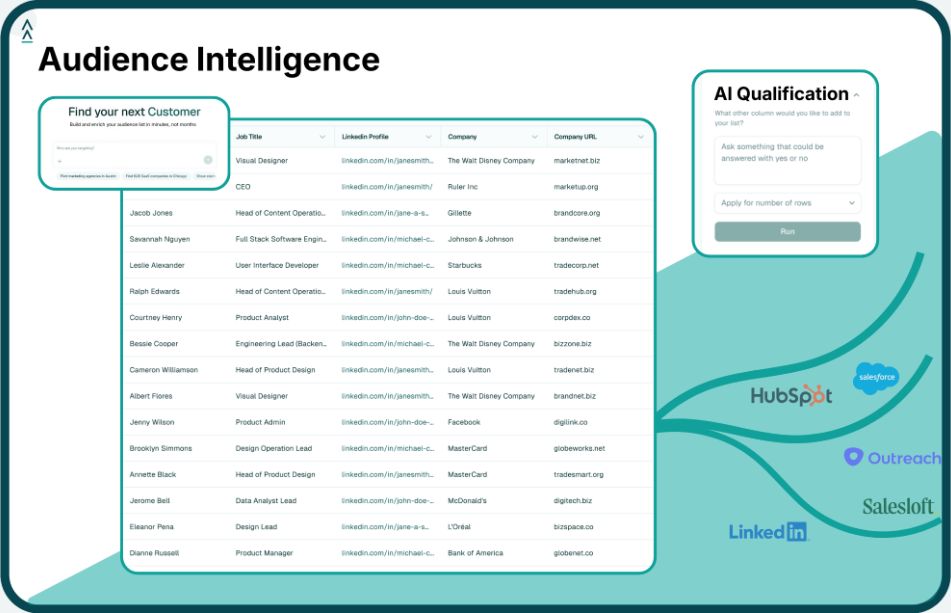
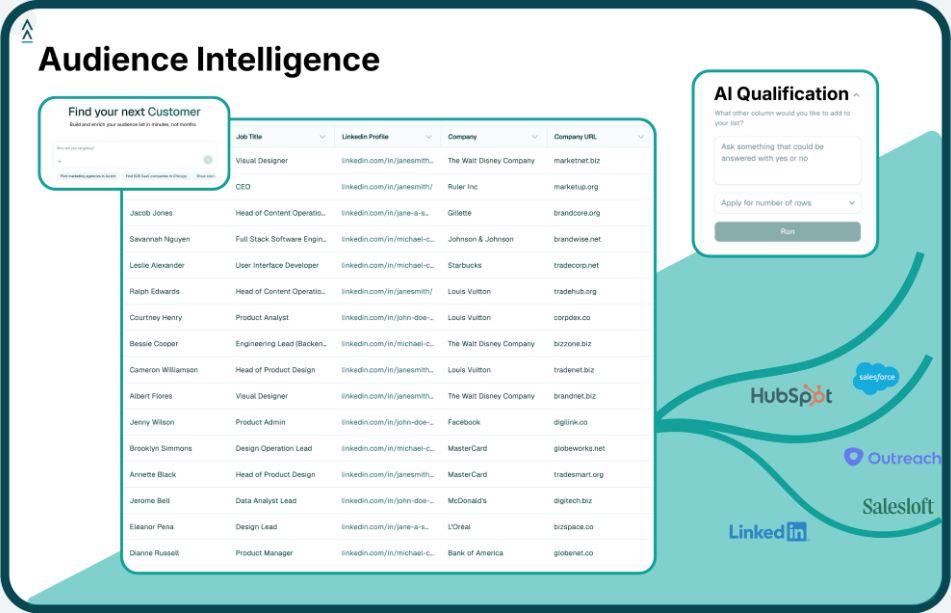
For logistics tech companies looking to accelerate their own go-to-market efforts, identifying and engaging with the right prospects is critical. This is where platforms like Landbase become essential. The VibeGTM interface allows logistics technology providers to use natural-language prompts to find their ideal customers—whether that's "VPs of Supply Chain at Fortune 500 companies currently using legacy warehouse management systems" or "Construction supply distributors in Texas with 50+ employees looking to modernize delivery operations."
By leveraging Landbase's 1,500+ unique signals—including funding rounds, hiring activity, technology stack changes, and real-time intent data—logistics tech companies can build highly targeted prospect lists in seconds rather than days. This capability is particularly valuable in a sector where timing is everything, such as reaching companies that have just raised funding or are expanding into new markets.
The 10 companies profiled here represent different approaches to solving the massive inefficiencies plaguing global logistics. From physical automation with robots and autonomous vehicles to software platforms that bring intelligence and visibility to complex supply chains, these innovators are fundamentally changing how goods move around the world.
Warehouse Automation Leaders like Symbotic, Locus Robotics, and Geek+ are addressing the labor shortage and e-commerce explosion by deploying robots that can work 24/7 while improving accuracy and efficiency. Their success demonstrates that automation is no longer optional for companies handling high-volume fulfillment.
Last-Mile Innovators like Nuro, Starship, and Ottonomy are tackling the most expensive and environmentally impactful segment of delivery. Their autonomous solutions promise to reduce costs dramatically while eliminating carbon emissions from traditional delivery vehicles.
Visibility and Intelligence Platforms like FourKites, Aera, and One Network are bringing the power of AI to supply chain decision-making. By processing millions of data points in real-time, these platforms enable companies to respond to disruptions faster and optimize operations continuously.
Vertical Specialists like Curri, Transparent Path, and Flieber show that deep domain expertise combined with targeted technology can capture significant market share in specialized segments. Their success proves that sometimes the biggest opportunities lie in solving specific problems exceptionally well.
For any company operating in or selling to the logistics technology space, understanding these trends and players is essential. And for those looking to build their own pipelines efficiently, AI-driven audience discovery platforms provide the targeting precision needed to reach decision-makers at the right time with the right message.
Logistics technology companies provide software, hardware, or integrated solutions that optimize the movement, storage, and tracking of goods across supply chains. This includes warehouse automation, transportation management, supply chain visibility, last-mile delivery, and inventory optimization. The sector addresses massive inefficiencies in global logistics through digital transformation and automation, with markets growing at 19-23% annually.
Autonomous robots are transforming warehouse operations by addressing labor shortages while dramatically improving efficiency and accuracy. Companies like Locus Robotics have completed 3 billion+ picks as of May 2024 while Symbotic processes millions of cases weekly with 99.9%+ accuracy. These systems reduce operating costs by 25-40% while doubling productivity, making them essential infrastructure for modern e-commerce fulfillment.
AI plays a critical role in supply chain visibility and decision-making by processing millions of data points in real-time to provide predictive insights and automated recommendations. FourKites tracks 2 million+ shipments daily with 95%+ accuracy in arrival time predictions, while Aera Technology automates 95% of routine supply chain decisions. This real-time intelligence enables companies to respond to disruptions faster and optimize operations continuously.
Vertical specialization is crucial in logistics technology because different industries have unique requirements and pain points. Curri's focus on construction materials delivery, Transparent Path's expertise in food supply chain monitoring, and Flieber's specialization in e-commerce inventory optimization demonstrate that deep domain knowledge combined with targeted technology can capture significant market share. These specialized solutions address industry-specific challenges that generic platforms cannot solve effectively.
Key growth indicators for logistics technology companies include funding raised, client acquisition, operational scale metrics, and geographic expansion. The companies profiled here show strong growth through $2 billion+ funding for Nuro, Symbotic's $1.18 billion revenue for fiscal 2023, Delhivery's 2 million+ daily shipments, and Geek+'s 30,000+ robot deployments. These metrics demonstrate market validation and operational scale.
Companies in the logistics sector can find and qualify high-value prospects using platforms with natural-language targeting and comprehensive signal data. Instead of manually filtering through databases, they can use plain-English prompts like "Supply Chain VPs at Fortune 500 companies that raised funding in the last 6 months" to generate AI-qualified prospect lists instantly. This approach leverages 1,500+ unique signals including firmographic, technographic, intent, hiring, and funding data to identify prospects at the optimal time for engagement.
Tool and strategies modern teams need to help their companies grow.