January 14, 2026

10 Fastest Growing Collaboration Tech Companies and Startups

Discover the 10 fastest-growing collaboration tech companies transforming teamwork with agentic AI, from Cursor's +1,000% growth to autonomous customer service agents reshaping go-to-market strategies across industries.
  • Button with overlapping square icons and text 'Copy link'.
Table of Contents

Major Takeaways

What's driving the explosive growth in collaboration technology?
The collaboration tech market is expanding from $69.2 billion in 2024 to a projected $85.4 billion by 2029, fueled by the widespread adoption of agentic AI that transforms how teams communicate and engage with customers. Unlike passive AI assistants, these autonomous agents can reason, adapt, and independently execute workflows across coding, customer service, and sales operations.
How are startups challenging established collaboration platforms?
Hypergrowth startups like Anysphere (Cursor) achieved unprecedented +1,000% year-over-year growth in 2025, outpacing every other vendor in benchmark data. Vertical-specific platforms targeting industries like healthcare and sales are outperforming horizontal solutions by addressing unique compliance needs and workflow requirements that generic tools cannot solve.
Why does natural-language targeting matter for go-to-market teams?
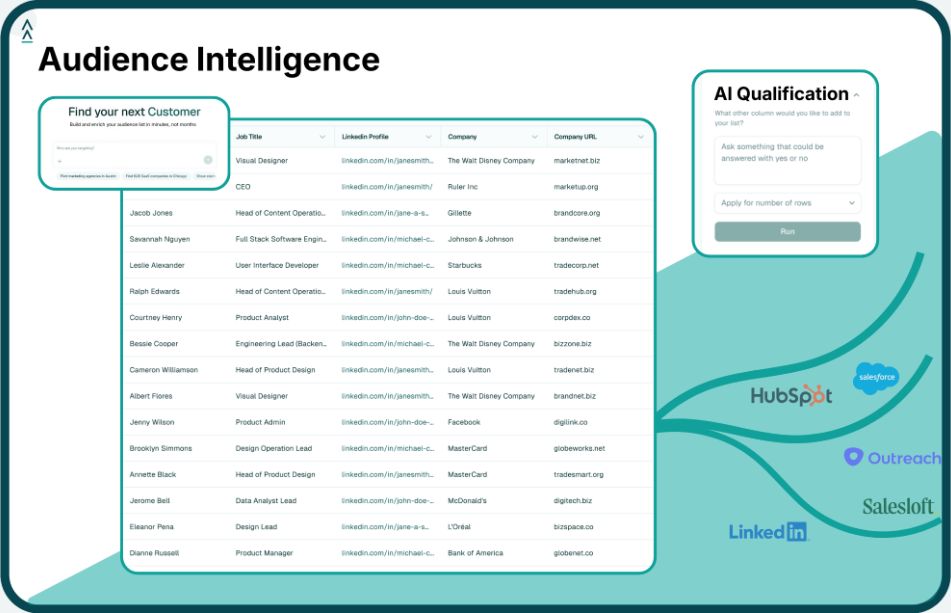
As collaboration platforms generate rich signals about prospect intent and engagement patterns, sales and marketing teams need equally sophisticated tools to identify high-value accounts. Natural-language audience discovery platforms enable teams to build targeted prospect lists in seconds using plain-English prompts based on real-time collaboration data and 1,500+ firmographic, technographic, and intent signals.

The collaboration technology industry has reached an inflection point, with the market valued at $69.2 billion in 2024 and projected to grow to $85.4 billion between 2025 and 2029. This explosive growth is fueled by the widespread adoption of agentic AI, which is transforming how teams communicate, collaborate, and engage with customers. From AI-powered coding assistants to autonomous customer service agents, these innovations are reshaping go-to-market strategies across industries. For sales and marketing teams looking to leverage these advances, platforms like Landbase's agentic AI offer a complementary approach by enabling natural-language audience discovery and qualification, helping teams identify and engage the right prospects at the right time.

Key Takeaways

  • Collaboration tech market is experiencing rapid growth – The enterprise collaboration market reached $64.90 billion in 2025 and is projected to expand to $121.47 billion by 2030, reflecting a 13.4% CAGR as organizations embrace AI-powered workflows.
  • AI agents are replacing AI assistants – The shift from passive AI assistance to autonomous AI agents is defining the next generation of collaboration tools, with companies like Cursor, RingCentral, and Talkdesk leading this transformation.
  • Hypergrowth startups are challenging established players – Anysphere (Cursor) achieved an unprecedented +1,000% year-over-year growth, spending that compounded every single month in 2025, a feat no other vendor in Brex's data can claim.
  • Vertical specialization is creating new opportunities – Industry-specific platforms like TigerConnect (healthcare) and Wildix (sales teams) are outperforming horizontal solutions by addressing unique workflow requirements and compliance needs.
  • Free AI integration is disrupting pricing models – Google's decision to offer Gemini AI integration at no additional charge for Workspace Business and Enterprise subscribers is forcing competitors to rethink their AI monetization strategies.
  • Natural-language targeting is becoming essential for GTM teams – As collaboration tools generate more signals about prospect intent and engagement, platforms like Landbase's VibeGTM interface enable teams to build targeted audiences using plain-English prompts based on real-time collaboration data.

1. Anysphere (Cursor) — AI Coding Collaboration Platform

What They Do:

Anysphere (Cursor) has developed an AI-powered code editor that transforms how software development teams collaborate. The platform provides intelligent code completion, real-time suggestions, code explanations, and refactoring assistance across 70+ programming languages. It functions as a complete IDE (Integrated Development Environment) that understands project context and enables developers to write code faster through AI-native workflows.

Why They're Important:

  • Represents the shift from AI as an experimental tool to AI as foundational infrastructure for collaboration
  • Enables engineering teams to "hire more, build faster, and allocate bigger budgets to speed"
  • Used by leading tech companies including Figma, Ramp, and Shopify
  • Sets the standard for agentic AI in developer tools

Key Stats / Metrics:

Leadership:

  • Founders: Michael Truell
  • Founded: 2022

Recent Funding:

  • Most Recent Round: $2.3B Series D (November 2025)
  • Valuation: $29.3B

2. Notion — All-in-One AI Workspace

What They Do:

Notion creates an all-in-one workspace combining notes, tasks, wikis, and databases into a single flexible platform. The block-based editor allows teams and individuals to build custom systems for project management, knowledge sharing, and collaboration. Recently launched Notion 3.0 introduces Notion Agents—AI assistants that automate repetitive tasks, organize workspaces, and collaborate alongside human teams.

Why They're Important:

  • Pioneered the "all-in-one workspace" category, challenging the need for multiple collaboration tools
  • Deep penetration into enterprise (62% of Fortune 100) and startup ecosystems (50% of Y Combinator companies)
  • Transition to AI-native workflows with Notion Agents positions it at the forefront of next-generation collaboration
  • Trusted by leading tech companies including OpenAI, Figma, Ramp, and Cursor

Key Stats / Metrics:

Leadership:

  • CEO: Ivan Zhao
  • Founded: 2016

Recent Funding:

  • Most Recent Round: $275M Series D (September 2021)
  • Valuation: $11B

3. Zoom — AI Video Collaboration & UCaaS Platform

What They Do:

Zoom provides AI-powered video conferencing, phone, chat, and contact center solutions unified in Zoom Workplace. In 2025, Zoom unveiled agentic AI Companion 3.0 with 45+ new skills across Meetings, Team Chat, Docs, Phone, Whiteboard, and Contact Center. The platform introduced 16 third-party app integrations via Custom AI Companion add-on and self-service capabilities for partners.

Why They're Important:

  • Became synonymous with video collaboration during the remote work revolution and continues innovating with AI-first features
  • Partner-first strategy and rapid AI integration demonstrate how established players are defending market share
  • Successful diversification beyond core video into contact center (100% growth) shows strategic expansion
  • 6th consecutive year as a Gartner Magic Quadrant Leader for UCaaS

Key Stats / Metrics:

Leadership:

  • CEO: Eric Yuan
  • Founded: 2011

Recent Funding:

  • Most Recent Round: $115M Series D (January 2017)
  • Valuation: $25B

4. RingCentral — AI Business Communications & UCaaS Platform

What They Do:

RingCentral delivers unified communications suites — voice, messaging, meetings, contact center — with AI‑powered capabilities like RingEX, RingCX, and AI Receptionist.

Why They're Important:

  • Long‑standing UCaaS category leader
  • AI product suite gaining enterprise traction
  • Consistent revenue growth and strong subscription base

Key Stats / Metrics:

Leadership:

  • CEO: Vlad Shmunis
  • Founded: 1999

Recent Funding:

  • Most Recent Round: $650M Post IPO (September 2020)

5. Microsoft Teams — Enterprise Collaboration Giant

What They Do:

Microsoft Teams is the world's largest collaboration platform, integrating chat, video, voice, file storage, and apps within Microsoft 365 ecosystem. In 2025, Teams updated its AI library with agentic memory, Agent2Agent Protocol (A2A), Model Context Protocol (MCP), and Meeting AI Insights API. Teams mobile enhanced agent experience for iOS/Android, allowing AI assistance without leaving workflows.

Why They're Important:

  • Dominates the collaboration category and shapes industry standards
  • Consolidation of Skype into Teams reinforces Microsoft’s collaboration strategy
  • Deep Microsoft 365 integration creates powerful network effects
  • Frequent AI-driven innovation updates keep Teams competitive

Key Stats / Metrics:

  • 32.29% global market share
  • 300 million monthly active users reported by late 2023 across Microsoft Teams products 
  • Integrated within Microsoft 365—part of Microsoft’s revenue of $281.7B fiscal 2025 

Leadership:

  • CEO: Satya Nadella
  • Founded: 2017

Recent Funding:

6. Otter.ai — AI Meeting Notetaker & Conversation Intelligence

What They Do:

Otter.ai builds an AI-powered meeting assistant that automatically transcribes conversations, generates detailed notes, and identifies action items across all discussions. The platform offers specialized AI Notetakers for Sales, Education, Media, SDR, and Recruiting use cases. Features include real-time transcription, automated summaries, AI Chat for extracting insights, and voice-activated queries via "Hey Otter."

Why They're Important:

  • Pioneered the AI notetaking category and remains a market leader
  • Specialized agents for different roles (sales, recruiting, SDR) demonstrate function-specific collaboration
  • Integration with major platforms (Zoom, Google Meet, Teams, Slack, Salesforce, HubSpot) makes Otter essential infrastructure
  • Wall Street Journal recognition validates market impact

Key Stats / Metrics:

  • ~$70 million total funding raised since inception
  • ~25 million users as of 2025 (company and analyst estimates)
  • Estimated ~$100M annual recurring revenue in 2025

Leadership:

  • CEO: Sam Liang
  • Founded: 2016

Recent Funding:

  • Most Recent Round: $50M Series B (February 2021)

7. Talkdesk — AI Contact Center (CCaaS) & CX Automation

What They Do:

Talkdesk provides AI-powered contact center solutions with a focus on agentic AI automation. In spring 2025, Talkdesk launched AI Agents for Voice, enabling lifelike conversations where virtual agents independently handle customer queries by analyzing situations and making informed decisions. The Customer Experience Automation (CXA) platform replaces fragmented workflows with unified intelligent autonomous AI agents.

Why They're Important:

  • Pioneering the shift from traditional CCaaS to Customer Experience Automation
  • Dynamic speech interpretation without rigid scripts represents a major advancement in conversational AI
  • Enterprise focus demonstrates how collaboration technology is transforming customer-facing operations at scale
  • Multi-billion dollar valuation shows market validation

Key Stats / Metrics:

  • $501 million total funding raised across rounds
  • Valued at $10B
  • 85% growth rate

Leadership:

  • CEO: Tiago Paiva
  • Founded: 2011

Recent Funding:

  • Most Recent Round: $230M Series D (August 2021)
  • Valuation: $10B 

8. Mural — Visual Collaboration & Digital Whiteboarding

What They Do:

Mural provides a collaborative intelligence platform serving as a digital whiteboard for teams to think and work visually. Used for interactive workshops, project planning, and brainstorming, Mural enables better alignment and innovation for distributed organizations. In October 2024, Mural launched Innovation Workspace, an AI-powered platform helping teams move from brainstorming to execution with canvas-first approach.

Why They're Important:

  • Pioneered visual collaboration at scale, proving asynchronous creative work can be as effective as in-person sessions
  • Innovation Workspace launch shows evolution from whiteboard tool to comprehensive innovation platform
  • Integration with Microsoft 365 and Google Workspace demonstrates positioning as enterprise-grade collaboration infrastructure
  • Used by distributed organizations globally

Key Stats / Metrics:

Leadership:

  • CEO: Mariano Suarez-Battan
  • Founded: 2011

Recent Funding:

  • Most Recent Round: $50.7M Series C (July 2021) 
  • Valuation: $2B

9. TigerConnect — Clinical Collaboration Platform for Healthcare

What They Do:

TigerConnect builds a clinical collaboration platform to streamline communication and workflows for healthcare providers. The secure, HIPAA-compliant software connects care teams and integrates with existing clinical systems, improving patient care coordination. The platform enables secure messaging, care team coordination, and clinical workflow automation.

Why They're Important:

  • Demonstrates verticalization trend in collaboration—building industry-specific solutions
  • Healthcare's strict compliance requirements (HIPAA) create high barriers to entry
  • Integration with clinical systems shows collaboration platforms becoming mission-critical healthcare infrastructure

Key Stats / Metrics:

  • $426 million total raised
  • Ranked 1st among 230 active competitors
  • $370 million post money valuation

Leadership:

  • Founders: Andrew Brooks M.D.
  • Founded: 2010

Recent Funding:

  • Most Recent Round: $300M Series E (January 10)
  • Valuation: $370M

10. Five9 – AI-Powered Cloud Contact Center (CCaaS)

What They Do:

Five9 offers a cloud-based contact center platform with AI capabilities (Genius AI) for agent assistance, intelligent routing, and automated experience enhancements.

Why They're Important:

  • Early AI adoption in CCaaS space
  • Public company (NASDAQ: FIVN) offers transparency and market validation
  • Continues expanding AI features for enterprise customers

Key Stats / Metrics:

  • $84.1 million total funding raised
  • $1.04 billion annual revenue
  • 1,513 employee count

Leadership:

  • CEO: Mike Burkland
  • Founded: 2001

Recent Funding:

  • Most Recent Round: $650M Post IPO (May 2020)

The Future of Collaboration: AI-Powered Go-to-Market Integration

The companies profiled in this list demonstrate that collaboration technology has evolved far beyond simple communication tools. Today's platforms are intelligent, autonomous systems that can understand context, make decisions, and take action independently. This shift has profound implications for go-to-market strategies.

As these collaboration platforms generate rich signals about prospect intent, engagement, and buying readiness, sales and marketing teams need equally sophisticated tools to identify and prioritize the right accounts. This is where natural-language audience discovery platforms like Landbase become essential. By leveraging 1,500+ unique signals across firmographic, technographic, intent, hiring, and funding data, Landbase enables teams to build targeted lists in seconds using plain-English prompts.

For example, a sales team could use Landbase to identify "Sales VPs at mid-market consulting firms using RingCentral that are scaling outbound teams" or "Marketing Directors at healthcare technology firms that recently visited competitor pricing pages." This level of precision, combined with the collaboration intelligence from platforms like those profiled above, creates a powerful go-to-market engine that can identify, engage, and convert high-value prospects at scale.

How We Selected These Collaboration Tech Companies

This list highlights the 10 fastest-growing collaboration technology companies based on:

  • Growth Velocity – Verified funding momentum, YoY growth rates, user acquisition metrics from sources like Brex Benchmark and TechCrunch
  • Innovation Index – AI/agentic capabilities, product launches, and technology advancements documented in CRN and company announcements
  • Market Validation – Funding amounts, investor quality, customer counts, and market share data from Crunchbase, Failory, and market research reports
  • Industry Relevance – Importance to the collaboration category, GTM applicability, and alignment with current trends like agentic AI and vertical specialization

All companies included have demonstrated significant growth or innovation in 2024-2025, with verified funding rounds, product launches, or market metrics from the research input sources.

Frequently Asked Questions

What defines a "fastest growing" collaboration tech company in 2025?

Fastest growing collaboration tech companies in 2025 are defined by explosive user adoption, significant funding rounds, and the successful integration of agentic AI capabilities. Companies like Anysphere (Cursor) achieved +1,000% YoY growth, while RingCentral deployed AI Receptionists to 2,000+ organizations. The shift from AI assistants to autonomous AI agents is the key differentiator separating leaders from laggards.

How do collaboration tools enhance go-to-market strategies?

Modern collaboration tools enhance go-to-market strategies by providing rich signals about prospect intent and engagement. Platforms like Otter.ai generate meeting intelligence that saves 4+ hours weekly per user, while specialized tools like Wildix offer deep Salesforce integration for sales teams. These signals can be leveraged by natural-language targeting platforms to identify high-value prospects based on their collaboration patterns, technology stack, and engagement behaviors. The combination of collaboration intelligence and AI-powered prospecting creates more effective sales and marketing workflows.

What role does AI play in the evolution of collaboration software?

AI has evolved from simple automation features to agentic capabilities that can reason, adapt, and take action independently. The collaboration software industry has shifted from AI assistants that respond to queries to AI agents that proactively manage workflows, customer interactions, and decision-making. This transformation is evident in platforms like Talkdesk's Customer Experience Automation and RingCentral's AI Receptionist, which can handle entire customer journeys without human intervention. AI is no longer a feature but the foundational infrastructure powering next-generation collaboration.

How important is vertical specialization in collaboration technology?

Vertical specialization has become increasingly important as generic collaboration tools struggle to address industry-specific workflows and compliance requirements. Companies like TigerConnect (healthcare) with $433.9 million funding and Wildix (sales teams) demonstrate that purpose-built solutions outperform horizontal platforms in specialized markets. This trend reflects the maturation of the collaboration market, where deep workflow integration and regulatory compliance trump broad feature sets. Industry-specific platforms deliver higher ROI by solving unique challenges that generic tools cannot address.

Can small businesses effectively implement the same collaboration tech as large enterprises?

Yes, SMBs are often adopting collaboration technology faster than large enterprises due to simplified procurement and less legacy infrastructure. Additionally, freemium models from companies like Google (free Gemini AI) and Notion (100M+ users) make advanced collaboration technology accessible to organizations of all sizes. Cloud-based delivery and pay-as-you-grow pricing have democratized enterprise-grade collaboration tools for the SMB market.

  • Button with overlapping square icons and text 'Copy link'.

Stop managing tools. 
Start driving results.

See Agentic GTM in action.
Get started
Our blog

Lastest blog posts

Tool and strategies modern teams need to help their companies grow.

Compare the best AI agent monetization platforms for usage-based billing, micropayments, and autonomous agent commerce.

Daniel Saks
Chief Executive Officer

Discover the 10 fastest-growing gaming tech companies in 2026, from Turkish mobile studios raising billions to AI research labs reshaping development, plus key funding trends and emerging business models disrupting the $197.7 billion gaming industry.

Daniel Saks
Chief Executive Officer

Discover the 10 fastest-growing creator economy tech companies raising billions in 2025, from AI video generation leaders like Runway to social shopping pioneer Whatnot reshaping how creators monetize content.

Daniel Saks
Chief Executive Officer

Stop managing tools.
Start driving results.

See Agentic GTM in action.