Daniel Saks
Chief Executive Officer


The go-to-market landscape has gotten complicated fast. Between the 12-15 tools in your average tech stack and the explosion of AI capabilities, it's no wonder companies are scrambling to figure out who should own what. Enter the RevOps vs GTM Engineering debate—two distinct but complementary functions that are reshaping how companies approach revenue operations. While RevOps focuses on optimizing existing processes, GTM Engineering builds new systems from scratch. Understanding this distinction is crucial for any company looking to scale efficiently without drowning in operational chaos.
The confusion is real: LinkedIn is flooded with posts about "GTM Engineers," but many companies aren't sure if they need this role or if it's just RevOps with a fancy new title. The reality is more nuanced. RevOps keeps the trains running on time, while GTM Engineering experiments with how to build faster trains. Both are essential at different stages of growth, and increasingly, they work together to create what industry experts call "autonomous go-to-market" systems powered by agentic AI.
Revenue Operations (RevOps) is the backbone of any scalable go-to-market motion. Think of RevOps as the air traffic control system for your revenue engine—ensuring smooth coordination between sales, marketing, and customer success teams. RevOps professionals focus on process optimization, data governance, and cross-functional alignment to drive predictable revenue growth.
RevOps emerged as a response to the siloed nature of traditional go-to-market functions. Instead of having separate operations teams for sales, marketing, and customer success, RevOps creates a unified approach that aligns all revenue-generating activities around common goals and metrics.
Core RevOps responsibilities include:
RevOps teams are essential for companies that have moved beyond founder-led sales and need systematic processes to scale. According to QuotaPath data cited by Apollo.io, companies with aligned RevOps functions achieve 36% more revenue growth and 19% faster growth overall.
Most companies should consider their first RevOps hire once they hit $1M in annual recurring revenue (ARR) with at least three sales representatives. This is when process debt starts to accumulate, data quality becomes critical, and cross-functional alignment becomes challenging without dedicated oversight.
RevOps is particularly valuable for:
GTM Engineering is the innovation engine of modern revenue operations. While RevOps optimizes what exists, GTM Engineering starts with a blank canvas to build new capabilities that didn't exist before. As Jake Gill, Founder of Engineered GTM, puts it: "RevOps optimises existing systems. GTM Engineering starts with a blank canvas... One improves the machine; the other engineers it."
GTM Engineers are technical specialists who combine deep revenue operations knowledge with engineering skills to create custom solutions for complex go-to-market challenges. They're responsible for building data models, creating API integrations, developing automation scripts, and implementing AI-powered workflows that push the boundaries of what's possible with off-the-shelf tools.
GTM Engineering core deliverables:
GTM Engineering emerged as a distinct function around 2022-2023, accelerated by the explosion of AI tooling and the increasing complexity of modern tech stacks. The role has seen 205% year-over-year growth, making it one of the fastest-growing positions in revenue operations.
GTM Engineering is typically a luxury for early-stage companies but becomes essential as organizations scale. Most experts recommend adding GTM Engineering capabilities once you reach $5-10M in ARR and have a stable RevOps foundation in place.
GTM Engineering is particularly valuable when:
The clearest way to understand the difference between RevOps and GTM Engineering is through the Build vs. Run operating model, popularized by Saad Bayezeed, Head of Revenue Operations at Easygenerator. This framework provides a structured approach to dividing responsibilities and ensuring both functions can operate effectively without stepping on each other's toes.
RevOps operates in the "Run" domain, focused on maintaining and optimizing existing systems. Their success is measured by operational stability, process adoption, and forecast accuracy. GTM Engineering operates in the "Build" domain, focused on creating new capabilities and driving innovation. Their success is measured by technical outcomes like automation coverage and system uptime.
Key differences in focus:
Saad Bayezeed describes GTM Engineering as the "R&D arm for RevOps." In this model, RevOps keeps the trains running while GTM Engineering experiments with how to build faster trains. This creates a healthy tension between stability and innovation that drives continuous improvement in go-to-market operations.
The R&D Arm concept works through structured experimentation cycles:
This handoff process is critical—without clear protocols, organizations risk either stifling innovation (if RevOps blocks all changes) or creating operational chaos (if GTM Engineering deploys untested solutions directly to production).
The skill requirements and compensation structures for RevOps and GTM Engineering reflect their fundamentally different roles in the organization. Understanding these differences is crucial for hiring the right people and setting appropriate expectations.
RevOps professionals need strong analytical skills, process design expertise, and the ability to work across functions. They should be proficient in CRM administration, basic SQL for reporting, and understanding of go-to-market metrics. GTM Engineers, by contrast, need deep technical skills including advanced SQL, Python programming, API design, and increasingly, machine learning and AI implementation.
RevOps core skills:
GTM Engineering core skills:
The compensation difference between RevOps and GTM Engineering is perhaps the most telling indicator of their distinct roles. RevOps compensation is typically stable and operations-focused, with median salaries ranging from $84K to $176K according to industry data. GTM Engineering compensation, however, is structured more like a revenue role, with 25-50% variable compensation tied to measurable outcomes.
This variable compensation model reflects the direct revenue impact that GTM Engineers can have through their work. When a GTM Engineer builds an automation that saves 500 hours of manual work per month or creates an AI agent that generates qualified meetings, that value can be directly quantified and rewarded.
Knowing when to invest in RevOps versus GTM Engineering is critical for efficient resource allocation. Hiring too early wastes precious capital, while hiring too late creates operational debt that's expensive to fix later.
The optimal hiring sequence follows a predictable pattern based on company maturity and revenue scale:
This timeline isn't rigid—some companies may need GTM Engineering capabilities earlier if they're pursuing particularly technical go-to-market strategies or if they're in highly competitive markets where innovation velocity is critical.
The most common mistake companies make is trying to hire a "unicorn" who can do both RevOps and GTM Engineering. While some professionals have skills in both areas, the mindsets and day-to-day work are fundamentally different. RevOps professionals thrive on stability and process, while GTM Engineers thrive on experimentation and innovation.
Other common mistakes include:
When done right, RevOps and GTM Engineering create a powerful feedback loop that drives continuous improvement in go-to-market operations. The key is establishing clear collaboration frameworks that leverage the strengths of both functions while minimizing friction.
Successful organizations use RACI (Responsible, Accountable, Consulted, Informed) matrices to clarify roles and responsibilities for joint projects. For example, when implementing a new AI-powered lead scoring system:
These structured handoff protocols prevent the common scenario where GTM Engineering builds something impressive that RevOps can't maintain, or where RevOps blocks innovation because it doesn't fit existing processes.
Some of the most successful collaborations between RevOps and GTM Engineering happen around:
Artificial intelligence is fundamentally changing both RevOps and GTM Engineering, creating new opportunities for collaboration while also challenging traditional role boundaries. The emergence of agentic AI systems that can autonomously research, qualify, and engage prospects is particularly transformative.
For RevOps, AI is shifting the focus from data wrangling to strategic oversight. Instead of spending time cleaning data and creating reports, RevOps professionals can focus on interpreting AI-generated insights and ensuring AI outputs align with business goals.
For GTM Engineering, AI is both a tool and a subject of innovation. GTM Engineers are now responsible for not just implementing AI tools but orchestrating complex AI agent workflows that can handle entire go-to-market functions autonomously.
The future of both roles will center on AI governance and orchestration rather than manual execution, as AI takes over repetitive tasks and allows humans to focus on relationship-building and strategic decision-making.
Perhaps the most exciting development is the democratization of GTM Engineering capabilities through AI platforms. Companies like Landbase are building platforms that provide GTM Engineering-level capabilities without requiring specialized technical talent. This means mid-market companies that could never afford a dedicated GTM Engineering team can now access advanced automation and AI orchestration.
As Daniel Saks, CEO of Landbase, puts it: "The future of GTM shouldn't need to include GTM Engineers. When a GTM Engineer's job is to orchestrate tools like Clay... something's broken. At Landbase, we have an AI lab of data scientists, so you don't have to."
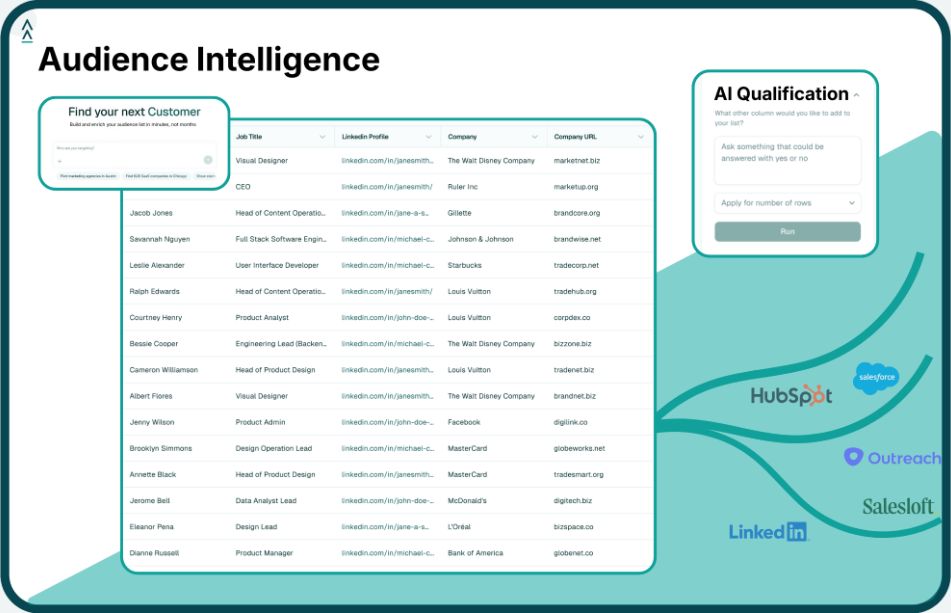
For companies that aren't ready to hire dedicated GTM Engineering talent but still want access to advanced go-to-market capabilities, Landbase offers a compelling alternative. The platform combines GTM-2 Omni, an agentic AI model trained on billions of GTM data points, with the VibeGTM interface that allows users to build AI-qualified audiences using natural language.
This approach effectively democratizes GTM Engineering by providing the technical capabilities without requiring the specialized talent. Instead of hiring a GTM Engineer to build complex audience discovery workflows, companies can simply type a prompt like "SaaS startups in Europe hiring for RevOps" and get an AI-qualified export ready for activation.
Landbase's platform is particularly valuable for:
The platform's free tier allows unlimited prompt searches with up to 10,000 exports per session, making it accessible even for early-stage companies. This represents a fundamental shift in how companies can access advanced go-to-market capabilities—through platforms rather than people.
RevOps focuses on optimizing and maintaining existing go-to-market processes (the "Run" function), while GTM Engineering focuses on building new technical capabilities and systems from scratch (the "Build" function). RevOps ensures operational stability and process efficiency, while GTM Engineering drives innovation and technical experimentation. Think of RevOps as keeping the trains running on time, while GTM Engineering experiments with building faster trains. Both functions are essential at different stages of company growth and work together through structured handoff protocols.
Agentic AI platforms like Landbase's GTM-2 Omni allow RevOps teams to access advanced audience discovery capabilities without technical dependencies, while giving GTM Engineering teams a foundation to build upon rather than starting from scratch. Both functions can focus on higher-value strategic work rather than manual execution. For RevOps, AI shifts focus from data wrangling to interpreting insights and ensuring AI outputs align with business goals. For GTM Engineering, AI enables orchestration of complex agent workflows instead of building everything manually.
Yes, most companies should establish successful RevOps before considering GTM Engineering. RevOps is essential for companies with $1M+ ARR, while GTM Engineering becomes valuable at $5-10M+ ARR once basic processes are stable. Many companies operate successfully with just RevOps, especially if they use AI platforms that democratize GTM Engineering capabilities. However, AI platforms are now making GTM Engineering capabilities accessible to companies that may never hire dedicated GTM Engineers, allowing mid-market companies to access advanced automation without specialized headcount.
RevOps provides the process foundation and success metrics for autonomous systems, while GTM Engineering builds the technical infrastructure and AI agent workflows that enable autonomy. Together, they create systems where AI can handle repetitive tasks like prospect research and qualification, freeing humans to focus on relationship-building and strategic decision-making. RevOps ensures AI outputs align with business goals and integrates them into existing workflows, while GTM Engineering orchestrates the AI agents and maintains the technical infrastructure. This collaboration creates the "Build vs. Run" framework that drives continuous innovation while maintaining operational stability.
Tool and strategies modern teams need to help their companies grow.