.png)
.png)
.png)

Daniel Saks
Chief Executive Officer


Identifying prospects who are actively evaluating your solution is the holy grail of B2B sales. The 'Viewed Docs' signal—when prospects engage with pricing pages, product documentation, case studies, or sales proposals—represents one of the strongest indicators of buying intent. By leveraging this behavioral data, revenue teams can build highly targeted prospect lists that convert at significantly higher rates than traditional cold outreach. The Landbase Platform combines agentic AI with real-time signal tracking to help teams instantly identify and qualify accounts showing document engagement, transforming anonymous visitors into actionable opportunities.
Unlike static firmographic targeting that casts a wide net across your entire total addressable market, viewed document signals pinpoint the roughly 5% of accounts that are actually in-market and ready to buy. This precision approach eliminates wasted outreach efforts and focuses sales resources on prospects demonstrating genuine interest through their content consumption behavior.
The 'Viewed Docs' signal captures behavioral intent when prospects interact with sales-critical content on your website or digital sales rooms. This includes viewing pricing pages, downloading product specifications, spending time on implementation guides, or reviewing case studies. Unlike demographic data that tells you who a company is, document engagement reveals what they're actively doing—evaluating solutions to solve a specific business problem.
The 'Viewed Docs' signal encompasses any engagement with content that indicates solution evaluation. This includes the following:
The signal becomes even more powerful when you track not just whether content was viewed, but how it was consumed—time spent per section, which pages received the most attention, and whether multiple stakeholders engaged with the same material.
Document analytics platforms reveal that prospects who view pricing information are demonstrating bottom-of-funnel intent that requires immediate sales engagement. Pricing page visits and demo page views are clear indicators that prospects have moved beyond research into active evaluation.
Document engagement represents a significant step in the buyer's journey because it requires active participation. When prospects voluntarily spend 5+ minutes on pricing pages or implementation guides, they're signaling serious purchase consideration. This behavior is fundamentally different from passive content consumption like reading blog posts or watching generic videos.
Multi-stakeholder engagement dramatically increases conversion probability. Proposals viewed by multiple stakeholders indicate that the buying committee is aligned and actively evaluating the solution. This makes document engagement one of the most reliable predictors of deal progression.
To effectively leverage viewed document signals, teams must shift from volume-based to precision-based list building. Traditional approaches targeting entire industries or company sizes waste resources on the accounts that aren't actively buying. Instead, focus on building lists of accounts demonstrating active evaluation behavior through document engagement.
This requires implementing tracking across your content ecosystem—website pages, sales proposals, digital sales rooms, and even email attachments. The goal is to create a unified view of document engagement that can trigger immediate action when prospects show buying intent. The most successful teams treat document views as real-time alerts that demand immediate response rather than data points to be analyzed later.
While document engagement is a powerful signal on its own, its true value emerges when combined with complementary website analytics and behavioral data. Single signals rarely tell the complete story—layering multiple indicators creates a comprehensive picture of buying readiness and intent.
Not all document views carry equal weight. Prospects who view pricing pages multiple times demonstrate different intent than those who spend extended time on technical documentation.
Tracking the sequence of document views reveals the buyer's journey stage:
Digital sales rooms and proposal tracking platforms provide granular insights into this behavior, showing time spent per section, which stakeholders engaged with specific content, and whether prospects shared materials internally. This level of detail enables highly personalized follow-up that addresses specific concerns or questions demonstrated through their content consumption patterns.
The most actionable viewed docs signals occur when combined with other high-intent behaviors. A prospect who views pricing pages and visits demo request pages is demonstrating clear purchase intent that demands immediate engagement. Similarly, accounts that download competitor comparison guides while also viewing your pricing indicate they're in the final evaluation stage.
Combining first-party signals like website visitor behavior with second-party signals (G2 reviews, social engagement) and public signals (funding, hiring) creates the most actionable outreach opportunities. The key is identifying signal combinations that indicate both need and readiness to buy.
Repeat visits to document-heavy pages indicate sustained interest and ongoing evaluation. Prospects who return to pricing pages multiple times within a week are more likely to be comparing options or seeking internal approval. This behavior should trigger different outreach than first-time visitors.
Multi-signal approaches that combine document views with firmographic fit and trigger events create exponentially better qualification. For example, a company that recently hired a new CTO (trigger event) + is viewing your DevOps documentation (document signal) + has the right company size and industry (firmographic fit) represents a high-priority prospect requiring immediate attention.
Raw document engagement data requires significant processing to become actionable. AI-powered qualification transforms these signals into prioritized prospect lists by evaluating audience fit, timing, and buying readiness across thousands of data points simultaneously.
Traditional qualification requires manual research to determine if document viewers fit your ideal customer profile and represent genuine opportunities. AI eliminates this bottleneck by automatically evaluating every document engagement against the following:
GTM-2 Omni, Landbase's agentic AI model, analyzes 1,500+ unique signals to qualify prospects in real-time. When accounts show document engagement, the AI immediately assesses:
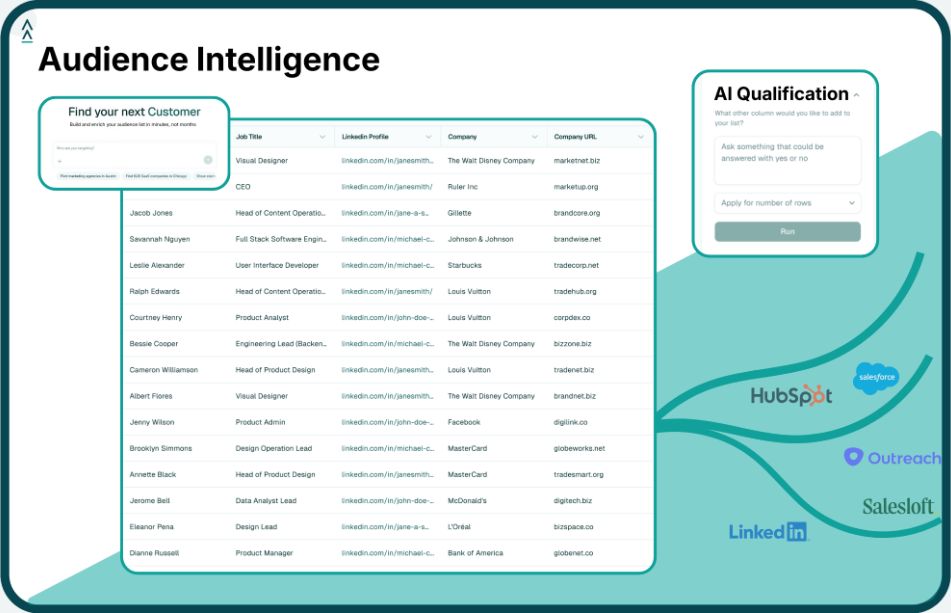
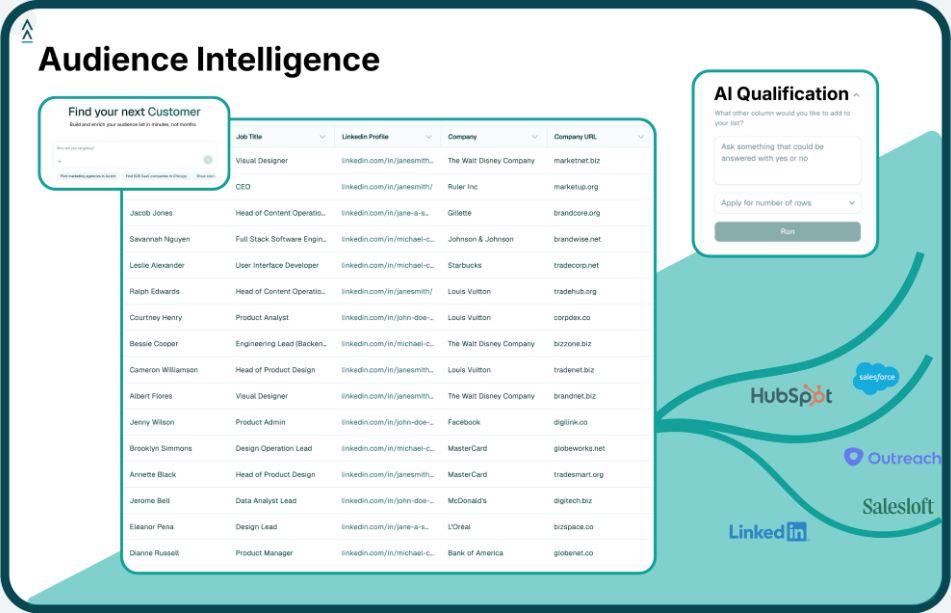
The power of AI-powered audience discovery lies in its natural-language interface. Instead of complex Boolean searches or manual filter building, teams can simply type prompts like "Companies that viewed our pricing page in the last 7 days and have 200+ employees in the SaaS industry" to instantly generate qualified lists.
This prompt-based approach democratizes sophisticated list building, enabling anyone on the revenue team to create highly targeted audiences without technical expertise. The AI interprets the natural language query, identifies relevant signals, and delivers an AI-qualified export ready for immediate activation.
AI qualification goes beyond simple filtering to provide nuanced lead scoring based on signal strength, combination, and decay. Not all document views are equal—prospects who view multiple relevant documents, spend significant time on high-intent pages, and demonstrate multi-stakeholder engagement receive higher priority scores.
The AI continuously learns from campaign performance and feedback, improving its qualification accuracy over time. This creates a virtuous cycle where each interaction enhances the system's ability to identify the highest-converting prospects from document engagement signals.
Converting document engagement signals into actionable email lists requires accurate contact identification, verification, and enrichment. The quality of your outreach depends directly on the accuracy and completeness of your contact data.
When accounts demonstrate document engagement, the next step is identifying the right contacts for outreach.
For example, if a company's technical team is viewing implementation documentation, the AI prioritizes engineering leaders and technical evaluators. If pricing pages are being viewed, economic buyers and procurement stakeholders receive higher priority. This role-based contact discovery ensures outreach reaches the right people with the right message.
Email verification is critical for maintaining sender reputation and ensuring deliverability. Multi-source contact enrichment delivers complete prospect profiles including verified email addresses, phone numbers, and social profiles. Advanced validation processes continuously monitor data accuracy and automatically update changed information.
Poor data quality can significantly impact campaign effectiveness—typical email bounce rates from unverified data reach 23%, wasting precious outreach opportunities and damaging sender reputation. Verified contact data ensures your high-intent outreach actually reaches the intended recipients.
Document engagement enables sophisticated list segmentation beyond basic firmographics. Prospects can be grouped by the specific content they viewed:
Each segment requires different messaging and follow-up approaches. This content-based segmentation enables hyper-personalized outreach that references the specific materials prospects engaged with, demonstrating that you understand their specific needs and evaluation stage. Personalized messaging based on actual behavior consistently outperforms generic outreach in both response rates and conversion metrics.
High-intent prospects deserve highly relevant messaging that acknowledges their specific interests and evaluation stage. Campaigns targeting viewed docs audiences should reference the specific content engaged with and address the questions or concerns that content likely raised.
The most effective outreach directly references the specific documents prospects viewed. If someone spent significant time on your pricing page, acknowledge their evaluation process and offer to clarify any questions about pricing structure or ROI. If they viewed technical documentation, focus on implementation ease, integration capabilities, or technical support.
This approach demonstrates that you're paying attention to their specific needs rather than sending generic sales messages. According to outreach data from 500 revenue professionals, personalized emails that reference specific prospect behavior achieve significantly higher engagement rates than generic templates.
Document engagement signals should trigger coordinated multi-channel outreach across email, LinkedIn, and other relevant channels. The average prospect now requires 4.81 touchpoints before responding, making single-channel approaches insufficient.
Multi-channel sequences should be carefully orchestrated to avoid overwhelming prospects while ensuring consistent messaging across channels. LinkedIn outreach can reference the same content mentioned in email follow-ups, creating a cohesive experience that reinforces your understanding of their specific interests.
Effective signal-based selling requires seamless integration between document tracking, contact discovery, and outreach platforms. Data silos prevent teams from seeing the complete buyer journey and responding appropriately to intent signals.
CRM integration ensures that document engagement signals appear as actionable records in sales reps' workflows. When prospects view critical documents, the CRM should automatically update with this behavioral data and trigger appropriate follow-up tasks or alerts.
Real-time alerts are particularly effective—conversion rates are 8x higher when responses occur within 5 minutes of signal detection. Slack integrations that deliver contextualized alerts with suggested next steps have proven more effective than complex dashboards that require manual checking.
Marketing automation platforms should trigger personalized follow-up sequences based on document engagement thresholds. For example, prospects who spend more than 3 minutes on pricing pages could automatically receive a sequence focused on ROI and implementation success stories.
These automated sequences should be sophisticated enough to recognize multiple engagement types and adjust messaging accordingly. Prospects who view both pricing and technical documentation might receive different content than those who only view pricing information.
The ultimate goal is creating a seamless workflow where document engagement automatically triggers the complete go-to-market response: contact discovery, enrichment, list building, personalized messaging, and multi-channel outreach.
Successful signal-based list building requires attention to data quality, compliance, and continuous optimization. Following best practices ensures sustainable success while maintaining ethical standards and regulatory compliance.
Document tracking must be disclosed in privacy policies, and contact enrichment tools must source data ethically from public and business sources. Landbase maintains SOCII & GDPR compliance, ensuring that list building practices meet the highest standards for data privacy and security.
Avoid collecting personally identifiable information from anonymous viewers without proper consent mechanisms. Focus on account-level identification for anonymous visitors, then use ethical enrichment practices to discover relevant contacts once accounts are identified.
Track the pipeline and revenue generated from viewed docs campaigns versus traditional outreach methods. Companies using intent data report that 97% of identified leads generate more pipeline than leads without intent focus, providing clear ROI validation.
Continuously refine your signal combinations based on performance data. Some signals may be more predictive in your specific industry or for your particular solution. Regular analysis ensures your list building strategy remains optimized for maximum conversion.
The most common mistake is relying on single signals without proper qualification. Document views alone don't guarantee buying intent without firmographic fit and complementary signals. Always combine viewed docs data with ICP criteria and other behavioral indicators.
Another pitfall is signal decay—engagement signals expire over time. Implement decay rules that prevent stale outreach based on document views from months ago.
The true power of viewed docs signal-based list building emerges when combined with agentic AI automation. AI handles the repetitive work of signal detection, qualification, and list building, allowing teams to focus on high-value human interactions.
Traditional list building requires hours of manual research, filter configuration, and data validation.
This zero-friction approach—free, no-login, instant results—enables teams to build and refine lists in real-time as market conditions and signal patterns change. The speed to qualified list becomes a competitive advantage, allowing teams to act on intent signals before competitors even detect them.
When machines handle the mundane work of list building and qualification, humans can focus on what they do best—building relationships, understanding complex needs, and closing deals. This human-centered approach aligns with modern buying expectations, where relationships and trust still matter in sales.
AI qualification ensures that sales conversations start with prospects who are actually interested and qualified, dramatically improving conversion rates and sales efficiency. Teams spend less time chasing cold leads and more time engaging with prospects who have already demonstrated buying intent through their document engagement.
Go-to-market strategies are entering a new era of precision and personalization:
Landbase delivers a frictionless audience discovery and qualification platform powered by GTM-2 Omni, the first agentic AI model specifically built for go-to-market automation. Unlike traditional data providers that offer static databases requiring complex setup and expensive subscriptions, Landbase enables teams to instantly build AI-qualified lists using natural language prompts.
GTM-2 Omni interprets plain-English queries to build and qualify audiences instantly, analyzing 1,500+ unique signals including document engagement patterns, website visitor intelligence, and market triggers. The AI agents coordinate targeting, qualification, and list building based on dynamic signal data rather than static databases, ensuring lists reflect real-time market conditions and buying intent.
Trained on billions of data points from 50M+ B2B campaigns, GTM-2 Omni continuously improves its qualification accuracy through feedback from prompt performance and offline AI qualification processes. This creates a learning system that becomes more effective at identifying high-converting prospects over time.
The Vibe interface provides a free, no-login audience builder embedded directly on landbase.com. Teams can type prompts like "SaaS companies that viewed pricing pages in the last 30 days and are hiring for RevOps roles" and instantly receive AI-qualified exports up to 10,000 contacts. This zero-friction UX eliminates the complex workflows and technical setup required by traditional platforms.
The prompt → export moment is the core value proposition—teams can build higher-quality lists than traditional data providers in seconds rather than hours or days. This speed to qualified list enables real-time response to intent signals, capitalizing on the critical window when prospects are actively evaluating solutions.
Landbase's AI Qualification (Online + Offline) ensures precision by evaluating audience fit and timing using comprehensive signal analysis. Unlike simple filtering that returns all matches regardless of quality, AI qualification prioritizes prospects most likely to convert based on signal strength, combination, and decay. By focusing on this in-market segment through viewed docs and other intent signals, teams achieve dramatically higher conversion rates and more efficient resource allocation.
A 'Viewed Docs' signal includes any engagement with sales-critical content such as pricing pages, product documentation, case studies, technical specifications, implementation guides, or sales proposals. The signal becomes more valuable when tracking not just whether content was viewed, but how it was consumed—including time spent per section, which pages received the most attention, and whether multiple stakeholders engaged with the same materials. This behavioral data provides insight into the prospect's evaluation stage and buying intent. Tracking these engagement patterns allows sales teams to prioritize prospects showing the strongest buying signals.
Document tracking requires implementing analytics across your content ecosystem, including website pages, digital sales rooms, and proposal platforms. Most modern content management systems and sales enablement platforms include built-in analytics that track page views, time spent, and engagement patterns. For anonymous visitors, IP-based account identification can match viewing behavior to company domains, while identified visitors can be tracked through cookie-based or authenticated sessions. These tools provide the foundation for capturing and acting on viewed docs signals across your digital properties.
The most effective approach combines viewed docs signals with complementary indicators that confirm both need and readiness to buy. Layering first-party signals (website behavior) with second-party signals (review site activity) and public signals (funding rounds, job changes, leadership appointments) creates the most actionable opportunities. Champion job changes convert at 3x the rate of cold outreach, making them particularly valuable when combined with document engagement. Multi-signal strategies ensure you're reaching prospects with both intent and optimal timing for conversion.
Yes, when done properly with attention to privacy regulations and ethical data practices. Document tracking must be disclosed in your privacy policy, and contact enrichment should use ethically sourced business data from public sources. In most B2B contexts, outreach to business email addresses based on legitimate interest is compliant with regulations like GDPR and CAN-SPAM, provided clear opt-out mechanisms are available. Platforms like Landbase maintain SOCII & GDPR compliance to ensure ethical list building practices.
AI transforms raw document engagement data into actionable insights by automatically evaluating prospects against ideal customer profile criteria, firmographic requirements, and timing indicators. Instead of manual research to determine if document viewers represent genuine opportunities, AI qualification analyzes 1,500+ signals simultaneously to score and prioritize leads based on conversion probability. This automation ensures no high-intent signal goes unnoticed while eliminating the time-consuming manual qualification process that traditionally slows down response times. The AI continuously learns from campaign performance to improve qualification accuracy over time, creating more effective prospect identification with each interaction.
Tool and strategies modern teams need to help their companies grow.