.png)
.png)
.png)

Daniel Saks
Chief Executive Officer


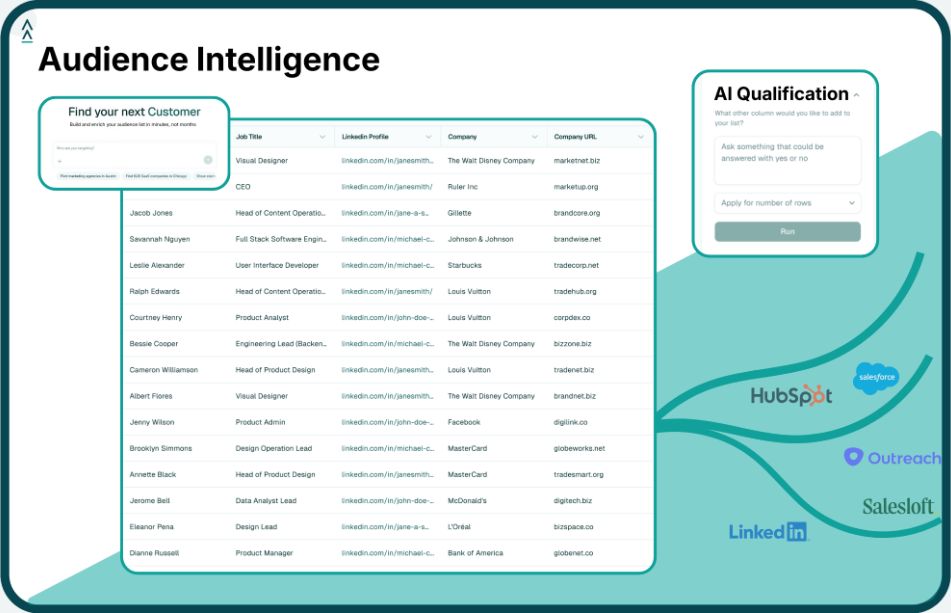
Building a high-quality email list starts with finding the right prospects, but maintaining engagement requires smart segmentation based on behavioral signals. While the "opened email" metric has traditionally been a cornerstone of email marketing, recent privacy changes have fundamentally compromised its reliability. Understanding how to properly interpret email engagement signals—and leverage them for strategic list building—is now more critical than ever. Tools like Landbase's audience discovery platform can help you build an initial list of AI-qualified prospects to begin your email outreach with precision.
The reality is that email open tracking has been disrupted since Apple's Mail Privacy Protection (MPP) rolled out with iOS 15, automatically pre-loading email content regardless of whether users actually open messages. With Apple Mail accounting for 46.21% of email clients, this technical change has significantly skewed open rate data upward. Despite these challenges, email engagement signals remain valuable for list building when used correctly alongside more reliable metrics like click-through rates and conversion data.
Email open tracking relies on invisible 1x1 pixel images embedded in messages to detect when recipients open emails. However, this mechanism has been fundamentally compromised by privacy protection features. Apple's Mail Privacy Protection automatically pre-loads email content and tracking pixels regardless of actual user behavior, artificially inflating open rates across the industry.
Since Apple Mail represents 46.21% of email clients, this change has significantly impacted how marketers interpret engagement. Some sources report open rates increased by 18 percentage points within six months of MPP implementation, creating a false sense of improved performance. Similarly, Google Workspace's security scanning pre-clicks links to check for phishing, resulting in false click data.
Despite these challenges, open rates still have directional value when tracked in aggregate over time to spot deliverability issues or subscriber fatigue. However, they should never be used as a standalone metric for individual campaign optimization or lead scoring. As one industry expert noted, "Opens may no longer serve as an absolute measure of engagement, but when looked at alongside click-through and conversion data, they can still help paint the larger picture."
The key is to understand what "opened email" signifies beyond a simple metric—it's part of a broader engagement pattern that, when combined with other behavioral signals, can inform strategic list growth and segmentation decisions.
With open rates becoming unreliable, click-to-open rate (CTOR) has emerged as the most accurate measure of email content effectiveness. CTOR measures the percentage of people who clicked something among those who opened the email, providing insight into content quality rather than just deliverability.
The average CTOR is 5.3% depending on the sector. When marketers optimize for clicks rather than opens, they naturally create more focused, action-oriented content with clearer calls-to-action.
To improve your CTOR and build better list quality:
High CTOR indicates that your content is relevant and valuable to subscribers, which naturally leads to stronger list growth through sharing, forwarding, and positive engagement signals. When recipients consistently click through your emails, they're more likely to remain engaged long-term, reducing list churn and improving overall deliverability.
Foundational email marketing strategies naturally lead to more opens and stronger list growth, even in the post-MPP era. The key is focusing on delivering consistent value that encourages genuine engagement rather than gaming unreliable metrics.
Effective strategies include:
The goal is to create a positive feedback loop where valuable content drives engagement, which improves deliverability, leading to more consistent inbox placement and further engagement. This cycle naturally attracts higher-quality subscribers who are genuinely interested in your offerings.
Segmented email campaigns dramatically outperform non-segmented approaches, delivering 14.31% higher open rates and 101% higher click-through rates.
The most effective segmentation strategies go beyond simple demographic splits to include behavioral patterns:
Industry experts recommend creating engagement tiers with different email frequencies for each:
This approach maintains sender reputation while maximizing reach to truly engaged subscribers. For B2B companies, Landbase's 1,500+ signals can help identify ideal audience segments for highly targeted email campaigns based on firmographic, technographic, and intent data.
When defining segmentation criteria, focus on behaviors that indicate genuine interest rather than passive metrics like opens alone. True engagement signals include:
Conditions that don't qualify as engagement include simply subscribing to the list, double opt-in alone, one-time purchases, or just visiting your site while subscribed. By focusing on these deeper engagement signals, you can create more accurate segments that drive better results.
To implement effective segmentation:
Start with broad behavioral categories (engaged vs. unengaged, purchasers vs. browsers) and layer additional criteria only when segment size remains actionable (typically 500+ subscribers). This prevents over-segmentation that creates audience groups too small to yield meaningful results.
For beginners or small businesses, Gmail provides basic but effective tools for email list management. While not as sophisticated as dedicated email marketing platforms, Gmail's built-in features can help you get started with list building and basic segmentation.
Key Gmail strategies include:
To create an email list in Gmail:
While this approach works for small-scale efforts, it quickly becomes unwieldy as your list grows. Gmail lacks advanced features like automated workflows, detailed analytics, and sophisticated segmentation capabilities. For serious email marketing efforts, dedicated platforms or AI-powered audience discovery tools become essential.
The advantage of starting with Gmail is that it's free and familiar, allowing you to test your messaging and build initial segments before investing in more advanced tools. However, as your needs grow, you'll likely need to upgrade to platforms that offer better tracking, automation, and integration capabilities.
Effective email list building goes far beyond just collecting email addresses—it's about attracting high-quality subscribers who are genuinely interested in your content and offerings. The foundation of sustainable list growth includes several key components:
The quality of your initial list directly impacts your long-term email performance. A well-qualified list built through targeted outreach will naturally have higher engagement rates, better deliverability, and stronger conversion outcomes than a list built through broad, untargeted methods.
Landbase allows you to build & enrich your ideal audience list by chatting with AI and export up to 10,000 contacts for initial list seeding. This approach ensures that your email list starts with prospects who match your ideal customer profile, setting the foundation for more effective segmentation and higher engagement rates from the beginning.
Lead magnets should solve a specific problem for your target audience and demonstrate your expertise. Effective examples include:
The key is ensuring your lead magnet aligns closely with your core offering and attracts the right type of prospect. For example, a cybersecurity company might offer a "Security Vulnerability Assessment Checklist" that naturally attracts IT decision-makers who are already concerned about security risks.
Opt-in form optimization involves both placement and design:
A/B testing different form elements can significantly improve conversion rates. Even small changes like button color, headline copy, or form placement can have substantial impacts on sign-up rates.
Modern lead generation requires moving beyond basic email collection to sophisticated audience discovery and qualification. AI-powered platforms can help identify high-intent prospects using multiple signals rather than relying on single metrics like email opens.
Advanced lead generation strategies include:
Landbase's core offering is a frictionless audience discovery and qualification platform powered by GTM-2 Omni (agentic AI) to find your next customer in seconds. This approach allows you to build targeted prospect lists based on complex criteria like "CFOs at enterprise SaaS companies (1000+ employees) that raised funding in the last 30 days" without manual research or complex filters.
GTM-2 Omni evaluates audience fit and timing using 1,500+ signals, providing AI-qualified contacts for your lead generation efforts. The platform interprets natural-language queries to build and qualify audiences instantly, eliminating the need for complex workflows or technical setup.
For example, instead of manually filtering through databases, you can simply type "Sales VPs at mid-market consulting firms scaling outbound teams" and receive an AI-qualified export ready for activation. This approach ensures that your email list starts with prospects who are not only a good fit but also at the right stage for engagement.
AI-powered audience discovery automates the most time-consuming aspects of prospecting:
By automating these processes, you can focus your email efforts on prospects who are most likely to engage and convert, rather than wasting resources on unqualified leads. This targeted approach naturally leads to higher engagement rates, better deliverability, and stronger overall email performance.
The principles of email engagement and list building apply equally to specialized industries like real estate, where precision targeting is essential for success. Niche markets require even more sophisticated audience discovery to identify prospects with specific characteristics and intent signals.
For real estate professionals, effective email list building might focus on:
Landbase's capability to target "Luxury Real Estate Agents in Malibu, CA" demonstrates its precision for niche lead generation. This level of specificity ensures that email lists are built with prospects who have both the demographic characteristics and behavioral signals indicating genuine interest.
In niche markets, the quality of your initial list becomes even more critical. Broad, untargeted approaches rarely work in specialized industries where prospects have unique needs and buying criteria. AI-powered audience discovery allows you to build highly targeted lists that reflect the specific requirements of your niche market.
Once you've built a targeted real estate email list, content should be tailored to the specific stage of the buyer/seller journey:
Segmentation based on these journey stages, combined with behavioral signals like email engagement and website activity, creates a powerful foundation for effective email marketing in specialized markets.
Behavioral data provides deeper insights than demographic information alone:
By combining these behavioral signals with demographic and firmographic data, you can create highly qualified segments that drive better engagement and conversion rates in specialized markets like real estate.
For businesses that prefer to outsource their lead generation efforts, partnering with specialized agencies can provide access to expertise, technology, and resources that might be difficult to build in-house. However, measuring the effectiveness of these partnerships requires clear metrics and performance tracking.
When working with lead generation companies, focus on engagement-based performance metrics rather than just volume:
Landbase Outbound helps identify and qualify prospects along their journey and build targeted lists to move fast for agencies. This ensures that agency partners have access to high-quality, AI-qualified prospect lists that drive better engagement and results.
When evaluating potential partners, consider:
The best partners will understand the limitations of traditional email metrics like open rates and focus on more reliable indicators of engagement and conversion potential.
Successful agency partnerships require clear integration with internal marketing efforts:
The "opened email" signal, while compromised, can still provide directional insights when combined with other metrics and used as part of a comprehensive performance measurement framework for agency partnerships.
While email engagement signals are crucial for ongoing list optimization, the foundation of effective email marketing starts with building a high-quality initial list of prospects who match your ideal customer profile. This is where Landbase's focused approach to audience discovery provides exceptional value.
Landbase is not a full-stack GTM suite—it's a frictionless audience builder powered by GTM-2 Omni, an agentic AI model specifically designed for go-to-market automation. The platform's public face is Vibe, a free, no-login experience that delivers on the simple promise: Type a prompt → get an AI-qualified export in seconds.
Unlike traditional data providers that rely on static databases, Landbase leverages a dynamic signal layer that continuously monitors 1,500+ unique signals including firmographic, technographic, intent, hiring, and funding data. This real-time approach ensures that your email list starts with prospects who are not only a good fit but also at the optimal stage for engagement.
The zero-friction UX means you can build and export up to 10,000 AI-qualified contacts without any login or payment required. This speed to qualified list allows you to begin your email campaigns with confidence, knowing that your foundation is built on precise audience targeting rather than broad, untargeted approaches.
For email marketers struggling with list quality and engagement, Landbase provides the missing piece: a way to build your initial list with prospects who are genuinely aligned with your offering. When you start with an AI-qualified audience, your email engagement metrics naturally improve, creating a positive feedback loop that drives better deliverability, higher conversion rates, and stronger overall performance.
While email opens alone don't directly build your list, they can indicate initial interest when combined with other signals. However, due to Apple's Mail Privacy Protection affecting 46% of email clients, open rates are no longer reliable as a standalone metric. Focus instead on multi-signal engagement scoring that combines clicks, website activity, and conversions for more accurate list building insights.
The most effective approach uses engagement recency tiers: daily emails for 0-30 day engaged users, 3x weekly for 31-60 days, 2x weekly for 61-90 days, and weekly for 91-180 days. Segmented campaigns deliver 14.31% higher open rates and 101% higher click-through rates than non-segmented campaigns. Focus on actual behaviors like clicks and conversions rather than just opens.
Yes, Landbase specializes in AI-powered audience discovery, allowing you to build & enrich your ideal audience list by chatting with AI and exporting up to 10,000 contacts for initial list seeding. The platform uses GTM-2 Omni agentic AI to interpret natural-language prompts and deliver AI-qualified exports based on 1,500+ real-time signals.
Open rates measure how many recipients opened your email, but this metric has become unreliable due to privacy protection features. Click-to-open rate (CTOR) measures the percentage of people who clicked among those who opened, providing a more accurate indication of content quality. The average CTOR across industries is 5.3%, making it a better indicator of genuine engagement.
Regular list cleaning is essential for maintaining deliverability. Implement sunset flows for unengaged subscribers (typically those who haven't clicked in 90-180 days) and regularly remove hard bounces and spam complaints. Focus on engagement-based cleaning rather than just open-based cleaning due to the reliability issues with open tracking.
Tool and strategies modern teams need to help their companies grow.