.png)
.png)
.png)

Daniel Saks
Chief Executive Officer


The landscape of B2B sales and marketing is evolving rapidly, and businesses that fail to adapt risk being left behind. Traditional go-to-market strategies often rely on time-consuming manual processes and a patchwork of tools that slow down pipeline generation. Enter agentic AI – autonomous AI agents that can plan, execute, and optimize omni-channel campaigns with minimal human intervention. Instead of juggling disconnected systems and repetitive SDR tasks, GTM teams can deploy AI agents as always-on extensions of their team – analyzing vast datasets, identifying high-intent prospects, orchestrating outreach across multiple channels, and continuously learning from each interaction to boost engagement and conversion rates.
Leading this transformation is a new generation of AI-driven platforms purpose-built for GTM. In this blog, we profile the top AI agent solutions for go-to-market strategies – starting with pioneer Landbase – and examine their key capabilities, unique strengths, and real-world impact. From fully autonomous multi-agent systems to AI-assisted sales tools, each platform offers a different approach to automating and enhancing the GTM process. Let’s dive in.
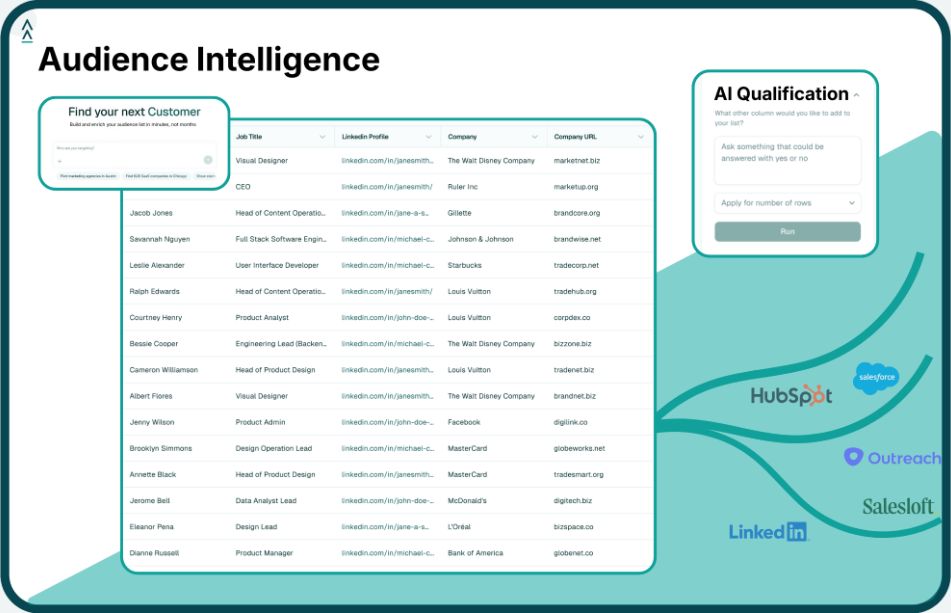
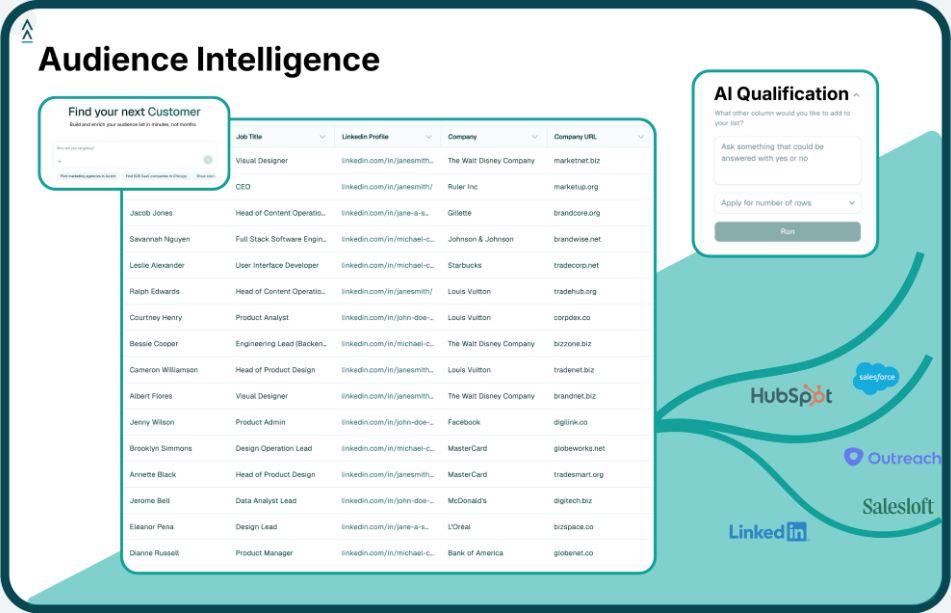
Landbase stands as the first truly agentic AI platform with complete autonomous workflow execution, introducing revolutionary AI agents that handle complex sales processes independently(1). Powered by its proprietary multi-agent engine GTM-1 Omni, Landbase acts as a 24/7 AI sales team that can research prospects, craft personalized messaging, execute multi-touch outreach, and optimize campaigns on its own. It was founded in 2024 by AppDirect co-founder Daniel Saks and emerged from stealth with a $12.5M seed round, positioning itself as a category-defining solution for GTM automation(1).
Key Features:
Pricing Structure:
The platform’s greatest strength lies in its fully autonomous operation, requiring minimal human intervention while delivering measurable results. Users report 4–7x higher conversion rates on outbound campaigns(1). In fact, Landbase’s agentic AI has driven such high lead volumes that one customer added $400K in new MRR during a traditionally slow season and even paused the system because their sales team couldn’t keep up with the inbound meetings(2). Since launching, Landbase has been adopted by 100+ organizations and generated over $100M in pipeline while saving more than 100,000 hours of manual work for its users(2) – a testament to the efficiency gain from “AI SDR” automation.
For B2B SaaS companies looking to optimize their go-to-market execution, Landbase’s agentic approach proves invaluable. The platform eliminates the content quality issues that plague generic AI tools by leveraging its massive training dataset of successful B2B communications. Every message is crafted with authentic, human-like tone yet tuned by data for maximum impact. VentureBeat noted that Landbase’s private knowledge graph and feedback loops enable “more informed predictions and recommendations” than models trained only on public data(1) – meaning outreach is not only automated, but also smarter and more personalized. Users consistently highlight Landbase’s ability to “set it and forget it” compared to platforms requiring constant management. With Landbase’s AI agents handling the heavy lifting of prospecting and outreach, sales teams are freed to focus on closing deals, making GTM execution virtually hands-free.
Another notable AI-driven GTM solution is 11x, a startup that famously relocated its headquarters from London to San Francisco as its growth accelerated in 2024(3). Founded in 2022, 11x positions its AI agents as “digital workers” – autonomous bots that handle repetitive sales tasks so humans can focus on strategic work(2). Its flagship AI employee is Alice, an AI Sales Development Rep, accompanied by Julian (an AI voice agent for phone calls, sometimes referred to as Jordan)(2). Together, Alice and her counterpart aim to automate outbound prospecting across email and phone. Notably, Alice works around the clock and is multilingual – engaging prospects in 25+ languages and operating 24/7 without fatigue(2), a compelling feature for companies needing global outreach.
11x offers strong agentic capabilities in that Alice and the other “digital workers” can act autonomously within their defined roles. Alice conducts lead research, sends personalized emails, follows up on opens, and even books meetings on behalf of sales reps. The company claims Alice can match the output of a human SDR at 11× the scale, by combining deep personalization, continuous self-learning, and nonstop prospecting(2). In practice, an AI SDR like Alice could handle the volume of outreach that might require a double-digit team of humans – an attractive proposition for high-growth sales teams with limited headcount. According to 11x, their digital workers have already generated over $100 million in revenue for customers (and driven the startup to about $10M ARR within two years)(2), indicating real market traction. This aligns with the performance metrics 11x publishes, such as >$100M total revenue produced for clients and significant cost and time savings (e.g. 50% lower cost-per-lead) through automation(4).
Where 11x focuses is primarily on outbound SDR tasks and sales engagement. Alice functions essentially as an AI cold emailer and prospector, while Julian handles call outreach and qualification. They excel at automating these front-of-funnel activities, though the scope is somewhat narrower than Landbase’s end-to-end GTM orchestration. For instance, 11x’s agents don’t (yet) manage multi-channel campaign strategy or intent-driven targeting beyond their specific functions. In other words, 11x serves as a specialized AI SDR replacement rather than a holistic go-to-market machine.
It’s also worth noting implementation effort: deploying 11x’s AI workers isn’t simply plug-and-play overnight. New clients typically spend ~4 weeks to configure and train Alice on their business and CRM systems(2). This is still relatively quick by enterprise software standards, but longer compared to Landbase’s “campaigns in minutes” approach. The upside is that once configured, Alice truly becomes an extension of the team. She uses billions of data points to tailor outreach and learns from every interaction, much like Landbase’s AI(2). Alice doesn’t blast generic spam; she references each prospect’s context and continuously adjusts her messaging, increasing reply rates over time(2).
In summary, 11x is a top contender in AI-powered sales development due to its vision of digital workers augmenting (or even replacing) human SDRs. Its strengths lie in focused AI agents (for email and phone) that deliver automated, multilingual outreach at scale. Companies that primarily want an AI to take over outbound prospecting will find 11x appealing – especially with its marketing claim that Alice can rapidly boost meeting rates while cutting cost-per-lead by 50% or more(2). Potential limitations include the narrower GTM scope (it covers outbound SDR tasks, not the entire marketing-to-sales funnel) and the need for some upfront training to align the AI with your specific workflows. Compared to an all-in-one platform like Landbase, 11x might require integrating into your existing CRM and data sources rather than replacing them. Still, for many startups and sales teams, “hiring” Alice as an AI SDR can significantly accelerate pipeline generation without adding headcount. It’s essentially an AI SDR team member that never sleeps, never takes a break, and gets a little better at its job each day – making 11x a formidable AI agent platform for go-to-market strategies.
San Francisco-based Artisan is another rising player in the AI GTM arena, focused on outbound sales development with an emphasis on deep personalization. Founded in 2023 (Y Combinator Winter ’24 batch), Artisan introduces the concept of AI “employees” called Artisans – with their first being Ava, an AI Business Development Representative. Ava acts as a virtual outbound sales rep specialized in cold prospecting and pipeline generation for B2B companies. What differentiates Artisan is its strong data-driven approach to personalization, encapsulated in a feature they dub the “Personalization Waterfall.”
In terms of capabilities, Artisan’s Ava automates the entire outbound workflow, from prospect sourcing to multi-step email sequencing. Upon onboarding, Ava even scrapes your website and ingests information about your company and value propositions to craft relevant messaging(5). This quick 10-minute onboarding conversation gives the AI the context it needs about your business. Artisan boasts that Ava can leverage a massive database of over 270 million B2B contacts for prospecting(5) – tapping into numerous data providers to build targeted lists. In practice, that means a user can instantly access a huge TAM (Total Addressable Market) and let the AI find and reach out to ideal buyers. Ava then gathers dozens of data points on each lead (firmographics, technographics, recent news, etc.) to personalize its outreach at scale(5). The multi-layered personalization waterfall ensures each cold email contains specifics relevant to the recipient – for example, referencing a prospect’s industry, a technology they use, or a recent event at their company.
Thanks to this data-rich approach, Artisan’s Ava can dynamically personalize thousands of emails in ways a human team could not practically match. The platform claims access to 300M+ contact records and “10s of data sources” for research on each lead(2). Not only does Ava write bespoke intro lines and value props for each email, she can also handle replies: Artisan has a feature where Ava will automatically respond to email replies and attempt to schedule meetings, with this autonomous reply-handling in beta at launch(5). Essentially, Artisan is pitching that you can “hire” Ava instead of a team of BDRs and have her generate pipeline on your behalf.
When comparing Artisan to other solutions, it is somewhat similar to 11x in focus – primarily outbound sales automation. Artisan shines in its personalization and data integration. The sheer number of contacts and data sources available to Ava means she can richly enrich leads with information, making outreach highly targeted. (For example, if a target prospect recently announced a new round of funding, Ava will incorporate that into her email approach.) Artisan also emphasizes ease of use – initial setup is incredibly fast (the AI guides you through a brief Q&A and then is ready to run). In fact, new users reportedly can have Ava running a campaign on her own the same day they sign up(5). That speed, combined with the platform’s polished interface, makes it accessible even to teams without deep technical expertise.
However, it’s important to note that Artisan, in its current form, is focused on outbound email and LinkedIn outreach. It may not cover broader GTM needs like inbound lead nurturing, account-based marketing plays, or post-meeting analytics. Companies with needs beyond cold outbound – for instance, managing warm inbound leads or coordinating multi-channel marketing – might find Artisan to be only one piece of the puzzle. Also, while Ava can operate largely autonomously, Artisan positions her as working “alongside” human team members rather than completely replacing them. In practice, users might still oversee Ava’s campaigns and adjust strategy, especially during the early learning phase (e.g., reviewing the AI’s suggested replies for a few weeks while the system gains confidence(2)).
Overall, Artisan earns a spot among top AI agents for GTM due to its cutting-edge personalization and rapid deployment. For any organization where highly tailored outbound messaging is key – think enterprise SaaS targeting specific verticals or use cases – an AI BDR like Ava can be a game-changer. She brings together the scale of automation with the customization of a skilled human rep. Artisan’s early customers have lauded how quickly Ava ramps up and the quality of meetings she books. The platform is relatively new (seed-stage startup with ~$11.5M raised as of late 2024), so buyers should vet its track record. But the concept of “AI employees” working alongside your team is one that’s quickly gaining traction. Artisan shows how, with the right data and training, an AI agent can truly emulate a top-performing BDR – handling the grind of outbound prospecting while your human sellers focus on closing deals.
Clay takes a different angle in the GTM automation space. Based in San Francisco, Clay is known as a sales enablement and data automation platform that has become popular among creative outbound teams and growth hackers. Rather than positioning as an “AI SDR-in-a-box,” Clay provides the building blocks (data access and workflow automation tools) for teams to build powerful sales workflows, which can include AI-driven prospecting components. Think of Clay as a Swiss Army knife for GTM data and research – it aggregates a wealth of information and lets you automate how that info is used in your outreach processes.
Clay’s superpower is data aggregation. The platform gives users access to 100+ premium data sources and APIs, ranging from contact databases (e.g. Apollo, ZoomInfo) to social media, news, and public web data(2). All this data is pulled into a spreadsheet-like interface where it can be enriched, filtered, and acted upon. For example, a team could use Clay to: find all companies in their CRM that just raised funding, automatically fetch each company’s key contacts and emails, then push that list into an email sequencing tool for outreach. Clay even supports custom scripts and AI mini-agents for research tasks – e.g., an AI that visits each prospect’s website and summarizes key points or finds a recent piece of news about them(2). In essence, Clay excels at the prospect research and list-building stage of sales development. It consolidates tasks that would normally require several separate tools or lots of manual effort. By having over 100 data sources integrated (covering firmographics, technographics, intent data, social feeds, etc.), Clay enables users to assemble richly detailed lead lists with minimal manual work(2).
To illustrate the power: a user can set up a Clay workflow that, say, takes a list of target accounts, enriches each with latest funding info and tech stack, finds people with certain titles at those accounts, and then sends that info into a personalized email campaign. Many growth teams use Clay in innovative ways – for example, finding all Twitter users who tweeted about a relevant topic and then sending them tailored messages. The platform provides templates and a community library of clever use-cases, reflecting its flexibility.
It’s important to note, however, that Clay is not a fully autonomous SDR agent. It’s more of an advanced tool for human operators or ops teams to supercharge their workflow. Clay itself doesn’t run multi-channel sequences or optimize campaigns on its own; rather, it feeds other systems with great data and can trigger actions. In our comparison criteria: Clay’s automation scope is broad in the data realm (it can automate finding and prepping leads), but it doesn’t manage the entire sales development process end-to-end. There’s no single AI orchestrating the campaign strategy – the user designs the workflow and can integrate AI components for specific tasks (like generating a custom intro sentence via GPT). There is an AI research agent within Clay, but it’s one component, not an all-knowing SDR brain.
The upside of Clay’s approach is top-notch personalization potential. Users can compile very specific insights on each prospect and then feed those into their outreach messages via mail merge or an external sequencing tool. In practice, many teams pair Clay with an email engagement platform (like Outreach or Salesloft) or use Clay’s output in conjunction with generative writing assistants. Clay basically becomes the data engine behind highly personalized campaigns. The trade-off is that Clay’s flexibility requires some assembly: users (often technically savvy sales operations folks or “growth hackers”) need to configure workflows and possibly write small formulas or scripts. There is a learning curve – new users might find the interface complex initially and need to experiment to unlock Clay’s full power. Thus, Clay tends to be loved by power users who enjoy building custom solutions, and can feel overwhelming for someone who wants an out-of-the-box AI SDR.
In summary, Clay is a top platform for augmenting the “research and data” side of the GTM process with AI and automation. It doesn’t replace your SDRs; it arms them (or your ops team) with superpowers. By consolidating data silos and automating data workflows, Clay helps ensure no lead falls through the cracks due to lack of info. Many organizations even use Clay alongside an AI SDR platform: for example, using Clay to generate enriched lead lists and then feeding those into Landbase or Artisan to execute the outreach. The value Clay provides is maximized in the hands of teams that want customization and have the expertise to craft their ideal process. If you simply need a plug-and-play SDR replacement, Clay may feel too open-ended. But if you have a vision for a perfect outbound workflow and just need the tools to build it, Clay is incredibly empowering.
If your go-to-market strategy revolves around hitting prospects at exactly the right time, Unify is an AI SDR platform worth noting. Unify’s focus is on intent signals and “warm” outbound – essentially, it helps sales teams identify which companies or prospects are showing buying intent, and then automates outreach to those high-probability targets. Founded in 2021 by Austin Hughes and backed by investors like the OpenAI Startup Fund, Unify is positioned as an all-in-one warm outbound engine. It’s part of the Silicon Valley ecosystem and as of 2025 had raised a $6.6M Series A to expand its platform(2).
What makes Unify stand out is the breadth of intent data it brings into one workflow. The platform aggregates 25+ intent signals from 10+ data sources – including technographic data (what tools a company uses), funding events, hiring trends, web traffic surges, third-party intent providers like 6sense and Bombora, and more(2). All these signals are consolidated in Unify’s dashboard so users can see which accounts are “raising their hand” through their behavior. For example, Unify can show that a target account recently visited your pricing page, or that a company in your ICP has a spike in searches for a solution category.
Unify then enables users to build Plays, which are essentially automated workflows that trigger when certain intent criteria are met. For instance, a user could set up a Play: “If a target account in our list has a recent funding event ANDvisits our website AND fits our ICP (industry X with tech stack Y), then auto-enroll them in an AI-driven sequence: send a personalized email, connect on LinkedIn, and assign to an SDR for follow-up call.” These Plays allow outreach that feels timely and relevant, rather than generic cold emails. The idea is to do outbound that’s almost like inbound – reaching out only when interest is detected, so the message lands when the prospect is receptive.
Under the hood, Unify uses AI agents to assist with research and personalization as well. For example, when a Play is triggered, Unify’s AI might generate a custom intro line that references the specific intent signal (e.g. “Hi Jane, I noticed you’ve been exploring solutions in [category] – since CompanyX just hired 5 engineers and launched a new product, it seemed like a good time to reach out…”). It supports multi-channel touches (email, LinkedIn, etc.) as part of its Plays, so you can coordinate an email and a LinkedIn message, for instance, without manual work.
In terms of agentic AI, Unify is using AI within a workflow, but it might not have a multi-agent system in the same way Landbase or Lyzr do. Instead, you can think of Unify as trigger-based automation infused with AI. It excels at being the sensor for your GTM – monitoring when to engage – and then uses AI to make that engagement smarter. It may rely on the user’s existing tools to actually send emails or make calls (or Unify can send emails itself; it has an outbound email capability).
Unify’s strength is clearly in targeting and timing. By capitalizing on intent signals, it aims to dramatically improve conversion rates – essentially hitting prospects when their interest is high instead of sending cold outreach blindly(2). For organizations practicing Account-Based Marketing or those with finite target account lists, this is extremely valuable. Rather than burning contacts with repeated emails at the wrong time, Unify helps ensure reps reach out in the moments that matter. It’s like having a smart alert system for your TAM.
The platform’s current limitations might include breadth of execution. It’s fantastic for warm outbound triggers, but it’s not a comprehensive SDR replacement by itself – you’d use it to augment your strategy (perhaps alongside a tool like Outreach or as an add-on to a sales team’s workflow). Unify also might require that you have enough inbound data signals or intent data coming in; companies without much market presence or web traffic might get less value until they have those signals.
All told, Unify represents an important branch of AI GTM tools: those that focus on when and to whom you should reach out, rather than just how to reach out. It brings the kind of intelligence that 6sense provides (finding in-market accounts) and marries it with outbound action. For GTM teams, using Unify can mean fewer but higher-quality sales touches – reaching out only when leads are “warm.” In today’s environment, that’s a great way to maximize efficiency and not exhaust your addressable market with spam.
No discussion of AI agents for GTM would be complete without mentioning the tech titan Salesforce. In late 2024, Salesforce (headquartered in San Francisco) announced Agentforce, a new layer of its platform that allows companies to build and deploy autonomous AI agents across various business functions(2). While Agentforce isn’t exclusively a “sales SDR” product – it spans customer service, marketing, and IT use cases too – it represents Salesforce’s entry into the agentic AI arena. For enterprise organizations already using Salesforce’s CRM extensively, Agentforce offers a way to create AI SDR agents that are deeply integrated into their existing data and workflows.
So what is Agentforce? Essentially, it’s Salesforce’s answer to enabling secure, custom AI agents within the Salesforce ecosystem. Users can spin up AI agents that connect to any enterprise data (CRM records, emails, support tickets, etc.) and take actions across Salesforce applications(2). These agents run on Salesforce’s Atlas AI engine and come with some pre-built “skills.” For example, Salesforce initially provided an out-of-the-box Service Agent that can handle common support inquiries without human help(2). For sales, companies can configure an agent (or use templates) that acts as an AI SDR: it could monitor CRM for new leads, automatically follow up with personalized emails, log activities, and hand off hot leads to human reps when they respond.
Because it’s built on Salesforce, Agentforce can natively trigger Salesforce Flows, update records, and utilize all the data in your CRM for context(2). An Agentforce SDR agent could, for instance, see a new lead come in from a webinar, check that account’s past engagement, and send a tailored outreach email within minutes – then create a follow-up task if the lead clicks a link. If a prospect replies, the agent might even parse the email (via Einstein GPT, Salesforce’s AI) and draft a suggested response or directly book a meeting, depending on configurations.
One of Agentforce’s big selling points is security and compliance. It’s pitched as “AI that lives in your CRM” so you don’t have to worry about data leaving your environment for an external AI service(2). For large enterprises in regulated industries, this is a huge factor. Also, because Agentforce is a Salesforce product, it comes with enterprise-grade controls, audit trails, and the ability to customize agents with no-code/low-code tools (like using Salesforce’s Flow builder and prompts). Salesforce essentially said “no need to DIY your own AI agents – we’ve built a platform for it”(2).
However, the flip side is that Salesforce Agentforce typically requires significant implementation work and is currently targeted at Salesforce’s big customers. It’s not a turn-key SaaS you sign up for tomorrow. An enterprise might engage Salesforce consulting or their internal admins to set up Agentforce agents. It also likely carries a premium price as an add-on. Think of Agentforce as a toolset; to get a fully functioning AI SDR, you have to assemble it (or use a Salesforce-provided template and then tailor it). The complexity also means it’s best suited if your data and processes already live in Salesforce (which, for many large enterprises, they do). If you’re not a Salesforce CRM shop, Agentforce isn’t really relevant.
For companies that are heavily Salesforce-centric, Agentforce opens up exciting possibilities. An Agentforce SDR agent can have unparalleled context: it can see everything in your Salesforce environment – from past opportunities and support cases at an account to marketing email interactions – and use that to personalize outreach. Imagine an AI sales agent that knows an account’s entire history and can craft an email like, “Hi John, I saw you attended our webinar yesterday and downloaded the whitepaper on pricing – given your role as CTO and that your team uses AWS, I wanted to share how our solution integrates with AWS to cut cloud costs…”. This level of context-aware messaging, triggered automatically, is powerful. Salesforce has mentioned companies like OpenTable and Wiley as early users of Agentforce for support and sales augmentation(2). Wiley, for instance, saw over 40% faster case resolution in customer support by using Agentforce agents(6) – a figure that hints at what could be possible on the sales side as well (Salesforce also noted up to 25% higher lead conversion rates in early sales AI projects(6)).
Overall, Salesforce Agentforce is a top AI agent offering for those who need enterprise-scale, deeply integrated AI. It delivers the flexibility to automate very complex sales development processes at scale – but with the expected trade-offs of cost and complexity. It’s almost in a category of its own, catering to the Fortune 500 type use cases. For a startup or SMB, Agentforce would be overkill (and likely out of reach). But it’s a testament to the momentum of agentic AI that even Salesforce built such an offering. In competitive terms, if you’re a large Salesforce customer, you might weigh Agentforce vs a specialist platform like Landbase. Landbase’s advantage is a faster time-to-value (ready-to-go with GTM-specific AI), whereas Agentforce’s advantage is ultimate customization within your Salesforce universe. In fact, Landbase’s own analysis noted that while Agentforce is powerful, it “requires lengthy implementation with consultants, carries enterprise pricing, and lacks the focused GTM specialization of Landbase’s model”(2). Both have their place: if you have unique processes and a big Salesforce investment, Agentforce can mold AI to your needs; if you want a turnkey solution out-of-the-box, a dedicated platform might serve you better.
Copy.ai is an interesting entrant on this list because it comes from a different starting point. Initially launched in 2020 as one of the first AI copywriting tools (using GPT-3 at the time), Copy.ai gained huge popularity among marketers for generating blog posts, emails, and social media copy. As of early 2025, Copy.ai is used by more than 17 million people worldwide(7). In late 2024, the company pivoted from being purely a text-generation app to branding itself as the first GTM AI platform – aiming to automate broader go-to-market workflows, not just content creation(7). This makes Copy.ai a hybrid: part content assistant, part workflow automation tool.
At its core, Copy.ai’s strength is still AI content generation. It excels at producing human-like marketing copy, sales emails, ad texts, and more, given a prompt. For sales development, Copy.ai can be used to craft personalized email sequences or LinkedIn messages at scale, much like a supercharged writing assistant. It has features to ingest data (like a prospect’s info or a company blurb) and generate tailored outreach messages. This addresses one key piece of the SDR puzzle: writing engaging, customized content quickly.
Where Copy.ai has extended its platform is in building workflow automation (called “Actions”) around that content. They’ve introduced features where their AI can be integrated into multi-step workflows – for example, automatically pulling data from a CRM, generating an email, sending it, waiting for a reply, and then taking an action. In other words, they are trying to orchestrate some go-to-market processes within their app. Copy.ai also emphasizes an all-in-one approach for go-to-market teams, with use cases spanning marketing, sales, and customer success in an “autonomous” system that gets smarter with use(7).
Despite this broader positioning, observers note that Copy.ai’s platform is still largely content-centric. It’s fantastic for content production (their generative models are top-notch for writing in different tones, languages, etc.), but it lacks some of the specialized capabilities of a true agentic SDR platform. For instance, Copy.ai doesn’t natively provide a massive contact database or intent data; it would rely on the user connecting their own data sources. It also doesn’t have multi-agent roles – it’s more of a single AI engine that can do tasks sequentially. So while you can automate an email campaign with Copy.ai, you might still need other tools for sourcing leads or for handling responses unless you build custom integrations.
One area Copy.ai has a leg up is enterprise adoption and ease of use. They’ve raised substantial funding (e.g. a $23M Series A led by top VCs) and have been growing their enterprise user base, touting customers like Juniper Networks and Lenovo using their GTM AI workflows(7). In fact, Lenovo’s digital marketing lead cited that Copy.ai automated content workflows and saved them $16 million in one year by replacing expensive agency work(7). Those kinds of ROI figures underscore the value of speeding up content production and campaign execution. Copy.ai also offers an intuitive UI and many templates, given its origins as a self-serve tool for marketers. A sales team could easily use it to, say, generate 100 personalized email variations in minutes – something that would take a copywriter days.
In comparing Copy.ai to others: think of it as a copilot that’s evolving toward an autopilot. It started as a helpful assistant for writing, and it’s now adding more autonomous features for executing tasks. However, it’s not yet as autonomous end-to-end as platforms like Landbase or Empler. It also focuses on text and messaging more than data or strategy. That said, for companies that already have good data and just need to hyper-scale their content output (personalized emails, ad copy, follow-up sequences), Copy.ai can be incredibly useful. It can slot into your GTM stack to handle the “heavy lifting” of writing, while other systems handle sending and tracking.
Interestingly, Copy.ai’s recent messaging around “GTM AI Platform” shows how the market is converging – even a tool known for content is expanding to cover more GTM automation. They announced 480% revenue growth in 2024(7), indicating demand for AI solutions in this space. Their approach is somewhat the inverse of something like Landbase: Landbase started with data and actions, and added content generation; Copy.ai started with content and is adding data/actions.
For a small business or startup with limited content creation resources, Copy.ai might deliver immediate value by accelerating campaign creation (writing all your outbound emails, ads, etc. in a flash). For larger orgs, it could serve as the central AI writing brain that feeds into other GTM systems.
In summary, Copy.ai is a top AI agent platform primarily for its unmatched generative writing ability in GTM contexts. It brings an “AI copywriter” at scale, and increasingly can automate how that copy is used in campaigns. It does not, however, replace the entire GTM toolset – you’d use it alongside your CRM, your email sending platform, etc., unless you adopt their emerging workflow features. As the company continues to innovate, it may well inch closer to a fully autonomous GTM assistant. But even today, used in tandem with your sales stack, Copy.ai can dramatically reduce the human effort in crafting tailored outreach and marketing content.
Moving further into cutting-edge solutions, Lyzr AI is a platform providing an agentic AI framework for sales teams, enabling them to deploy their own AI SDRs and marketing agents with remarkable speed. Lyzr is a younger startup (founded mid-2020s, based in California) that might not have the same name recognition as some others on this list, but it has been making waves with its flexible, customizable approach to AI-driven GTM. If Landbase is a fully managed “AI SDR department in a box,” Lyzr is more like a DIY kit to build your own AI SDR team.
One of Lyzr’s headline capabilities is rapid deployment. The company advertises that its AI SDR agent, named Jazon, can be up and running in under 24 hours thanks to a low-code integration framework(2). In practical terms, that means a client can deploy Lyzr’s AI in their own cloud environment, connect it to their data sources (CRM, email, etc.), and have it start outreach within a day. This is a big selling point, as some other sophisticated platforms might take weeks to implement. Once deployed, Jazon functions as an autonomous SDR: it conducts research on leads, writes and sends emails, follows up according to playbooks, and hands off interested responses to humans. Lyzr emphasizes data privacy and control – companies can even choose on-premise or private cloud deployment for the AI agent, which appeals to organizations with strict compliance needs(2).
Lyzr’s architecture is a multi-agent system as well. Jazon is the SDR agent, but Lyzr also offers Skott (an AI marketer), and hints at other agents for roles like sales ops, etc.(2). Together, these can form a team that covers outbound sales and marketing tasks in tandem. What’s intriguing is that Lyzr allows a high degree of customization of these agents. The platform provides a no-code “Multi-Agent Framework” where users can define their agents’ behaviors, roles, and even create new ones for specific tasks(2). Essentially, Lyzr is giving companies the scaffolding to build AI agents tailored to their processes – a very powerful capability for those who have unique workflows or want to embed AI into their own product.
In terms of performance, Lyzr shares some impressive case studies on their site. In one example, a customer deployed Jazon and saw 10x more appointments booked and “hundreds of hours” saved within a short period(2). Jazon is designed to handle everything a human SDR would: finding leads (Lyzr can integrate with your existing data providers or use your CRM data), engaging them with personalized messaging, following up, and learning from what works. Lyzr touts that Jazon continuously improves its outreach through AI-driven optimization – very much in line with the self-learning hallmark of agentic AI.
Because Lyzr is providing a framework rather than just a fixed service, it tends to attract more tech-savvy teams who want control. The upside: ultimate flexibility (you can train/tweak the AI to follow your playbooks, you can run it on your cloud for security, and integrate it deeply with your systems). The downside: more configuration required. It’s not as plug-and-play as something like Landbase; you might need to define how you want the AI to behave, what data it should use, and set up the integrations. Lyzr’s approach is more modular and task-based, meaning the user has to decide on the tasks and sequence for the AI, as opposed to a monolithic AI that just “does it all” automatically. In simpler terms, using Lyzr is like hiring a very smart SDR that you need to train on your methodology (though the training is much faster since it’s AI). For organizations with unique processes or strict data control needs, this is fantastic. For those who want a turnkey solution with minimal effort, Lyzr could feel like more work than expected.
Another consideration is feature completeness. Lyzr is relatively young, and while it promises a lot, prospective users should evaluate if all the pieces are there. For example, does Lyzr provide a large built-in contact database, or do you need to connect your own? (It appears you’d bring your own data or plug into third parties.) Does it cover multi-channel fully (email, calls, LinkedIn), or primarily email? The website indicates Lyzr can integrate with your sales stack and even run on your cloud, which suggests it piggybacks on your existing tools to some extent(2). This can be good (it uses what you have) or bad (if you expected it to replace certain tools).
Comparatively, Lyzr stands out for truly offering agentic AI with extreme customizability. It’s a bit like an “open-core” version of an AI SDR – giving technical teams the power to deploy and mold AI agents quickly. The 24-hour deployment claim is a strong differentiator, underscoring their focus on speed and ease of integration(2). Lyzr might not have the marketing clout of larger players, but its feature set (multi-agent, low-code, on-your-cloud) is very attractive to certain segments – e.g. enterprises concerned about data residency, or companies that want to white-label or internalize an AI SDR into their own platform.
All in all, Lyzr is carving a niche as the flexible middle-ground in AI GTM solutions. It offers near-instant autonomous SDR capabilities, with the ability to fine-tune to your heart’s content. The trade-off is that you, the user, have more responsibility in configuring and maintaining it. But for those willing to invest a bit of time, Lyzr’s users would argue that a day of setup to get a tireless SDR that can potentially triple your pipeline is well worth it(2). As always, matching the tool to your needs is key – Lyzr is ideal for teams that have strong ops or technical resources and perhaps even want to embed AI into their product or proprietary processes. It’s less ideal if you’re looking for a hands-off service.
Apollo.io is a well-known name in B2B sales tech, and while not an AI agent platform per se, it has been increasingly adding AI-driven features to its all-in-one sales platform. Apollo started as a sales intelligence and engagement tool – essentially a do-it-yourself prospecting toolkit that combines a huge contact database with outreach automation. It has become a go-to solution for many startups and SMBs to power their outbound efforts. In the context of this list, Apollo deserves inclusion because it provides some building blocks of an AI GTM strategy (data and basic automation) and has begun integrating AI assistance into its product.
First, consider Apollo’s scale: it offers a B2B database of over 200–210 million contacts and 30+ million companies(8). This massive trove of data is one of Apollo’s chief strengths – users can search for leads with very granular filters (industry, title, technologies used, hiring patterns, etc.) and get verified emails and phone numbers. In fact, Apollo’s data is often compared to ZoomInfo’s; it’s become a popular lower-cost alternative for building prospect lists. According to Apollo’s site, over 500,000 businesses use the platform(8), which speaks to its widespread adoption.
Apollo pairs this data with built-in tools for email sequencing, dialing, and task management. A sales rep can use Apollo to find leads, then add them to an email sequence that Apollo sends and tracks (including automated follow-ups). It’s not an autonomous AI SDR, but it significantly streamlines a human SDR’s workflow. Apollo has also introduced some AI-powered features: for example, it has an AI email assistant that can generate sales email drafts or suggest the next best action. It’s not agentic AI that operates on its own; rather, it’s an AI helper within a rep-driven system. Apollo’s marketing now calls it “The AI Sales Platform,” highlighting new capabilities like AI-powered call analysis and email writing.
One might ask: if Apollo does so much, why consider anything else? The difference is automation level and intelligence. Apollo is a powerful manual tool – it gives you data and automation, but you, the user, still decide who to contact, when, and largely what to say (with some AI suggestions). It doesn’t proactively run a campaign for you without instruction. In contrast, the more agentic platforms (Landbase, 11x, etc.) aim to make those decisions and optimizations on their own. Apollo keeps a human in the driver’s seat (which some teams prefer, for control reasons).
Apollo’s value prop has also been cost consolidation. It offers a lot (data + sequencer + CRM integration) in one package, often at an affordable price point. Many small and mid-sized companies use Apollo to avoid paying for multiple tools. In terms of go-to-market strategy, Apollo is great for teams that have a playbook and just need a solid engine to execute it with human oversight. You get the data, you get the sending capability, and now some AI help writing emails faster. It doesn’t, however, self-improve or handle strategy – that’s up to your team.
Apollo can be seen as a baseline: if you had a strong SDR team and playbook, Apollo supercharges their productivity (many more outreaches, done more efficiently). The AI agent platforms then layer on, potentially replacing the need for that SDR team by automating decisions too. Some companies might actually use Apollo data inside an AI platform like Landbase (since Landbase can ingest external data). Others might consider whether to use Apollo + humans vs. an AI-driven approach.
In competitive terms, Apollo and platforms like Landbase sometimes target the same budget but with different philosophies. Apollo says, “here are the tools to make your reps 2x more efficient.” Agentic AI says, “we can do what your reps do, 10x more efficiently.” There’s overlap in data (Apollo’s 210M contacts vs Landbase’s 220M contacts, for example, both very large). One might imagine a scenario where a company tries Apollo first (low risk, improve current team), then as they grow or if they need more scale without hiring, they explore an autonomous solution.
To sum up, Apollo.io is among the top platforms enabling go-to-market teams, albeit from a more traditional angle with emerging AI features. It excels in providing a rich database and integrated outreach tools at a reasonable cost. While it’s not an autonomous AI agent that runs itself, Apollo’s recent AI enhancements (like recommending prospects or generating email copy) do add intelligence to the process. For many startups building their initial outbound motion, Apollo offers a fast, do-it-yourself way to get started – kind of an “all-in-one sales stack” in a box. The trade-off is you supply the strategy and effort. As your needs mature, you might layer more advanced AI on top. But Apollo remains a very strong foundation and often a comparison point when evaluating the ROI of more autonomous solutions.
Empler AI rounds out our list as a platform taking an agentic approach similar in spirit to Landbase and Lyzr, with a mission to support B2B go-to-market teams through customizable AI agent workflows. Empler is based in California and has been developing what it calls the “brain of agentic go-to-market operations”(2). The idea is to let businesses automate their GTM tasks by deploying collaborative multi-agent AI processes that strengthen their sales and marketing pipeline while integrating with the tools they already use(2).
Empler positions itself as a user-friendly agentic AI platform for GTM, emphasizing a no-code interface to build and run AI-driven workflows. For example, an Empler workflow (essentially a “team” of AI agents working in concert) might handle a sequence like: Enrich a list of target accounts with fresh data, find key contacts at those accounts, craft personalized outreach emails to each, send them, then update the CRM and schedule follow-ups for any responders. Each of those steps could be considered an agent’s role, and Empler’s system coordinates them. Crucially, Empler integrates with popular sales/marketing systems – it can connect to CRMs like Salesforce or HubSpot, sales engagement tools like Salesloft, databases, etc., so that the AI agents work within your existing tech stack(2). This integration focus means if you have, say, Salesforce and Outreach in place, Empler can act as the intelligence layer that drives those tools automatically.
One notable aspect is Empler’s claim to manage huge data scale. They mention having 1 billion+ professional profiles and 60 million companies accessible through the platform(2). Essentially, Empler brings its own data backbone (or connects to many data providers) to give its AI plenty of context. That scale is on par with Apollo/ZoomInfo-level data, which is impressive for an emerging platform. It ensures that when Empler’s AI agents operate, they can draw on a vast universe of information – whether it’s to find net-new prospects or to pull detailed insights about a company for email personalization. In fact, Empler highlights this as a key strength: your AI agents won’t be hampered by lack of data.
Empler’s workflows are quite customizable. Companies can design their own “plays” by chaining together AI agents and specifying triggers. It’s not as pre-packaged as Landbase (where the strategy is more built-in); rather, Empler gives you building blocks. The messaging from Empler suggests you can create agents for specific tasks and string them together to suit your needs(2). This modular approach offers flexibility – you can start by automating one piece of the GTM process (say, lead enrichment) and then expand to others. But it also implies Empler isn’t a one-click magic bullet; you have to configure it to do exactly what you want. For organizations willing to fine-tune their AI, this is great. For those who prefer a preset system, it might feel like more initial work.
One advantage of Empler’s integration-first philosophy is that it can slot into a company’s existing GTM stack without requiring a rip-and-replace. If you already love your CRM, your LinkedIn Sales Navigator, etc., Empler can add an AI brain on top of them rather than asking you to abandon them. It’s akin to hiring an AI “virtual team” that uses your current tools just like a human team would. Additionally, Empler’s website shows use cases beyond classic SDR outreach – like monitoring competitors’ websites for intel, automating research tasks, or even content generation for marketing(2). This hints that Empler is a broad platform capable of cross-functional GTM automation, not just sales emails.
In comparison to others on this list, Empler is closest to Landbase and Lyzr in spirit (agentic, GTM-focused, multi-agent). It may not yet have the maturity or out-of-the-box polish of Landbase’s GTM-1 Omni, but it offers versatility and a middle ground between fully built and build-it-yourself. You might think of Empler as a toolkit to build your own AI SDR and more. It’s possibly a good fit for teams that have a strong RevOps function or a sales ops engineer who can configure workflows. Those teams can leverage Empler to tailor AI precisely to their GTM strategy, which can yield amazing results if done right (imagine automating the exact processes that used to bottleneck your team).
To sum up, Empler AI earns its spot among top GTM AI platforms for bringing together agentic AI and integration-friendly design. Its ability to handle massive data (1B profiles) and orchestrate tasks across sales, marketing, and support systems makes it a powerful ally for companies aiming to automate smarter. The key is to go in with clear priorities: identify which tasks or workflows you want to automate first, and be prepared to “train” and configure your AI agents accordingly. Empler’s successful users treat their AI agents like part of the team – guiding them initially and refining their tasks, much like you would with a human new hire. With that approach, Empler can potentially deliver significant pipeline growth and efficiency gains (Landbase’s benchmark of 4–7x conversion lift and ~70% cost reduction is a high bar, but any agentic platform in this space will strive for multiX improvements). As the GTM landscape evolves, having a flexible, AI-driven platform like Empler in your stack could become a strategic advantage, enabling you to automate not just today’s processes but also adapt quickly to tomorrow’s sales motions.
The landscape of sales and marketing is changing rapidly, driven by advances in AI. As we’ve seen, solutions ranging from fully autonomous agentic platforms (Landbase, 11x, Lyzr, Empler) to AI-enhanced traditional tools (Apollo, Copy.ai) are redefining what’s possible in go-to-market execution. Each of the platforms profiled – Landbase, 11x, Artisan, Clay, Unify, Salesforce Agentforce, Copy.ai, Lyzr AI, Apollo.io, and Empler AI – brings a unique flavor to augmenting sales development:
Ultimately, the right solution depends on your organization’s size, tech stack, and go-to-market challenges. The good news is that whether you’re a lean startup or a Fortune 500 enterprise, there’s an AI-powered option to elevate your GTM game. The companies highlighted here show that AI agents are no longer theoretical – they’re delivering real results today. Sales teams are seeing 4–7x higher conversion rates and 60–70% reductions in manual workload by letting AI handle the heavy lifting of prospecting(1). Marketing teams are launching campaigns in a fraction of the time, and businesses are scaling outreach in ways that simply weren’t feasible a few years ago.
In today’s competitive market, the ability to scale revenue operations without scaling headcount is becoming a defining advantage. Agentic AI allows organizations to do more with less – automating the grunt work of outreach and follow-up, and freeing human reps to focus on strategic conversations and closing deals. Whether you are a fast-growing startup building your first outbound motion or an enterprise seeking to optimize GTM at scale, embracing AI agents can unlock new levels of efficiency and pipeline growth.
Now is the time to integrate the next evolution of AI-driven GTM execution into your strategy. Organizations that leverage autonomous GTM agents will gain a competitive edge by generating pipeline around the clock, reacting to buying signals in real-time, and personalizing at scale in a way that resonates with today’s buyers. Landbase – with its fully autonomous multi-agent system and proven results – is one example of what’s possible: users have achieved 4–7x higher conversions, up to 70% lower customer acquisition costs, and campaign launch cycles shrunk from weeks to minutes. The tools and techniques are here; it’s up to GTM leaders to deploy them strategically.
Tool and strategies modern teams need to help their companies grow.