.png)
.png)
.png)

Daniel Saks
Chief Executive Officer




“GTM risk” refers to the threats that jeopardize your go-to-market outcomes – revenue, customer acquisition, market reputation – stemming from adverse events. In the context of cloud security, GTM risk means the business damage that security failures can inflict. Unlike purely technical metrics, GTM risk is about dollars lost, deals stalled, and time wasted when something goes wrong in the cloud.
Why does cloud security have such an outsized impact on GTM? Modern businesses run on cloud services and data. A security incident isn’t an isolated IT issue; it can knock out customer-facing systems, expose sensitive data, invite regulatory penalties, or consume your team’s attention for weeks. All of these outcomes hurt your ability to sell and grow. It’s telling that 61% of CEOs are specifically concerned about cybersecurity threats and their potential to disrupt business, according to Gartner(7). When a cloud outage or breach strikes, sales pipelines can freeze, marketing campaigns may pause, and customers might question if they should take their business elsewhere.
Key cloud-related failures that drive GTM risk include:
These aren’t abstract concerns. They happen frequently – over half (52%) of U.S. businesses reported a data breach in 2025(8). When security lapses are that common, GTM leaders must treat them as a probable business risk, not a remote possibility. The following sections unpack each of these cloud security failure modes and how they translate into GTM risks, with real data to quantify the stakes.
Every minute your cloud-based product or service is down, your business is at risk of losing revenue and goodwill. Cloud downtime directly translates to lost sales – whether it’s an e-commerce site that can’t process orders or a SaaS platform unreachable to demo for a prospect. The costs add up fast. An Oxford Economics study found downtime costs organizations about $9,000 per minute (over $540,000 per hour)(1). That’s purely the immediate loss in transactions and productivity. The GTM risk extends further when you consider customer frustration and missed opportunities during an outage.
One report revealed $49 million in lost revenue as the average direct cost of a major downtime incident for Global 2000 companies(2). It’s no wonder a single outage can even dent a company’s stock price – on average, a 2.5% drop in stock value follows a significant downtime event(2), reflecting investors’ concern about business stability.
Why does downtime happen? Sometimes it’s infrastructure failure, but 56% of outages are now linked to cybersecurity issues (e.g. attacks, misconfigurations) rather than just IT glitches(2). For example, a ransomware attack could force you to take systems offline, or a cloud misconfiguration could expose and subsequently shut down critical assets. In other words, weak cloud security often causes downtime.
Downtime is a silent GTM killer because it’s immediately visible to your customers and prospects. A prospective client trying your service during an outage isn’t likely to convert – they might go straight to a competitor. Existing customers facing service disruption could churn or demand concessions. And your sales and support teams spend time firefighting instead of engaging new leads. One study noted companies had to spend an average of $14 million on brand repair campaigns after major outages to win back trust(1) – a huge, unplanned marketing cost that diverts budget from growth initiatives.
While 100% uptime is impossible, you can reduce downtime risk by implementing robust cloud resilience plans. This includes redundancy (e.g. multiple cloud regions/providers), regular disaster recovery drills, and security measures like DDoS protection to fend off attacks. The key is coordination between IT and business leaders: identify which systems are mission-critical for revenue (order processing, website, CRM, etc.) and prioritize their uptime(1). Ensure you have monitoring and alerting that gives both technical and GTM teams a heads-up if something goes down, so you can respond quickly and communicate transparently to customers. Remember, customers are more forgiving of issues when you inform them proactively – silence during downtime damages trust the most.
A data breach is every executive’s nightmare – and for good reason. When sensitive customer or partner data is exposed, it’s not just an IT incident; it’s a public breach of trust. The immediate costs of breach recovery are steep (the global average cost of a data breach in 2025 is $4.44 million(4)), but the long-tail GTM risks can be even more damaging. Customers may stop doing business with you, prospects become harder to win, and your brand can take years to rebuild.
A famous IDC survey found 80% of consumers in developed countries will defect from a business if their information is compromised in a breach(3). Think about that – eight in ten customers would swiftly take their wallets elsewhere. Another study similarly showed 66% of U.S. consumers would not trust a company post-breach(3). Trust, once lost, is incredibly hard to regain in the marketplace.
The GTM risk from a breach comes in several forms:
Beyond trust, breaches also carry direct financial penalties and operational disruptions. Regulatory fines might apply (for instance, under GDPR, fines can reach up to 4% of global revenue). Legal costs, credit monitoring for affected users, and beefing up security afterward all drain resources. On average, lost business now accounts for $2.8 million of a breach’s cost, the largest share of breach expenses in recent years(4). This “lost business” category includes customer churn, business interruption, and reputational harm that hits revenue.
While preventing all breaches is ideal (but challenging), focus on reducing impact and likelihood. Non-technical leaders should ensure their company has an incident response plan before a breach occurs – companies with a thorough IR plan saved $1.23 million on average per breach compared to those without one(4). Regular tabletop exercises with leadership, PR, legal, and IT can prepare everyone to respond quickly and honestly, which is crucial for preserving trust. Also invest in customer communication: be transparent and timely if a breach happens. Studies show being the first to notify and not hiding the truth helps salvage reputation(3). Finally, emphasize proactive security: things like encryption of sensitive data (extensive encryption shaved ~$360k off breach costs on average)(4) and multi-factor authentication can greatly reduce the chance of a breach or at least limit data exposure. The goal is to convince customers (and regulators) that you take their data seriously – because in their eyes, your security is part of your product.
Staying compliant with laws and industry regulations isn’t just a checkbox exercise – falling short can shut you out of markets or rack up huge costs, becoming a major GTM risk. Non-compliance in cloud security (whether it’s missing privacy protections, not following data residency rules, or failing an audit) carries both direct penalties and indirect business consequences. For example, if your cloud infrastructure isn’t compliant with GDPR, HIPAA, PCI-DSS, or other relevant standards, you might be legally barred from serving certain customers or regions, instantly shrinking your addressable market.
A Ponemon Institute study found the average cost of non-compliance ($14.8M) is nearly 3 times higher than the cost of maintaining compliance ($5.5M)(5). In other words, trying to save money by skimping on compliance is a false economy – you end up paying far more in fines, remediation, and business loss. In 2023, for instance, Meta (Facebook) was fined a record $1.3 billion under GDPR for data transfer violations(5). That’s money that could have funded a lot of growth initiatives (or compliance efforts) instead.
How compliance issues hit GTM:
Non-technical leaders should champion a proactive compliance strategy. This means regularly reviewing what regulations apply to your data and cloud usage (often a mix of general ones like GDPR and industry-specific ones). Invest in compliance automation and expertise before you expand sales into a new region or vertical. Many companies now find it worthwhile to hire a compliance officer or use third-party compliance platforms to continuously monitor their cloud setup. The cost is far less than the penalties: remember that being compliant costs about one-third of being non-compliant on average(5). Additionally, treat compliance as part of brand building – demonstrate to customers that you meet high standards (certifications like ISO 27001, SOC 2 reports, etc. can be sales assets). It reassures prospects and can even be a selling point. One more tip: align compliance with security improvements. Often, the processes that keep you compliant (access controls, encryption, monitoring) also keep you secure. This dual benefit means you’re not just avoiding negatives (fines) but also reducing breach and downtime risks.
Even if a security incident doesn’t directly cause visible damage like downtime or a fine, it can still wreak havoc internally by distracting your team. Every hour your executives, engineers, or sales reps spend in war-room meetings about a security issue is an hour they’re not building the product, not closing deals, not serving customers. These opportunity costs add up and form a significant GTM risk: the risk of lost focus and momentum.
Consider a scenario: Your company discovers some suspicious activity in a cloud account. Suddenly, the CTO, head of product, and several engineers switch gears to investigate. Customer success and sales teams are looped in to prepare communication in case clients are affected. For days (or weeks), a chunk of your organization’s energy is absorbed by the incident. Projects get delayed. Marketing campaigns get put on hold. The roadmap slips by a quarter. All this is GTM impact that’s hard to quantify but very real.
Research confirms this “distraction risk.” A study on compliance failures noted that when companies have to remediate security gaps, teams divert time from product development, customer support, and strategy to handle audits and fixes(5). In effect, your growth engine sputters as key players focus on firefighting. Additionally, IBM’s data shows that companies with high complexity or a shortage of security skills face breach costs up to 34% higher(6) – one reason is likely because complexity and understaffing make incident response slower and more all-consuming, pulling in extra people to compensate.
Also, consider employee morale and productivity. A major incident (like a breach) can be demoralizing. Leadership pressure trickles down; normal work gets deprioritized. If incidents happen frequently, top talent may burn out or leave (creating even bigger GTM issues if your innovation slows). A 2024 survey by 1Password found that distracted employees are twice as likely to neglect security practiceshelpnetsecurity.com – which ironically can lead to more incidents, in a vicious cycle. So distraction itself can cause further security lapses.
From a sales perspective, ongoing incident noise can distract your sales engineers and IT support from helping with deals. If a prospect asks for a security architecture review during a pilot, but those experts are busy containing an incident, the deal might stall. Internally, product launches might be postponed due to a security review consuming the R&D team’s time – delaying new revenue streams.
The best antidote to distraction is preparation and empowerment. Ensure you have a dedicated incident response team or at least a clear IR plan so that when something happens, a defined group handles it while others continue business-as-usual. By defining roles in advance (e.g., who investigates, who communicates to customers, who liaises with management), you prevent the scenario of “everyone drops everything” whenever an alarm sounds. Regular training and drills here are key – they keep incidents from becoming chaotic surprises.
Another strategy is investing in detection and automation. The faster and more automatically you can handle minor security events, the less they escalate into all-hands distractions. Many companies are turning to AI-driven monitoring to catch and even remediate issues quickly. Automation can save significant time – organizations with highly automated cloud security save 19 hours per week on average(11) that would otherwise be manual effort. That’s nearly 50% of an FTE’s work week recovered, time that can go back into GTM projects.
Lastly, cultivate a culture of resilience. When leadership treats security incidents as manageable bumps rather than existential crises (assuming due diligence is done), teams can stay calm and mission-focused. Communicate internally that thanks to preparation, most incidents can be handled without derailing key deliverables. This mindset, paired with concrete processes, will minimize the GTM turbulence from inevitable security hiccups.
By now we’ve established that cloud security failures can directly undermine your revenue and growth. The good news: you don’t need to be a technical expert to dramatically reduce these risks. Many of the most effective security improvements come from strategic decisions, process changes, and resource investments that business leaders (like CEOs, COOs, GTM leaders) have a major hand in. Here are non-technical strategies to secure your cloud footprint and protect your GTM outcomes:
By implementing the above steps, you create a layered defense that significantly lowers GTM risk. You’ll notice none of these require writing code or configuring a firewall personally – they’re about governance, prioritization, and smart resourcing. This is the domain of business leadership. In sum, secure your cloud like your business depends on it – because it does. The payoff is not just avoiding negatives, but actively enabling faster, safer growth. As one report succinctly put it, companies that succeed in the cloud era “invest 27% more in compliance and automate everything they can”(11). That disciplined approach lets them move quickly and keep risk in check, which is exactly where you want to be.
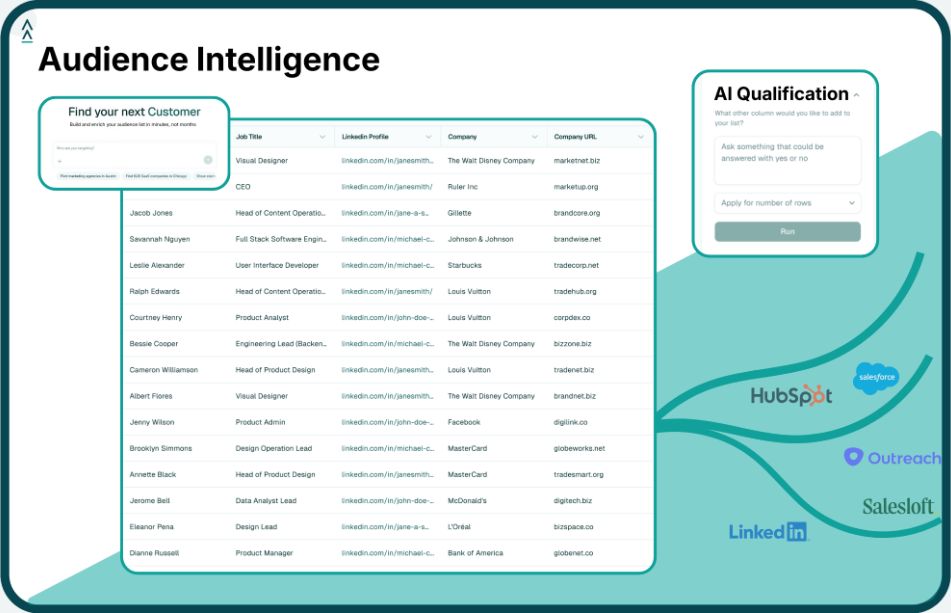
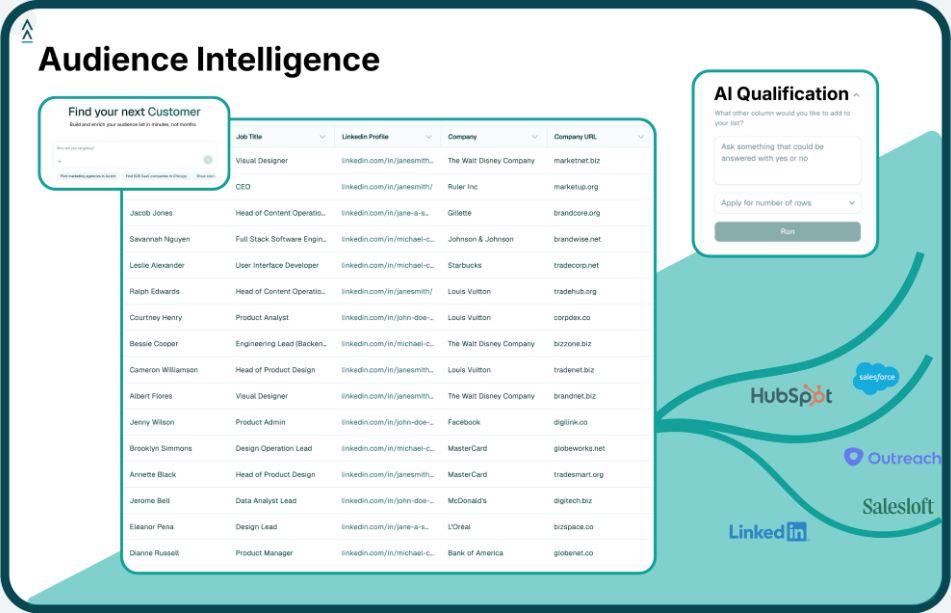
How do you know if a company (yours or a prospect’s) is taking cloud security seriously? There are telltale signals in the market that indicate a strong (or weak) security posture, and they often correlate with GTM readiness. This is where a platform like Landbase – which provides go-to-market intelligence – can act as a lens on security posture. By tracking certain data points (hiring trends, tech stack, etc.), Landbase can highlight which organizations are likely buttoned-up on security versus those that might be higher risk. Here are a few key signals and why they matter:
In essence, these signals form a “GTM risk radar.” Landbase, for instance, leverages agentic AI to scan millions of data points – from hiring postings to tech stack changes – to surface these kinds of insights. The goal for a GTM team is to use this intelligence to focus on the right prospects and partnerships. You might prioritize companies that show positive security signals (as they are stable and more likely to have budget and need for advanced solutions), or conversely, if you offer cloud security services, you might target those showing gaps (new CISO hired = likely looking to overhaul tools; no evident tools = likely need help). Internally, monitoring these signals for your own organization is a way to benchmark: are we keeping up with our peers in cloud security maturity?
Ultimately, viewing cloud security through a GTM lens means recognizing that security posture is both a risk factor and an opportunity. Companies with strong security posture often have smoother sales cycles (fewer objections, less downtime to derail revenue), whereas those lagging present risks (to themselves and others). By paying attention to these signals – and leveraging platforms that aggregate them – you can make more informed, risk-aware decisions in your go-to-market strategy.
Cloud security and GTM success are two sides of the same coin. If you secure your cloud footprint, you’re not only avoiding costly disasters – you’re actively enabling your business to move faster and with confidence. We’ve seen how cloud incidents translate to GTM risk in very concrete ways: downtime stalls your revenue engine, breaches drive customers away, compliance failures erect go-to-market roadblocks, and incident distractions sap your growth productivity. The data points are sobering (millions in losses, majorities of customers lost, etc.), but they also illuminate a path forward. Each risk we explored can be mitigated with foresight and the right investments.
As a non-technical leader, you have the power to champion these changes. By prioritizing security culture, visibility, tools, talent, and planning, you reduce the likelihood and impact of cloud mishaps. This isn’t just defensive posturing – it’s a proactive growth strategy. A company known for reliability and trust will have a smoother ride winning customers. Compliance readiness opens doors to new markets. Quick incident response preserves brand integrity. In short, operational security excellence becomes a selling point, not a cost center. It’s telling that today’s CEOs overwhelmingly see cybersecurity as a growth enabler(7); security done right can distinguish you from competitors and reassure customers that you’re a safe pair of hands.
One final piece of the puzzle is intelligence. Using data-driven platforms (like Landbase) to keep an eye on security-related signals ensures you stay ahead of risks and identify opportunities. Knowing where you stand and how others are behaving lets you allocate resources strategically – whether that’s doubling down on a looming risk area or marketing your strong security as part of your value proposition.
Your cloud footprint will only grow as your business does. Now is the time to solidify its foundation. The non-technical actions you take today – setting policies, asking the tough “are we secure enough?” questions, and resourcing your teams to succeed – will pay dividends in sustained GTM momentum. Secure your cloud, secure your growth. By treating cloud security as integral to go-to-market strategy, you not only reduce risk; you position your organization to thrive in an era where trust and resilience are competitive advantages.
Tool and strategies modern teams need to help their companies grow.