Your sales team is chasing a “perfect fit” account because they meet your ideal customer profile – yet the prospect isn’t buying anytime soon. Meanwhile, another company just hired a dozen new sales reps and secured a fresh funding round, practically waving a flag that they need solutions like yours, but you missed the memo. This gap is all too common. In fact, less than 5% of your target companies are actively in-market at any given moment. The key to finding that engaged 5% (and not wasting time on the other 95%) is reading the right signals.
Go-to-market (GTM) professionals in sales, marketing, and RevOps are increasingly turning to data “signals” – timely clues about a company’s activities – to prioritize outreach and personalize campaigns. These signals come in many forms, but three of the most powerful are hiring signals, funding signals, and tech stack signals.
Hiring Signals: Recruiting Trends Reveal Opportunity
Hiring activity is one of the clearest windows into a company’s priorities and pain points. When a business is on a hiring spree – or even just filling specific roles – it signals internal needs that a savvy GTM team can capitalize on. As one sales leader put it, “hiring reveals what’s happening inside a company: where the pressure points are, what’s being prioritized, and where capacity is stretched.” In other words, talent moves often presage business moves.
Consider what different hiring signals might tell you:
- Executive Appointments: A new C-suite or department head hire (e.g. a new CMO or Head of Sales) is a strong signal that change is afoot. New leaders are typically brought on to drive new strategies – meaning budgets may be reallocated and vendor relationships reconsidered. This is prime time to introduce your solution as part of their “fresh start.” (E.g. if a company just hired a Head of RevOps, they’re likely open to tools that can quick-start wins in analytics or process automation.)
- Department Expansions: A surge in job postings in a specific team (say 10+ new roles in engineering, marketing, or customer success) signals heavy investment in that function. If they’re building out a team, they’ll likely need software and services to support it. Job descriptions themselves often telegraph pain points – for instance, a listing for multiple data analysts suggests the company is doubling down on data infrastructure and might benefit from better analytics tools.
- Rapid Headcount Growth: Monitoring overall employee counts is critical. Rapid growth – e.g. expanding the engineering team by 30% in six months – is a classic sign of scale-up mode, often accompanied by new budgets and scaling challenges. A company hiring aggressively is (hopefully) investing in tools to keep pace with that growth. Conversely, if hiring slows or layoffs occur, it can signal cost-cutting mode, meaning they might be looking for efficiency gains or consolidation of vendors (a different kind of opportunity if you offer cost-saving solutions).
- Role-Specific Needs: The types of roles being recruited also hint at strategic focus. Hiring multiple sales or BD reps? The company needs leads and sales enablement – a great time to pitch lead generation tools. Filling marketing roles? They might need better campaign tech or outsourced support. Bringing on several recruiters at once? That implies a high hiring velocity and possibly an overwhelmed HR team – perhaps they could use HR tech or process automation. Each role hired shines a spotlight on an area of potential pain or growth that your product might address.
In practice, capitalizing on hiring signals means doing a bit of detective work. For example, if a SaaS startup is “hiring multiple data analysts”, that “signals a major investment in data infrastructure,” and a sales rep with a data analytics platform can reach out highlighting how their solution supports a growing data team. Or imagine you see on LinkedIn that a mid-size company just posted 5 new sales manager jobs – you could infer they’ll need to ramp those reps with training, tools, or leads, and tailor your pitch accordingly (“I noticed you’re expanding your sales team – our platform can help onboard new reps 20% faster and fill their pipelines on Day 1.”).
The bottom line: hiring signals give you a timing advantage. They let you strike while the iron is hot – reaching out right after a key hire or during a growth spurt, when your outreach will be most relevant. One study found that simply being first to engage a prospect can make you 35% more likely to close the deal (and you can only be first if you’re monitoring these triggers). By keeping tabs on who’s hiring and for what, GTM teams can anticipate needs before a prospect explicitly expresses them.
Funding Signals: New Capital, New Priorities
When a company announces a funding round – whether it’s a seed round or a massive Series E – it’s like a flare lighting up the sky for GTM teams. Funding signals indicate that a company has fresh capital to deploy and pressure to grow quickly. In 2024 alone, venture capitalists poured $371 billion into startups worldwide. Each of those investments is not just a number, but a story of planned expansion – new markets, bigger teams, and increased spending. Even in a “slow” year like 2023, over $285 billion in global startup funding was recorded, representing thousands of companies now armed with budgets for new projects and purchases.
Why are funding events such powerful GTM triggers? A few reasons:
- Budget Windfall: Simply put, a funded company has money to spend. Often the first order of business after a raise is to invest in growth – whether that’s hiring (typically hiring is the top use of funds), product development, or scaling sales and marketing. For example, after a $60M Series C, one startup planned to double its 220-person team within nine months, pouring capital into new hires and technology. Those hires and initiatives translate into concrete needs – new software licenses, marketing tools, infrastructure upgrades, services – that your product or service might fulfill. A company flush with cash is far more likely to consider new solutions, especially ones that help them hit the aggressive targets that often come with new funding.
- Growth & Scale Pressure: Investors don’t hand out money for a company to maintain the status quo; they expect acceleration. A startup that just raised a Series B or C is often under significant pressure to rapidly increase revenue, expand to new markets, or achieve specific milestones. This pressure makes them receptive to tools and partnerships that can drive efficiency or open new pipelines. It’s no surprise that post-funding, many companies immediately ramp up their sales and marketing spend – in fact, B2B companies often allocate 20-30% of their total funding to sales/marketing efforts in the first year after a major round (as anecdotal evidence from VC reports suggests). The funding announcement itself can be a strong signal of intent: for instance, if a press release says “Startup X raises $25M to expand its APAC presence,” you can infer they might need localized solutions, new regional partners, or support staffing overseas offices.
- Leadership and Strategy Shifts: Larger funding rounds (e.g. late-stage) sometimes coincide with bringing in new leadership or a mandate to “professionalize” operations. The company might be installing a new CRO, investing in RevOps, or overhauling tech stacks to prepare for scale. All of these are opportunities for GTM teams to position their offerings as part of that maturation process. For example, if you sell an enterprise CRM add-on and see a mid-stage company just raised a growth round, it could be the ideal time to pitch, before they finalize their post-funding tech investments.
How can you effectively leverage funding signals? Here are some best practices:
- Act Fast – but Add Insight: Timing is everything with funding news. There’s often a rush of vendors blindly emailing as soon as a deal hits Crunchbase. Stand out by timing your approach a few days after the announcement (once the initial congratulatory noise dies down), and lead with insight. Reference the funding in context – “Congrats on the Series B! Often after a big round, companies struggle with scaling customer success. We have a solution that….” This shows you understand the road ahead for them. In one playbook, experts suggest reaching out about 3–5 days post-announcement to avoid day-one inbox overload, while still being timely.
- Customize to Funding Purpose: Not all funding rounds are equal. A $5M seed round might mean they’re just trying to find product-market fit (maybe too early for an enterprise solution, but a good time to nurture). A $50M Series C likely means they have product-market fit and are now scaling go-to-market – a sweet spot for tools that improve sales productivity, marketing automation, hiring, etc. If you can glean why they raised (many news articles or press releases say “to expand into X” or “to launch Y product”), tailor your pitch to that. For instance: if a fintech startup raised money “to invest in AI capabilities,” a savvy GTM approach would be to highlight how your AI-related offering could accelerate their roadmap. Showing that you read their announcement and understand their goals will set you apart from generic vendors.
- Leverage Social Proof & Case Studies: Funded companies often look to their peers or industry leaders for guidance on scaling. This is a great time to share brief case studies of similar companies (perhaps ones a stage or two ahead) that used your solution to grow. E.g. “After their Series B, [SimilarCo] used our platform to double their outbound reach without doubling headcount.” Real metrics (even if anonymized) about how you’ve helped others post-funding can be very persuasive when the pressure is on for your prospect.
- Set a Follow-Up Cadence (SLA): Given the high value of funded accounts, it can help to establish internal SLAs for your team’s response. For example, one sales strategy guide suggests contacting a new funding lead within <24 hours of the news going public (especially for hot leads in your ICP) and then sequencing multiple touches over the next few weeks. The idea is to strike while the iron’s hot and competitors are swarming, but also not give up after one email. Combine channels – a congratulatory LinkedIn message from an exec at your company, followed by an email with a tailored suggestion, etc. Being prompt and persistent (yet value-driven) wins the day.
In short, funding signals are like GTM gold – they tell you who has the means and mandate to buy now. Rather than treating funding announcements as just good news, treat them as trigger events to refine your target list. A platform like Landbase makes this easy by automatically filtering companies by funding criteria (e.g. “Series A tech startups in Europe with >$5M raised in last 6 months”) and even combining it with other signals (such as hiring velocity or tech stack) to surface your next best accounts. The companies that just got a capital infusion today could be your best customers tomorrow – if you reach out with the right message.
Tech Stack Signals: Technographic Insights for Personalization
In B2B sales, knowledge is power – and one of the most powerful insights is knowing what technology your target company uses (and how that’s changing). These are tech stack signals (aka technographic data). Understanding a prospect’s software and hardware environment can inform how you sell to them, what you pitch, and when you reach out. Are they a Salesforce or HubSpot shop? Do they use a competitor’s tool? Have they recently adopted a new platform or gone through a migration? The answers to these questions can dramatically change your approach.
It’s no wonder that 70% of companies now use technographic data to inform their sales and marketing strategies. Leveraging tech insights isn’t just a nice-to-have – it’s a competitive necessity. According to Gartner research, companies that use technographic data are 2.5 times more likely to outperform their peers in revenue growth. Why? Because knowing a prospect’s tech stack helps you hit the mark with relevance: you can tailor your value proposition to their exact setup or pain points. In fact, over half of companies report seeing sales revenue increase after implementing technographic data into their workflow – a testament to its impact on win rates.
Key tech signals GTM teams should monitor include:
- Installed Technologies: Simply knowing what tools or platforms a company currently uses is immensely valuable. If they already use a direct competitor to your product, that’s a signal of both opportunity (they have a defined need you can fulfill, perhaps better) and challenge (you’ll need a competitive differentiator or a timing angle – like catching them when they’re dissatisfied or contract is up for renewal). On the other hand, if they use complementary tools that integrate with your solution, you can emphasize those integrations. For example, a sales rep at Salesforce might specifically target companies known to use Marketo or HubSpot marketing software, since they’re likely to need a robust CRM that plays nicely with their MA platform. Or, if you sell a Slack app for DevOps, any company using Slack is automatically a warmer prospect – especially if you see they recently added Slack enterprisewide.
- Technology Changes & New Adoptions: Keep an eye on news or data about a company adding, removing, or switching technologies. The adoption of a new software tool can indicate a shift in strategy and openness to further solutions, as one analysis notes. For instance, if a firm just implemented a Customer Success platform, they might soon realize they need better customer data enrichment to get the most from it – creating an opening for your data product. Conversely, if you see a prospect still using very outdated tech (say an on-prem CRM last updated a decade ago), that signals a likely pain point (inefficiency, integration issues) and a future need to modernize – you might nurture them until they’re ready to upgrade, positioning your offering as part of their modernization. Monitoring a company’s tech stack gives crucial context for lead qualification ; it helps answer “Are they a fit for us right now, and if so, what’s the angle?”
- Stack Breadth and Complexity: How many tools does the company use, and in which categories? Today, the average company uses 100+ different SaaS applications in their operations. A large enterprise might use several hundred! This sprawl can indicate challenges around data silos, integration, and spend management – which might be exactly what your product addresses. If your solution consolidates functions (for example, replaces 5 single-purpose tools), any prospect with an overstuffed tech stack is a great target for a consolidation pitch. On the flip side, a company with a very minimal stack might signal they’ve under-invested in a certain area, and you can educate them on the ROI of tooling up (backed by industry benchmarks).
- Public Cloud and Infrastructure Choices: For companies selling IT, DevOps, or security solutions, knowing if a target is AWS vs Azure vs Google Cloud (or multi-cloud) is key. These signals can often be gleaned from job posts (e.g. hiring for AWS engineers), press releases, or technographic providers. Pitching a tool optimized for AWS architecture to a company that’s a Microsoft shop would fall flat – so do your homework on these signals to personalize demos and content.
The power of tech stack signals is best illustrated through examples. Consider HubSpot: according to case studies, HubSpot has leveraged technographic data to identify companies using competitor marketing software and then target them with personalized campaigns. By focusing on prospects already using a similar tool, HubSpot’s sales team knows those companies have an established need (marketing automation) and likely budget – they just need to convince them of a better solution. This strategy contributed to significant gains in HubSpot’s sales, as they could tailor messaging to highlight features that outshine the competitors or ease migration pains. Another example: a cloud storage vendor might monitor which companies are gradually increasing their usage of on-premise storage (via job postings for on-prem admins or news of data center expansions); that’s a signal those companies could soon hit capacity and consider cloud alternatives – a perfect time to reach out with “How we can help you burst to cloud seamlessly” messaging.
To effectively use technographic signals, GTM teams often rely on data enrichment tools and databases. Platforms like ZoomInfo, Clearbit, or Landbase aggregate millions of data points on which companies use which tech. According to Forrester, the global technographic data market is booming, expected to reach ~$5 billion by 2025 as vendors race to provide up-to-date tech stack info. Using these sources, you can quickly answer questions like “What CRM does target X use?” or “Which accounts in my territory recently added a HRIS tool to their stack?” – and then craft your approach accordingly.
It’s important to note that technographic data isn’t just for prospecting; it supercharges sales conversations. Reps armed with this intel can ask smarter questions and build instant credibility. (“I saw you’re using XYZ for your ERP – how are you finding it? We often work with clients struggling to integrate XYZ with their planning tools.”) This demonstrates you’ve done your homework and understand their world, which is far more compelling than a generic pitch. Little wonder that in one survey, 80% of sales and marketing professionals reported technographic data as essential to their strategy, and 75% said it helped them better understand their target audience. When you ground your outreach in the reality of the prospect’s tech environment, you move from vendor to advisor.
Putting Signals to Work in Your GTM Strategy
We’ve seen how hiring, funding, and tech stack signals each shine a light on crucial aspects of a target account – from internal priorities and budget to existing pains and product needs. The final piece of the puzzle is integrating these insights into a cohesive GTM strategy. In practice, that means breaking down silos between your data sources and your action tools. Your CRM, marketing automation, sales outreach sequences, and analytics should all incorporate signal data so that every message, every campaign, and every sales call is contextual and timely.
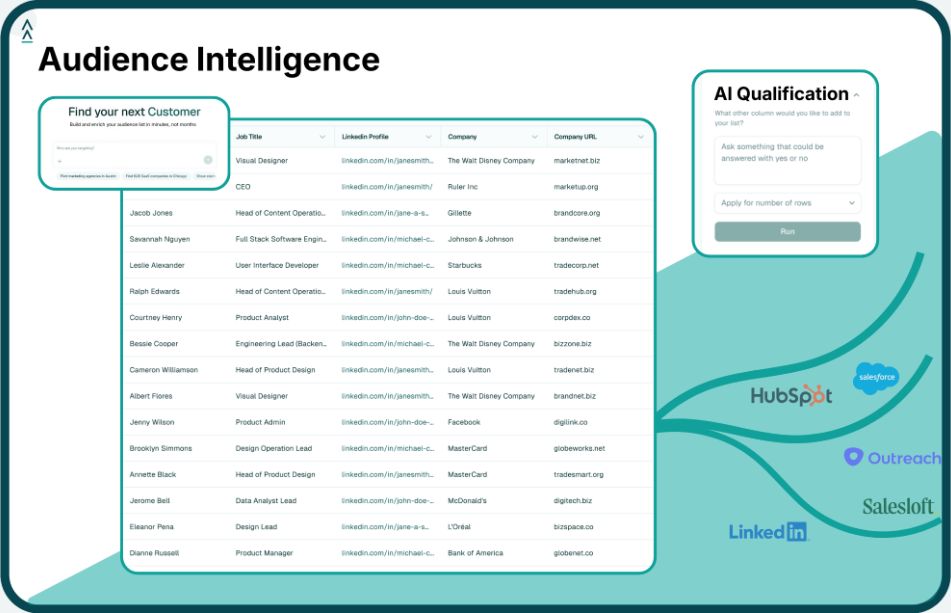
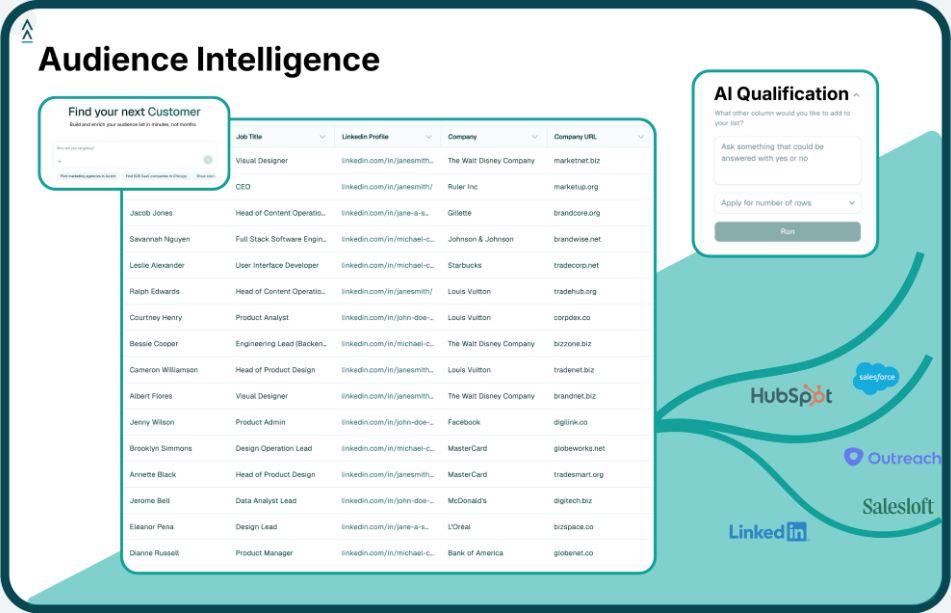
The good news is that leveraging signals has never been easier. Platforms like Landbase are pioneering an AI-driven approach to aggregate and act on these signals at scale. Landbase, for instance, unifies over 1,500 data signals – spanning firmographic details, technographic usage, real-time intent, hiring and funding events – into a single interface. It allows GTM teams to instantly query for companies that match complex criteria (e.g. “Fintech companies in North America that raised Series A in the last 6 months and are currently hiring for data science roles”) and get a ready-to-prospect list in seconds. By continuously scanning news, job boards, and web data, such a platform ensures you never miss a beat when a target account shows a new signal.
Ultimately, being data-driven with signals transforms your go-to-market approach from reactive to proactive. Instead of blasting the same pitch to 1000 companies and hoping 5 might have a need, you can focus on the 50 that today have a high propensity to buy, and approach them with a message that hits on exactly what they care about. This boosts efficiency (your SDRs and AEs spend time where it counts) and conversion rates – as evidenced by the many stats we’ve cited (higher revenue growth, faster sales cycles, better win rates when using signals). Even marketing teams benefit: signal-based segmentation can dramatically improve campaign ROI by aligning content to current buyer interest and intent.
.png)
.png)
.png)


.png)