.png)
.png)
.png)

Daniel Saks
Chief Executive Officer


The recruiting technology market raised over $208 million in just the first 11 months of 2025—fast enough to rival consumer social apps. This explosive growth reflects a fundamental shift in how companies source, screen, and hire talent. From automated video interviews to AI agents that source candidates 24/7, these technologies are solving the #1 challenge facing every growing company: finding great people, fast.
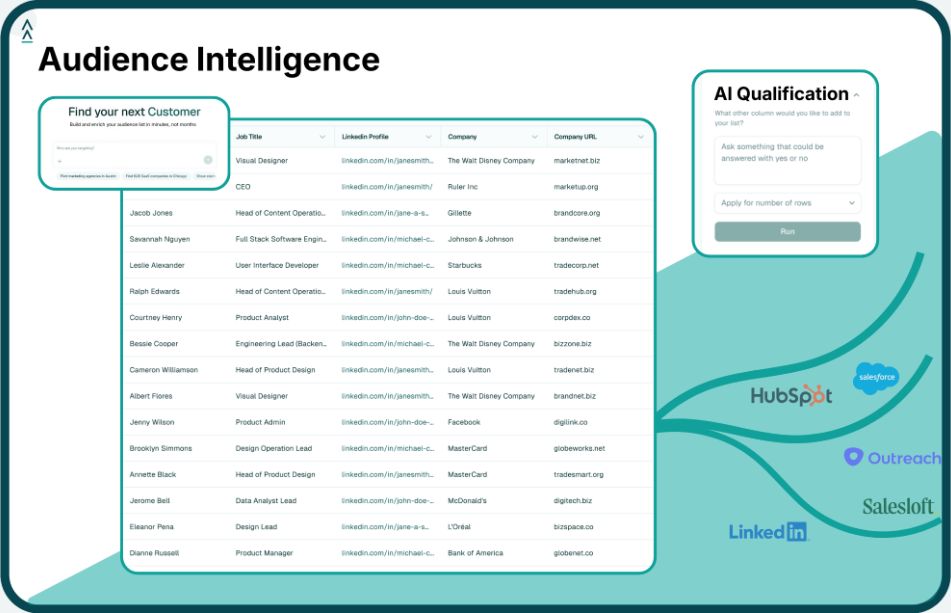
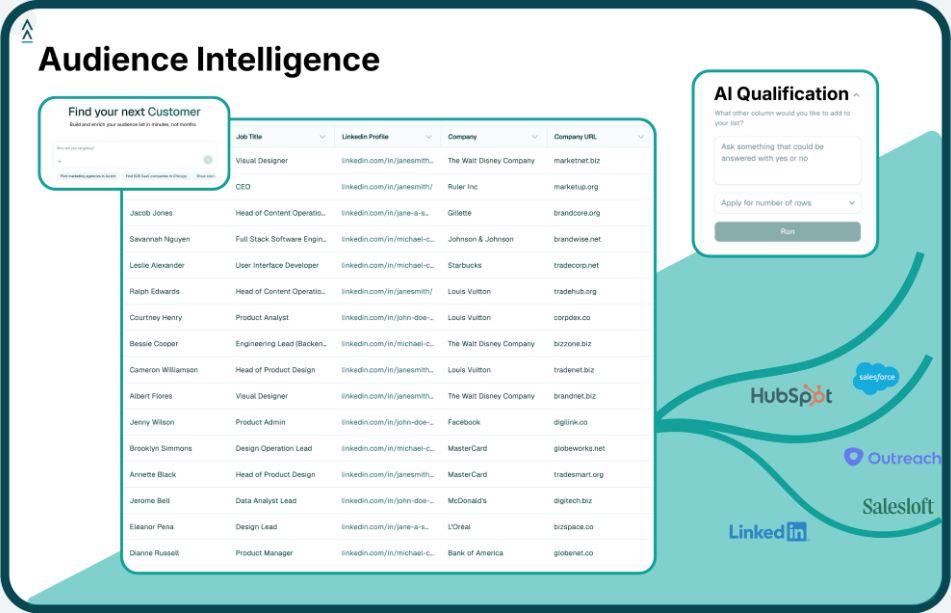
For GTM teams in the recruiting tech space, identifying and engaging with the right prospects requires more than traditional data providers. Platforms like Landbase's VibeGTM interface enable teams to discover and qualify target accounts using natural-language prompts like "HR tech startups with 100-500 employees that raised Series B funding in 2025," delivering AI-qualified audiences ready for immediate activation. This capability is especially valuable in the fast-moving recruiting tech landscape where timing and relevance are critical.
Juicebox provides an AI-native recruiting platform that powers thousands of searches daily with generative AI. The platform serves as an all-in-one solution for sourcing, screening, and managing candidates, allowing recruiting teams to find ideal candidates faster than traditional methods.
Juicebox powers hiring for leading AI companies like Ramp and Perplexity, operating in the competitive AI talent war. Its AI-native approach to recruiting represents the future of talent acquisition, using autonomous agents instead of traditional search methods.
Valuation: $180M | Founded: 2023
Recent Funding: $30M Series A (September 2025)
Mercor operates an AI-powered talent marketplace specializing in contract recruiting through AI-driven matching. The platform connects companies with qualified contractors across various industries, using sophisticated algorithms to ensure quality matches.
Mercor's massive funding round and rapid path to decacorn status demonstrate the market's confidence in AI-powered talent marketplaces. The company is transforming how businesses approach contract hiring, making it faster and more efficient through AI matching.
Valuation: $10B | Founded: 2022
Recent Funding: $350M Series C (October 2025)
Turing uses AI to match companies with global engineers and technical talent. The platform serves as a comprehensive solution for companies looking to build distributed engineering teams, handling everything from sourcing to vetting and matching.
Turing's significant Series E funding represents one of the largest recruiting tech raises of 2025, indicating exceptional growth in the global remote hiring market. The company has successfully scaled its AI matching technology to serve companies building distributed engineering teams worldwide.
Valuation: $2.2B| Founded: 2018
Recent Funding: $111M Series E (March 2025)
Ashby provides a modern ATS (Applicant Tracking System) that has become the go-to choice for high-growth tech companies and YC startups. The platform offers comprehensive recruiting functionality with a focus on user experience and integration capabilities.
Ashby's analytics-focused approach appeals to sophisticated recruiting teams that prioritize data over traditional ATS features. The platform's July 2025 Series D funding signals major market validation for analytics-first recruiting solutions.
Recent Funding: $50M Series D (July 2025)
Findem offers an AI-powered platform for sourcing, candidate matching, ATS database rediscovery, and marketing automation. The platform helps recruiting teams find passive candidates and rediscover previously overlooked talent in their existing databases.
Findem's significant Series C funding demonstrates strong investor confidence in the AI sourcing space. The company's multi-function platform addresses multiple pain points in the recruiting process, from initial sourcing to database optimization.
Recent Funding: $51M Series C (October 2025)
Alex (now Apriora.ai) provides an AI recruiting assistant that conducts live video call conversations with candidates for screening purposes. The platform enables companies to give 100% of applicants a chance by automating the initial screening process.
Alex represents a new approach to candidate screening that emphasizes inclusivity and efficiency. As Tim Sackett noted, "I like them so much I invested my own money. I love that any TA shop can now give 100% of their candidates an at bat, a chance. It doesn't get more inclusive than that."
Recent Funding: $17M Series A (September 2025)
Paradox provides high-volume recruiting automation through its AI assistant platform. The company specializes in scaling recruiting operations for organizations with large hiring needs, automating everything from scheduling to candidate communication.
Paradox earned the top ranking from industry expert Tim Sackett, indicating market leadership and exceptional execution in recruiting automation. The company's focus on reliability and user experience has made it the go-to solution for organizations with complex, high-volume hiring needs.
Valuation: $646M - $843M | Founded: 2016
Recent Funding: $200M Series C (December 2021)
Simplify offers an AI-enabled job search infrastructure called Copilot that helps job seekers discover and apply to positions. The platform has facilitated massive volume in job applications while maintaining a small team.
Simplify has achieved remarkable scale with minimal resources, demonstrating exceptional product-market fit in the job seeker segment. The company's ability to facilitate 100 million job applications with only 7 people represents a new benchmark for efficiency in recruiting technology.
Recent Funding: $3M Seed (March 2024)
Gem provides an all-in-one recruiting platform and CRM that serves as an alternative to complex enterprise tools. The platform is designed to be more accessible while still providing comprehensive functionality for sourcing, nurturing, and managing candidates.
Gem has successfully bridged the gap between startup-friendly recruiting tools and enterprise-grade functionality. The company's ability to secure major enterprise customers while maintaining ease of use demonstrates its strong market positioning.
Valuation: $1.2B | Founded: 2017
Recent Funding: $100M Series C (September 2021)
Phenom offers an AI-powered recruiting platform that sits on top of big HCM (Human Capital Management) recruiting modules. The platform enhances existing enterprise HR systems with advanced AI and agent capabilities for talent acquisition.
Phenom leads in AI and agentic recruiting technology for enterprise organizations, positioning for continued growth as large companies accelerate their AI adoption. The company's ability to enhance existing HCM platforms makes it an attractive solution for organizations with established HR technology stacks.
Valuation: $1.3B | Founded: 2010
Recent Funding: $100M Series D (April 2021)
The recruiting technology landscape is experiencing unprecedented growth driven by several key factors:
AI Adoption Acceleration: The shift toward AI-powered recruiting solutions has created massive opportunities for companies that can deliver real automation and intelligence. As Tim Sackett noted about Phenom, "Phenom might be the most advanced recruiting tech company around AI and Agents in our space", highlighting how AI capabilities are becoming the primary differentiator.
YC Ecosystem Effect: The dominance of Y Combinator-backed companies demonstrates how the accelerator's focus on technology-driven, high-growth startups aligns perfectly with the recruiting tech opportunity. These companies benefit from YC's network, mentorship, and go-to-market expertise.
Enterprise Digital Transformation: Large organizations are finally modernizing their recruiting technology stacks, creating opportunities for both enterprise-focused platforms like Phenom and Eightfold.ai and more agile solutions like Gem that can serve both mid-market and enterprise customers.
Efficiency Demands: The pressure to do more with less has made automation essential. Companies like Simplify demonstrate that massive scale is possible with minimal resources when AI is leveraged effectively.
For companies selling into this competitive space, success requires precise targeting and timing. Landbase's agentic AI platform enables GTM teams to identify high-intent prospects based on real-time signals like funding rounds, hiring surges, and tech stack changes, ensuring outreach happens when prospects are most receptive.
This list was compiled using a data-driven methodology that analyzed:
All companies on this list have demonstrated exceptional growth in 2024-2025 through quantifiable metrics like funding amounts, growth percentages, or user/customer acquisition rates. The selection prioritizes companies with the fastest actual growth rather than just market potential or brand recognition.
The companies on this list point toward a future where recruiting is increasingly automated through AI agents and autonomous systems. Platforms like Juicebox with 20%+ monthly growth with fully automated sourcing represent the next evolution beyond traditional recruiting tools.
For GTM teams targeting this space, success requires understanding these technology trends and identifying companies at the inflection point of growth. Landbase's audience discovery platform enables teams to find companies based on specific criteria like "AI recruiting startups with Series B funding" or "HR tech companies with 200-500 employees," delivering precisely targeted prospect lists for immediate outreach.
A 'fastest-growing' recruiting tech company is defined by quantifiable growth metrics in 2024-2025, including significant funding rounds (typically $17M+), exceptional revenue growth (like Juicebox's 20%+ monthly ARR growth), rapid user/customer acquisition (like Simplify's 1M+ users), or achievement of major milestones (like Mercor's $10B valuation in under 3 years). These companies demonstrate not just market potential but actual, measurable growth momentum that sets them apart from competitors in the recruiting technology space.
AI is transforming recruiters from manual sourcers and screeners into strategic talent advisors by automating repetitive tasks. Platforms like Alex/Apriora can screen 100% of candidates through AI video interviews, while Serra can completely automate sourcing across multiple platforms. This automation allows recruiters to focus on high-value activities like candidate experience, employer branding, and strategic workforce planning rather than administrative tasks. The shift enables recruiting teams to achieve significantly more with fewer resources while improving both speed and quality of hiring outcomes.
For small businesses, essential recruiting software features include cost-effectiveness with free tiers or affordable pricing, ease of use without requiring extensive training, integration capabilities with existing tools, automation features to compensate for limited staff, and scalability to grow with the business. Many companies on this list, particularly Ashby, specifically cater to the needs of growing small businesses by balancing powerful functionality with user-friendly interfaces. The best solutions offer immediate value without requiring significant upfront investment in training or implementation.
Recent funding rounds directly accelerate the development of new recruiting technologies by providing capital for R&D, talent acquisition, and market expansion. The $208 million raised by recruiting startups in 2025 has enabled companies to invest heavily in AI capabilities, with platforms like Juicebox developing increasingly sophisticated agentic AI systems. This funding creates a virtuous cycle where successful companies can reinvest in innovation, further widening the gap between AI-native platforms and traditional recruiting tools. Large funding rounds also signal market validation, attracting top talent and creating partnership opportunities that accelerate product development.
These fast-growing companies offer several key competitive advantages over traditional recruiting methods: AI-powered automation that dramatically reduces time-to-hire, enhanced candidate experience through personalized conversational interactions, data-driven decision making based on real-time market signals, scalability that allows small teams to handle large volumes (like Simplify's 7-person team serving 1M+ users), and integration capabilities that connect recruiting workflows with broader HR and business systems. These advantages create significant efficiency gains and better hiring outcomes compared to traditional manual methods, making them increasingly essential for companies competing for top talent in tight labor markets.
Tool and strategies modern teams need to help their companies grow.