.png)
.png)
.png)

Daniel Saks
Chief Executive Officer


The insurance industry is undergoing a $127+ billion digital transformation, with AI-powered startups raising record funding despite a challenging market. The global InsurTech market valued at $5.3B in 2024 is projected to reach $132.9B by 2034—a 25x growth driven by AI, automation, and data integration transforming legacy insurance models. From Medicare Advantage leaders to cyber insurance pioneers, these 10 companies represent the fastest-growing innovators reshaping how insurance is bought, sold, and managed. For go-to-market teams targeting the InsurTech sector, platforms like Landbase's AI-powered discovery enable instant identification of high-growth companies using natural-language prompts like "Recently funded InsurTech startups with Series B+ funding."
Devoted Health provides Medicare Advantage plans with integrated technology for senior healthcare. The company combines health insurance with data-driven care management to improve outcomes for older Americans while addressing the massive Medicare Advantage market projected to exceed $500B by 2027.
Devoted Health demonstrates how technology can transform one of insurance's largest and most complex segments. By integrating care management with insurance, they're redefining the Medicare Advantage experience for seniors and setting new standards for health insurance innovation.
Valuation: $12.6B | Founded:
Recent Funding: $112M Series E (August 2024)
Next Insurance provides AI-driven digital insurance for small businesses, offering tailored, affordable policies that bypass traditional brokers. The platform delivers swift policy quotes and claims handling through a fully digital experience designed specifically for small business owners.
Next Insurance transformed small business insurance by proving that AI-driven underwriting and digital-first experiences can serve this traditionally underserved market profitably. Their success validates the digital-first approach to commercial insurance distribution.
Valuation: $1B+ | Founded: 2016
Recent Funding: $250M Series D (March 2020)
Coalition combines cyber insurance with proactive cybersecurity tools through their Coalition Control platform. The company provides active insurance products across the US, UK, Canada, and Australia, addressing the trillion-dollar cyber insurance opportunity with integrated security solutions.
Coalition's holistic approach—combining insurance coverage with security tools—addresses the critical need for proactive cyber risk management. Their White House engagement validates the strategic importance of their model in national cybersecurity defense.
Valuation: $5B | Founded: 2017
Recent Funding: $30M Series F (March 2025)
Wefox operates a digital insurance platform connecting insurance companies, brokers, businesses, and customers across Europe. The company provides digital insurance solutions for the entire ecosystem with a B2B2C model focused on business transformation.
Wefox demonstrates how digital platforms can transform traditional insurance distribution in Europe. Their B2B2C model connects the entire insurance value chain, enabling faster innovation and better customer experiences across multiple markets.
Valuation: $4.5 billion | Founded: 2015
Recent Funding: Undisclosed Series D (July 2024)
Hippo Insurance provides homeowners insurance integrated with smart home sensor technology for proactive risk prevention. The company addresses the critical affordability crisis in homeowners insurance through IoT-enabled risk management and real-time monitoring.
Hippo's IoT-first approach transforms homeowners insurance from reactive coverage to proactive risk prevention. Their model demonstrates how embedded technology can reduce claims and improve customer safety while addressing critical affordability challenges.
Valuation: $5.6 billion | Founded: 2015
Recent Funding: $350M Series F (November 2020)
Alan provides AI-driven employee benefits and digital health insurance in Europe, revolutionizing healthcare for employees through a digital-first experience. The company focuses on making health benefits simple and accessible for European employers and their teams.
Alan shows how digital-first approaches can transform health insurance in regulated European markets. Their AI-driven platform improves employee experience while controlling costs for employers, setting new standards for health benefits administration.
Valuation: $4.4B | Founded: 2016
Recent Funding: $193M Series F (September 2024)
Ethos Life provides digital life insurance with AI-powered underwriting that streamlines the application process. The company has become one of the largest life insurance issuers in the US through technology-driven innovation and simplified customer experiences.
Ethos demonstrates how AI-powered underwriting can scale life insurance distribution while maintaining risk discipline. Their success with top-tier investors validates the market opportunity in digitizing life insurance through simplified application processes.
Valuation: $2.7B | Founded: 2016
Total Funding: $100M Series D (July 2021)
Marshmallow provides car insurance for newcomers and migrants using proprietary pricing models that serve traditionally underserved customers. The company offers real-time pricing and embedded insurance systems designed to provide fair coverage for immigrant populations.
Marshmallow proves that serving underserved immigrant populations with fair pricing can drive explosive growth. Their model challenges traditional auto insurance underwriting that often disadvantages newcomers and migrants.
Valuation: $1.2 billion | Founded: 2017
Recent Funding: $90M Series C (April 2025)
Bestow provides an end-to-end software platform for life insurers covering product development, underwriting, and policy administration. The company enables carriers to launch and scale life insurance products quickly through modern digital infrastructure.
Bestow addresses the critical need for life insurers to modernize operations and reduce costs across the entire value chain. Their B2B platform approach enables traditional insurers to compete with digital-native competitors through modern infrastructure.
Recent Funding: $120M Series D (May 2025)
hyperexponential provides decision intelligence platforms for pricing and underwriting in complex insurance lines. Their hx AI suite automates workflows for carriers, MGAs, and MGUs with advanced AI capabilities for specialty insurance products.
hyperexponential demonstrates how AI-first decision intelligence can transform pricing and underwriting workflows for complex insurance products. Their enterprise traction validates the demand for advanced analytics in specialty insurance markets.
Valuation: £75.7M | Founded: 2017
Recent Funding: $73 million Series B (December 2023)
For B2B companies selling to the InsurTech sector, identifying and qualifying these high-growth targets is critical. Traditional data providers often lack real-time funding signals, hiring activity, and technology stack changes that indicate optimal engagement timing.
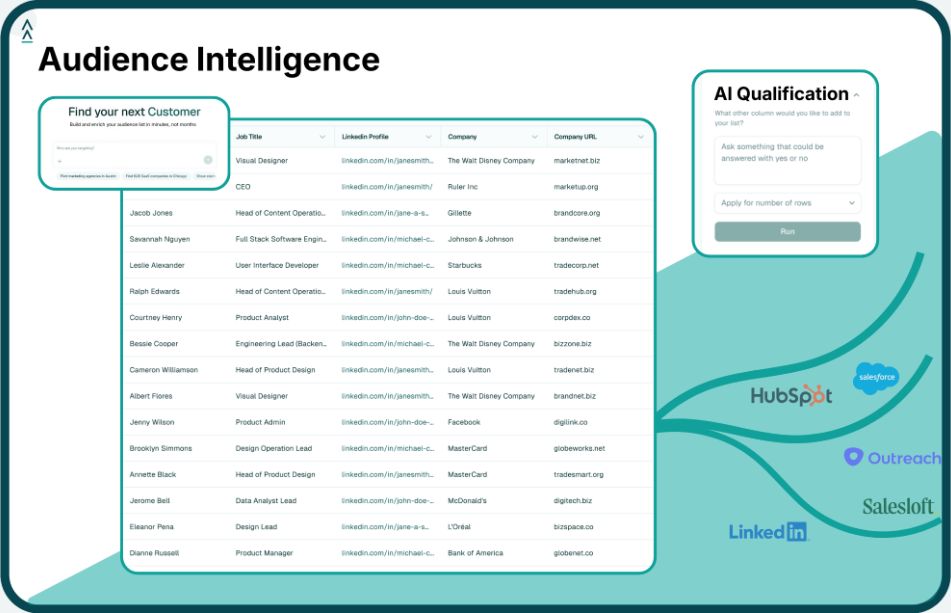
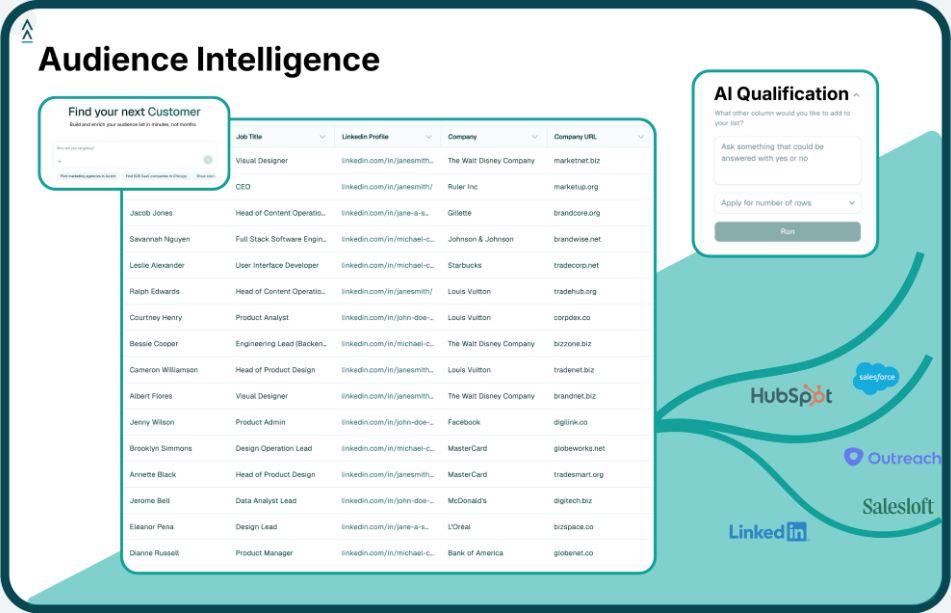
This is where Landbase's GTM-2 Omni excels. Instead of manually filtering through static databases, go-to-market teams can use natural-language prompts like:
The platform's 1,500+ unique signals span firmographic, technographic, intent, hiring, and funding data to deliver AI-qualified audiences ready for immediate activation. With up to 10,000 contacts exportable instantly without requiring a login, teams can accelerate their InsurTech targeting while focusing on high-value conversations rather than list building.
InsurTech refers to technology-driven innovation in the insurance industry that leverages AI, data analytics, and digital platforms to improve efficiency, customer experience, and risk assessment. Unlike traditional insurance with manual processes and legacy systems, InsurTech companies use real-time data, automated underwriting, and digital-first experiences. These innovations enable faster policy issuance, more accurate pricing, and better customer service. The fundamental difference lies in InsurTech's ability to leverage modern technology stacks to serve customers more effectively while reducing operational costs.
The primary growth drivers include widespread AI adoption across insurance segments, accelerating digital transformation demands, and opportunities in underserved markets. The global InsurTech market's projected growth from $5.3B in 2024 to $132.9B by 2034 reflects these powerful tailwinds. Regulatory changes enabling innovation and consumer demand for seamless digital experiences further accelerate adoption. Companies targeting previously underserved segments like immigrants, small businesses, and cyber risk are achieving exceptional growth through technology-enabled niche expertise.
AI enables InsurTech companies to automate underwriting, detect fraud, personalize pricing, and dramatically improve customer experiences. All 10 featured companies leverage advanced AI/ML capabilities for core business functions like risk assessment and claims processing. For example, Coalition combines AI-powered insurance with proactive security tools, while Next Insurance uses AI-driven underwriting to profitably serve small businesses. AI has become table stakes in the industry, enabling startups to compete with established insurers through superior data processing and decision-making capabilities.
Funding validates market opportunity and enables rapid scaling of technology infrastructure, customer acquisition, and geographic expansion. The top 7 unicorn InsurTechs have raised $20.2B in funding with combined valuations of approximately $106B. Recent rounds like Devoted Health's $2.3B total funding and Alan's $188M Series E+ demonstrate investor confidence in the sector's long-term potential. Funding allows companies to invest in AI capabilities, regulatory compliance, and market expansion while building sustainable competitive advantages through technology development.
Businesses can use AI-powered audience discovery platforms like Landbase's VibeGTM interface to identify InsurTech companies based on real-time signals like recent funding rounds, hiring activity, and technology stack changes. Natural-language targeting enables instant identification of high-value prospects without complex database queries or manual research. These platforms provide 1,500+ unique signals spanning firmographic, technographic, intent, and funding data for precise targeting. This approach allows sales and marketing teams to focus on high-value conversations with properly qualified prospects rather than time-consuming list building.
Tool and strategies modern teams need to help their companies grow.