.png)
.png)
.png)

Daniel Saks
Chief Executive Officer


The HealthTech sector is experiencing unprecedented growth, with the market valued at $387.8 billion and expanding at a 21.2% compound annual growth rate. Artificial intelligence now dominates the landscape, capturing 62% of all digital health funding in H1 2025. From AI-powered clinical documentation to precision medicine and virtual care platforms, these companies are transforming healthcare delivery while creating massive opportunities for B2B vendors serving this innovative ecosystem. For go-to-market teams looking to target these high-growth HealthTech companies, AI-powered audience discovery platforms can identify recently funded startups, companies in hyper-growth mode, and organizations actively hiring—critical signals for timing your outreach perfectly.
Ambience Healthcare provides AI-powered clinical documentation that automatically generates medical notes from patient-clinician conversations. The platform integrates with major EHRs like Epic and Cerner while also offering autonomous medical coding capabilities, addressing both documentation burden and revenue cycle management in one solution.
Ambience is addressing one of healthcare's most pressing challenges—physician burnout driven by excessive documentation requirements. Their rapid growth demonstrates the massive market demand for solutions that reduce administrative burden while improving billing accuracy.
Valuation: $1.25 billion | Founded: 2020
Recent Funding: $70 million Series B (2024)
Abridge offers ambient AI documentation that automatically captures and structures patient conversations into clinical notes. As the first "Pal" in Epic's Partners & Pals program, it has native integration with the dominant EHR system, serving 200+ US health systems including Mayo Clinic and Emory Healthcare.
Abridge has achieved the fastest adoption in healthcare IT history through its strategic Epic integration. Their native EHR integration eliminates workflow disruption, a key barrier to adoption of new healthcare technologies. The company is expanding beyond documentation into comprehensive revenue cycle management, positioning itself as an essential infrastructure layer for modern healthcare delivery.
Valuation: $5.3B | Founded: 2018
Recent Funding: $316M Series E
OpenEvidence provides a ChatGPT-style medical search platform that delivers evidence-based answers to clinicians' questions. The platform partners with trusted medical journals like NEJM and JAMA Network to ensure credibility and accuracy, fundamentally changing how doctors access medical information.
OpenEvidence addresses the impossible challenge of keeping up with medical knowledge that doubles every 73 days (projected for 2020). By partnering with trusted journals like NEJM and JAMA Network, the platform provides crucial credibility in evidence-based medicine. Their massive organic adoption demonstrates that clinicians are hungry for AI-powered tools that genuinely improve their ability to deliver evidence-based care.
Valuation: $6B | Founded: 2022
Recent Funding: $200M Series C (Oct 2025)
Hinge Health delivers digital musculoskeletal (MSK) care through a mobile app that combines physical therapy exercises with computer vision to ensure proper form. The platform uses AI-driven automation to personalize care delivery while maintaining clinical outcomes, serving 2,000+ employer and health plan partners.
Hinge Health is tackling MSK conditions, making effective solutions critically valuable to large organizations. Their clinically validated approach through peer-reviewed studies demonstrates that digital care can deliver measurable outcomes. In 2025, the company launched an in-person provider network, demonstrating the evolution toward hybrid care models that combine digital and physical care.
Valuation: $6.2 billion | Founded: 2014
Recent Funding: $400M Series E (October 2021)
Omada Health provides virtual chronic care programs focused on cardiometabolic conditions including diabetes, hypertension, prediabetes, and obesity. The platform combines virtual coaching with digital therapeutics and AI-powered personalization, with recent expansion into GLP-1 medication companion programs for the weight loss market.
Omada Health addresses chronic diseases that represent 90% of US healthcare costs ($4.1 trillion annually), making their virtual care model critically important for healthcare sustainability. Their first-mover advantage with over a decade of clinical data provides credibility that newer entrants lack. The strategic expansion into GLP-1 medication companion programs positions them at the intersection of digital therapeutics and the $100 billion+ weight loss pharmaceutical market.
Valuation: $1,000M | Founded: 2011
Recent Funding: $150M IPO (June 2025)
Natera provides precision medicine through cell-free DNA (cfDNA) testing for cancer, women's health, and organ health. The company has built AI foundation models trained on the world's largest cfDNA dataset of 250,000+ tumor exomes and 1 million plasma timepoints, enabling population-level precision medicine.
Ranked #1 on The Healthcare Technology Report's Top 50 list for 2025, Natera possesses the world's largest cfDNA dataset, enabling AI models for drug discovery and clinical decision-making. Medicare coverage for multiple conditions ensures broad accessibility to their precision medicine tests. Their strong revenue growth as a public company demonstrates a sustainable business model that validates the commercial viability of precision medicine at scale.
Valuation: $152M | Founded: 2004
Recent Funding: $288M (April 2020)
Spring Health provides a comprehensive mental health platform that uses proprietary assessment and machine learning to match individuals with the right care path. The platform coordinates digital exercises, coaching, therapy, and medication management through Care Navigators, with recent expansion into neurodiversity care serving major employers like Microsoft, Target, and JPMorgan Chase.
Spring Health serves 20 million lives across 40 countries in 20 languages, demonstrating that mental health platforms can achieve true global scale. Their comprehensive continuum of care from digital tools to therapy to medication management addresses the full spectrum of mental health needs. The March 2025 launch of their Neurodiversity Hub addresses an underserved population representing 15-20% of the workforce, expanding their addressable market significantly.
Valuation: $3.3 billion | Founded: 2016
Recent Funding: $35M Series E (July 2024)
Viz.ai provides FDA-cleared AI for multiple specialties including stroke, cardiology, trauma, oncology, and radiology. The platform automatically detects time-sensitive conditions and coordinates specialist care through its network. In 2025, the company launched Viz Oncology Suite and Viz Assist, its first multimodal AI agent platform combining imaging, EHR, and ambient listening.
Viz.ai is the only platform with FDA clearances across 5+ specialties, demonstrating their ability to scale AI beyond a single use case. Their presence in 1,800+ hospitals across the US and Europe makes them one of the most widely deployed AI platforms in healthcare. As the first to develop multimodal AI combining imaging, EHR data, and audio for comprehensive clinical intelligence, they're setting the standard for next-generation healthcare AI.
Valuation: $1.2 billion | Founded: 2016
Recent Funding: $40M Series D (March 2023)
Devoted Health provides tech-enabled Medicare Advantage coverage through its "all-in-one" plans and Devoted Medical provider network that combines virtual and in-home care. Founded by brothers Todd and Ed Park, the company has become the most-funded healthtech startup in the past decade while expanding rapidly across states.
As the #1 most-funded healthtech startup with $2.256 billion raised, Devoted Health is tackling Medicare Advantage, the fastest-growing Medicare segment with 30 million+ enrollees. Their proven value-based care model demonstrates operational excellence where many competitors have failed. The aggressive geographic expansion from 13 to 20 states shows they've mastered the complex regulatory and operational challenges of scaling health insurance.
Valuation: $12.6B | Founded: 2017
Recent Funding: $287 million Series E (2024)
Komodo Health provides healthcare data and analytics through its Healthcare Map, which tracks 330+ million de-identified US patient journeys across 50+ therapeutic areas. The company's Marmot healthcare-native AI analytics engine delivers transparent, verifiable insights in minutes rather than weeks or months.
Komodo Health possesses the largest patient journey database with 330 million de-identified patients, providing unprecedented real-world evidence for healthcare decisions. Their Marmot AI analytics engine reduces analysis time from months to minutes (30% faster), dramatically accelerating healthcare research and decision-making. The Nasdaq partnership creates a new asset class by providing medical claims data for institutional investors, expanding their market beyond traditional healthcare analytics.
Valuation: $3.3B | Founded: 2014
Recent Funding: $514M Series E (August 2025)
Glooko provides a comprehensive diabetes management platform that integrates with 200+ glucose meters, insulin pumps, and CGMs, providing unified data for both patients and clinicians. The platform offers EHR integration for clinician dashboards and recently expanded into inpatient care through the acquisition of Monarch Medical Technologies' EndoTool system.
Glooko's integration with 200+ devices eliminates the data silos that plague diabetes management, creating a unified platform that works with virtually any monitoring device. Their global scale serving 4.4 million patients across 30 countries demonstrates international scalability. The September 2025 acquisition of Monarch Medical Technologies expands their platform from ambulatory to inpatient care, creating a comprehensive diabetes management solution across all care settings.
Valuation: $201M | Founded: 2010
Recent Funding: $100 million Series F (2024)
CareDx provides transplant diagnostics through its AlloSure donor-derived cfDNA technology for non-invasive rejection monitoring and AlloMap Heart surveillance test. The company recently achieved EU IVDR certification for its AlloSeq Tx and QTYPE tests, expanding its European market presence under new CEO John W. Hanna.
CareDx provides the only comprehensive transplant surveillance platform covering heart, kidney, and lung transplants through non-invasive testing. By reducing the need for painful biopsies, they improve patient quality of life while maintaining monitoring efficacy. Their 13% revenue growth as a public company demonstrates a sustainable business model, while EU IVDR certification expands their addressable market across Europe.
Valuation: $138M | Founded: 1998
Recent Funding: $15M (March 2018)
Doctolib provides online appointment scheduling, teleconsultation services, and patient management tools for doctors, specialists, and therapists across Europe. The platform has successfully scaled across multiple European countries, becoming the leading healthtech platform in a region with different regulatory frameworks than the US.
Doctolib is the leading European healthtech platform in a market typically dominated by US companies, demonstrating that regional champions can emerge in healthcare technology. Their $815 million funding makes them the #2 unicorn on StartupBlink's list. Successfully scaling across European countries with vastly different healthcare systems and regulations proves telehealth's global applicability beyond the US market.
Valuation: $6.5B | Founded: 2013
Recent Funding: $51M Series G (August 2022)
Teladoc Health provides a global virtual care platform covering primary care, specialist care, mental health services (through BetterHelp), and chronic condition management programs. As the pioneer of telehealth with 20+ years of operation, the company has maintained growth despite market challenges and mental health headwinds.
As the pioneer and market leader in telehealth with over 20 years of operation, Teladoc legitimized virtual care long before COVID accelerated adoption. Their $2.7 billion revenue scale makes them the largest pure-play telehealth company. The platform's durability beyond pandemic demand spikes demonstrates that telehealth is a permanent transformation of healthcare delivery, not a temporary trend.
Valuation: $104M | Founded: 2002
Recent Funding: $850M Post IPO (May 2020)
Clearwave provides a patient revenue and engagement platform offering self-service scheduling, registration, eligibility verification, and payment processing for specialty practices. The platform automates 87% of registration tasks, serving 500+ specialty practices and reaching 170+ million patients.
Clearwave's massive scale reaching 170+ million patients through 500+ specialty practices makes them a critical infrastructure layer for healthcare access. Their industry-leading 87% automation of registration tasks addresses the #1 administrative bottleneck in healthcare. The appointment of CEO Mike Coffey in September 2025, bringing proven tech-enabled growth expertise from DTiQ and Zonar, signals aggressive expansion ahead.
Valuation: $5.3M | Founded: 2009
Recent Funding: $310K Series A (March 2019)
The HealthTech sector's explosive growth creates massive opportunities for B2B vendors, but requires sophisticated targeting approaches. These companies operate in a highly regulated environment with specific compliance requirements including SOC II and GDPR, making data quality and privacy essential considerations.
For go-to-market teams looking to engage with these high-growth HealthTech companies, understanding their specific signals is crucial. Companies like Ambience Healthcare and Abridge are scaling rapidly after substantial funding rounds, while public companies like Natera and CareDx demonstrate sustainable revenue models. The key is identifying companies based on their specific growth indicators:
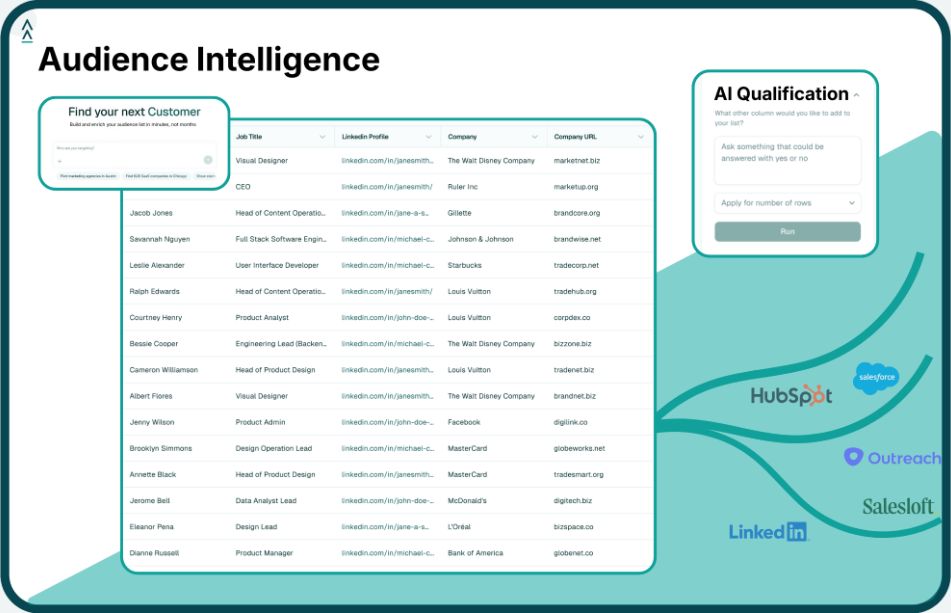
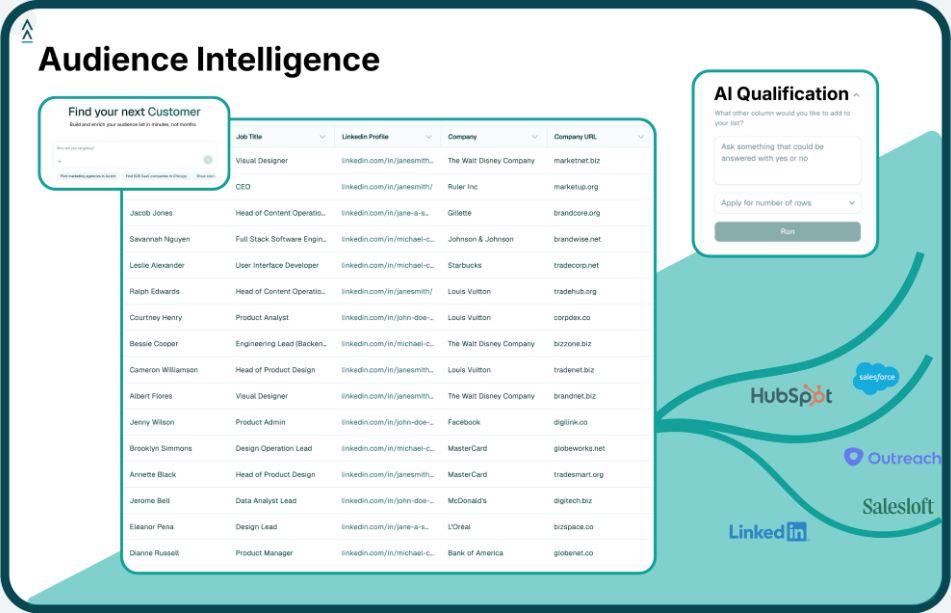
Platforms like Landbase's GTM-2 Omni enable natural-language targeting to build precise audience lists for HealthTech, such as "Marketing Directors at healthcare technology firms scaling digital teams" or "Healthcare organizations researching cloud security and data governance." The platform's 1,500+ unique signals span firmographic, technographic, intent, hiring, and funding data, allowing teams to identify the right prospects at the right time.
By leveraging AI-qualified audiences ready for immediate activation, B2B vendors can cut through the noise and engage HealthTech decision-makers with relevant, timely outreach that respects their complex regulatory environment and growth-stage needs.
Fastest-growing HealthTech companies are defined by multiple growth indicators including recent mega-funding rounds like Abridge's $150 million Series C, rapid user adoption such as OpenEvidence adding 50,000+ doctors monthly, and sustained revenue growth like Natera's 32% year-over-year increase. These companies typically combine AI innovation with clinical validation and address major healthcare inefficiencies. Growth is measured not just by funding but by actual deployment metrics, customer adoption rates, and geographic expansion.
HealthTech companies must navigate complex regulatory environments including HIPAA in the US and GDPR globally, with leading companies achieving SOC II and GDPR compliance certifications and implementing robust data security measures. They often partner with trusted institutions like Epic Systems and major health systems, which require stringent security and privacy standards before integration. Companies like Viz.ai and Abridge maintain FDA clearances and Epic partnerships that verify their compliance rigor. Regular third-party audits, encryption protocols, and de-identification practices are standard across the industry.
HealthTech startups face several major challenges including navigating complex regulatory requirements like FDA approval and HIPAA compliance, achieving clinical validation through peer-reviewed studies, integrating with existing healthcare infrastructure like EHRs, and demonstrating ROI to healthcare systems operating on thin margins. The long sales cycles typical in healthcare mean that even innovative solutions can take years to achieve widespread adoption. Companies must balance innovation speed with the healthcare industry's inherent conservatism and risk aversion while proving both clinical efficacy and financial value.
AI is transforming HealthTech with 62% of digital health funding going to AI-enabled companies in H1 2025 across multiple dimensions including ambient clinical documentation from companies like Ambience and Abridge, medical search and decision support through platforms like OpenEvidence, AI-powered diagnostics using imaging and genomics from Viz.ai and Natera, and personalized care delivery through machine learning at Spring Health and Omada Health. The most successful implementations combine AI with clinical expertise and real-world validation rather than relying on technology alone. Multimodal AI combining imaging, EHR data, and audio represents the next frontier.
B2B companies can effectively target HealthTech organizations by understanding their specific growth stages and needs, using platforms with natural-language targeting capabilities to build precise audience lists based on signals like recent funding rounds, hiring activity, technology stack changes, and geographic expansion. Given the regulated nature of healthcare, ensuring SOC II and GDPR compliance in your own data practices is essential for building trust with HealthTech prospects. Timing outreach to coincide with growth signals like new funding announcements, executive hires, or product launches dramatically improves conversion rates compared to generic outreach.
Tool and strategies modern teams need to help their companies grow.