.png)
.png)
.png)

Daniel Saks
Chief Executive Officer


Clicked link email signals represent one of the most reliable indicators of genuine prospect interest in your offerings. Unlike open rates—which have become increasingly unreliable due to privacy protections like Apple Mail Privacy Protection—clicks demonstrate deliberate human action and active engagement. By leveraging these behavioral signals to build and refine your email lists, you can create highly qualified audiences that convert at dramatically higher rates. Platforms like Landbase enable you to generate starting prospect lists instantly, which you can then refine using real-world engagement data like email clicks to ensure maximum relevance and qualification.
Most marketers struggle with bloated email lists filled with passive subscribers who never engage. The solution lies in treating clicked links not just as engagement metrics, but as powerful signals for audience qualification and segmentation. When prospects click specific links in your emails—whether to pricing pages, product features, or case studies—they're self-identifying their interests and purchase intent, making them ideal candidates for targeted follow-up and inclusion in high-value prospect lists.
Clicked links in emails transcend basic engagement metrics—they reveal genuine buyer intent and specific interests that can transform how you build and qualify your prospect lists. Understanding which content prospects engage with provides invaluable insights into their buying journey and decision-making process.
Email tracking distinguishes between three types of click signals: "Click Email" (any link clicked), "Click Link" (specific tracked links), and "Click-to-Open Rate" (CTOR)—the percentage of openers who clicked. These signals differ fundamentally from open rates because they require deliberate action from the recipient. While opens can be artificially inflated by email clients that pre-load images for privacy reasons, clicks represent conscious decisions to engage with your content.
This distinction is critical for list building because it separates passive list members from active prospects. A prospect who clicks a link to your pricing page demonstrates different intent than one who clicks a blog post link—these behavioral signals allow you to categorize contacts based on demonstrated interest rather than assumed demographics.
The business impact of leveraging click signals for list building is substantial. Marketers who segment their audiences based on click behavior achieve significantly better performance across all key metrics. Segmented campaigns show 14.31% higher open rates and dramatically improved conversion rates because messaging aligns with expressed interest rather than generic assumptions.
For B2B companies, this means identifying prospects who are actively researching solutions in your category. When someone clicks multiple links related to specific product features or use cases, they're signaling readiness to move further down the funnel. These high-intent prospects deserve inclusion in your most targeted outreach sequences and should be prioritized for sales follow-up.
Effective click tracking requires proper technical setup and integration with your existing marketing technology stack. The goal is to capture not just that a click occurred, but which specific link was clicked, by whom, and when—transforming your email campaigns into powerful data collection instruments for audience building.
Email marketing platforms automatically append unique UTM parameters to your links, routing clicks through tracking servers to capture detailed engagement data. This intelligence includes recipient identification, specific link clicked, timestamp, and IP/location data. Most modern email service providers (ESPs) like HubSpot, Klaviyo, and Mailchimp include this functionality natively.
For B2B marketers, the setup process typically involves:
The key is ensuring that your tracking captures enough detail to enable meaningful segmentation later. Generic tracking that only records "clicked email" without specifying which link was clicked limits your ability to build precise audience segments.
Once you're capturing click data, the next step is integrating it with your prospecting workflow. This involves creating automated rules that trigger based on specific click behaviors. For example:
This integration transforms click signals from passive analytics into active qualification criteria. Instead of manually reviewing engagement reports, your system automatically categorizes prospects based on their demonstrated interests, ensuring that your highest-value contacts receive appropriate attention.
Click-based segmentation enables you to create micro-audiences that are far more responsive than broadly defined lists. By grouping prospects based on which specific links they've clicked, you can deliver hyper-relevant messaging that addresses their exact interests and needs, driving significantly higher engagement and conversion rates.
The most effective click-based segments are built around content themes and buyer journey stages. For B2B companies, common segmentation strategies include:
Product Interest Segments:
Buyer Journey Segments:
Industry/Use Case Segments:
These segments enable you to create messaging that directly addresses each group's demonstrated interests. A prospect who clicked your healthcare compliance case study should receive different follow-up than one who clicked your financial services integration guide.
Beyond content-based segmentation, click patterns can reveal prospect readiness and urgency. Prospects who exhibit certain behavioral patterns should be flagged as high-priority leads:
These "hot" leads should be immediately added to high-priority prospect lists and flagged for expedited sales follow-up. The combination of click signals with other behavioral data (like website visits or content downloads) creates a comprehensive view of prospect intent that far exceeds what demographic data alone can provide.
Marketing automation transforms click signals from static data points into dynamic triggers for personalized follow-up sequences. By setting up automated workflows that respond to specific click behaviors, you can ensure that every prospect receives timely, relevant messaging that guides them toward conversion without manual intervention.
Automated workflows can respond to click events in real-time, delivering personalized content that builds on the prospect's demonstrated interest. Common automation triggers include:
These automated sequences work because they demonstrate attentiveness—showing prospects that you're paying attention to their specific interests rather than sending generic broadcast messages. This level of personalization is what drives the 340% revenue increase that segmented campaigns achieve.
Advanced AI platforms can analyze click patterns across thousands of interactions to identify which behaviors correlate most strongly with conversion. By training machine learning models on historical click data and conversion outcomes, AI can predict which prospects are most likely to become customers based on their engagement patterns.
This predictive capability goes beyond simple rule-based segmentation to identify complex behavioral patterns that might not be obvious to human marketers. For example, AI might discover that prospects who click case studies within 2 hours of receiving an email are 3x more likely to convert than those who click after 24 hours—insights that can inform both timing and targeting strategies.
Effective click-based list building requires careful measurement and optimization. While click-through rate (CTR) is the primary metric to track, it's just one piece of a comprehensive analytics framework that should inform your segmentation and targeting strategies.
The true value of click signals lies not just in the click itself, but in what happens afterward. Key metrics to track include:
These post-click metrics reveal which types of content and which audience segments drive actual business outcomes, not just engagement. A segment with a lower CTR but higher conversion rate might be more valuable than one with high clicks but low conversions.
Regular analysis of segment performance helps you refine your targeting and content strategy. Look for patterns like:
This analysis should inform both your email content creation and your prospect list building strategy. High-performing segments become templates for finding similar prospects through tools like natural-language targeting, while underperforming segments may need content or messaging adjustments.
Clicked link data isn't just valuable for new prospect qualification—it's also essential for maintaining list health and re-engaging dormant subscribers. By analyzing historical click patterns, you can create targeted win-back campaigns that resonate with subscribers' previously demonstrated interests.
Dormant subscribers who have clicked in the past represent your best re-engagement opportunities. These contacts have already shown interest in your content and are more likely to respond to targeted outreach than completely cold prospects. Key segments to target include:
Effective re-engagement campaigns reference the subscriber's previous engagement to demonstrate relevance and personalization. For example:
These personalized approaches acknowledge the subscriber's past interest while providing new value, making them far more likely to re-engage than generic "we miss you" messages.
Real-world examples demonstrate how clicked link data transforms vague demographic segments into precise, behavior-driven audiences that drive measurable business results.
A B2B SaaS company sends an email featuring three solution categories: CRM integration, analytics dashboards, and workflow automation. Using click-based segmentation, they automatically create three distinct prospect lists:
Each segment receives messaging that directly addresses their demonstrated interest, resulting in 4-7x higher conversion rates compared to generic outreach.
An e-commerce retailer sends a newsletter featuring multiple product categories with tracked links for each. Customers who click "yoga gear" links are automatically segmented into a yoga preference group, receiving personalized yoga product recommendations while being excluded from unrelated promotions like hiking gear or office supplies.
This preference-based segmentation drove over $70,000 in 8 months for brands like Andie Swim, which used similar behavioral segmentation with their fit finder quiz to generate substantial additional revenue through preference-based targeting.
While click tracking provides valuable insights for list building, it must be implemented with proper attention to privacy regulations and ethical marketing practices. Building trust with your audience is essential for maintaining long-term engagement and compliance.
Key compliance considerations include:
Platforms like Landbase are SOCII & GDPR compliant, ensuring that your underlying data infrastructure meets crucial privacy standards. This compliance extends to any prospect data you collect and use for list building purposes.
Ethical click tracking involves being transparent about data collection while providing clear value in exchange. Best practices include:
Proper compliance isn't just about avoiding penalties—it's about building trust with your audience and ensuring they understand the value exchange of sharing their behavioral data.
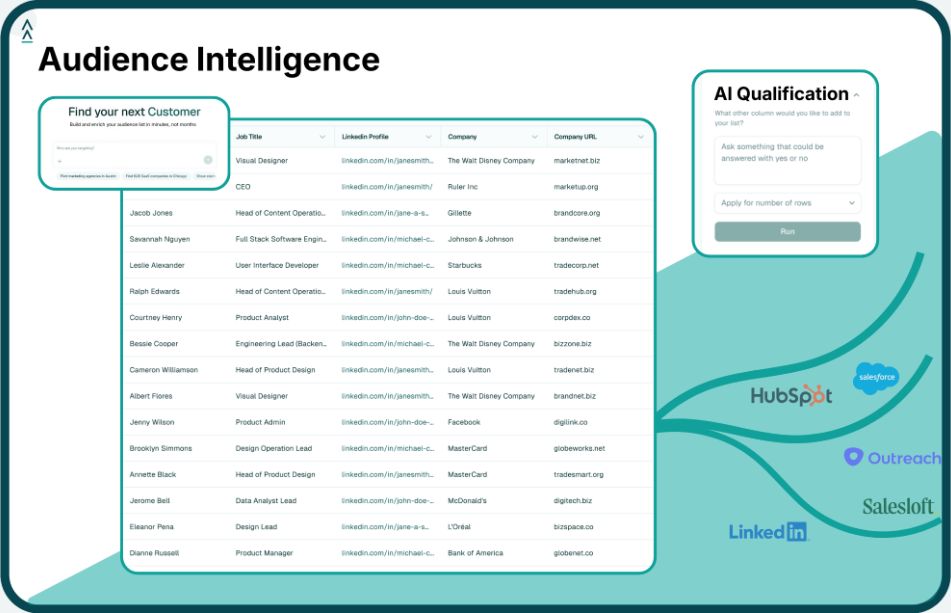
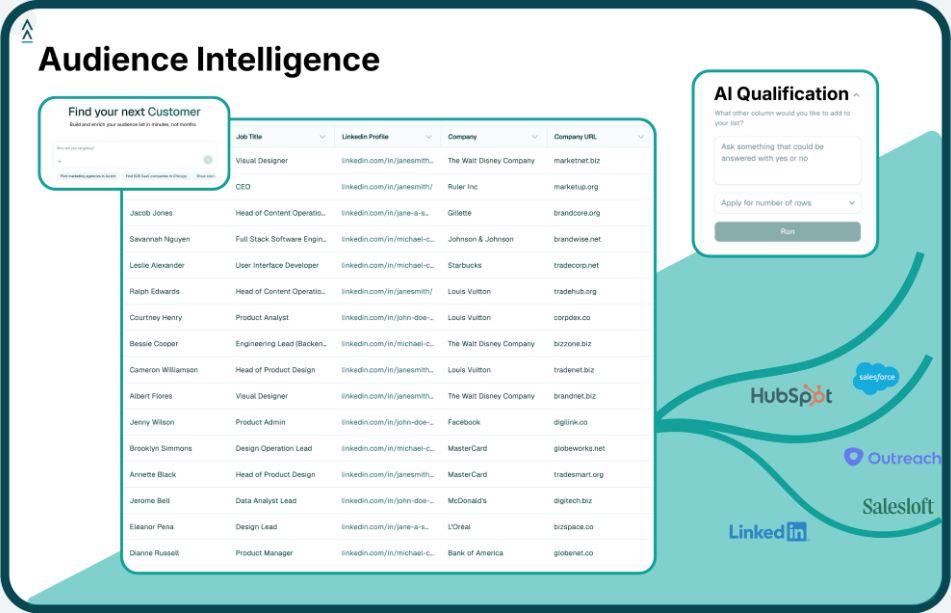
Landbase transforms how you leverage email click signals for audience building by combining behavioral data with agentic AI capabilities. Instead of manually creating segments based on click patterns, Landbase's GTM-2 Omni AI can automatically build and refine prospect lists that incorporate your engagement signals with rich firmographic, technographic, and intent data.
Landbase's approach starts with your click-based insights but amplifies them with AI-powered qualification. When you identify high-performing segments based on click behavior, you can use natural-language targeting to find similar prospects at scale. For example, if prospects who clicked your healthcare compliance content convert at high rates, you can prompt Landbase with "Find healthcare companies similar to my best customers who clicked compliance content" to generate a new, qualified prospect list.
The platform's AI Qualification combines your behavioral signals with 1,500+ unique data points including:
This multi-layered qualification ensures that your prospect lists aren't just behaviorally similar, but also contextually relevant based on real-world business conditions.
Landbase's frictionless workflow enables you to go from insight to action in seconds. Once you've identified valuable click-based segments, you can:
This eliminates weeks of manual list building and data enrichment work, allowing you to focus on high-value conversations rather than data wrangling. The platform's no-login requirement and free access ensure you can test and iterate quickly without lengthy setup processes.
Landbase stands out as the ideal solution for marketers looking to leverage email click signals for sophisticated prospect list building. Unlike traditional data providers that offer static databases, Landbase's GTM-2 Omni agentic AI creates dynamic, real-time audiences that combine your behavioral insights with comprehensive market intelligence.
The platform's core strength lies in its ability to translate your click-based learnings into actionable prospect lists instantly. When you discover that prospects who engage with specific content types convert at higher rates, Landbase enables you to find more prospects with similar characteristics using simple natural-language prompts. This capability is particularly valuable for B2B companies that need to identify accounts showing both behavioral interest (clicks) and contextual relevance (firmographics, technographics, intent signals).
Landbase's frictionless experience—free access, no login required, and instant exports of up to 10,000 contacts—makes it perfect for testing hypotheses about which prospect characteristics drive the best results. You can quickly validate whether your click-based segments translate to broader market opportunities without significant investment or technical setup.
For marketers tired of manually building and refining prospect lists, Landbase's agentic AI handles the heavy lifting of audience discovery and qualification, allowing you to: focus on what matters most: building relationships and closing deals. The platform embodies Landbase's mission to help you reclaim your day by automating the repetitive work of list building while ensuring superior qualification through AI-powered signal analysis.
Most email marketing platforms automatically track link clicks by appending UTM parameters and routing through tracking servers. Ensure your ESP is configured to track all outbound links and capture detailed data about which specific links were clicked by which recipients. For B2B campaigns, be aware that up to 80% of apparent engagement may come from security bots, so implement filtering to distinguish human engagement from automated scans. The key is ensuring your tracking system captures enough granular detail to enable meaningful audience segmentation later.
Click-through rate (CTR) measures the percentage of email recipients who clicked any link in your email, while conversion rate measures how many of those clickers completed a desired action like filling out a form or making a purchase. CTR indicates engagement and interest, while conversion rate measures actual business outcomes. Both metrics are important for understanding email performance, but conversion rate ultimately determines campaign ROI and should be your primary focus when evaluating list quality.
Absolutely—by analyzing which types of prospects click your links and which click patterns correlate with conversions, you can refine your ICP based on real behavioral data rather than assumptions. Look for patterns in firmographics, technographics, and engagement behaviors among your highest-converting clickers to identify the characteristics that define your ideal prospects. This behavioral data is far more reliable than demographic assumptions alone because it's based on actual demonstrated interest and purchase intent.
For active campaigns, analyze click data weekly to identify emerging patterns and optimize ongoing efforts. For strategic list building, conduct comprehensive analysis monthly to identify high-performing segments and inform your broader targeting strategy. The key is linking click insights to business outcomes—focus your analysis on metrics that directly impact pipeline and revenue rather than vanity metrics like total clicks.
Yes, most modern email marketing platforms support automated segmentation based on click behavior. You can create rules that automatically add contacts to specific segments when they click particular links, triggering personalized follow-up sequences without manual intervention. This automation is what enables the significant revenue increases that segmented campaigns achieve. The setup typically involves defining your segment criteria, creating automated workflows, and integrating with your CRM for seamless data synchronization.
You must be transparent about click tracking in your privacy policy, obtain proper consent under regulations like GDPR, and provide easy opt-out mechanisms that comply with CAN-SPAM requirements. Ensure your data collection and usage complies with all relevant regulations and consider implementing data minimization practices—only collect and use click data that directly supports your stated business purposes and provides clear value to subscribers. Proper compliance isn't just about avoiding penalties; it's about building trust with your audience and ensuring they understand the value exchange of sharing their behavioral data.
Tool and strategies modern teams need to help their companies grow.